


Health
Country Rolls Out Lenacapavir Injection to Strengthen HIV Prevention Services

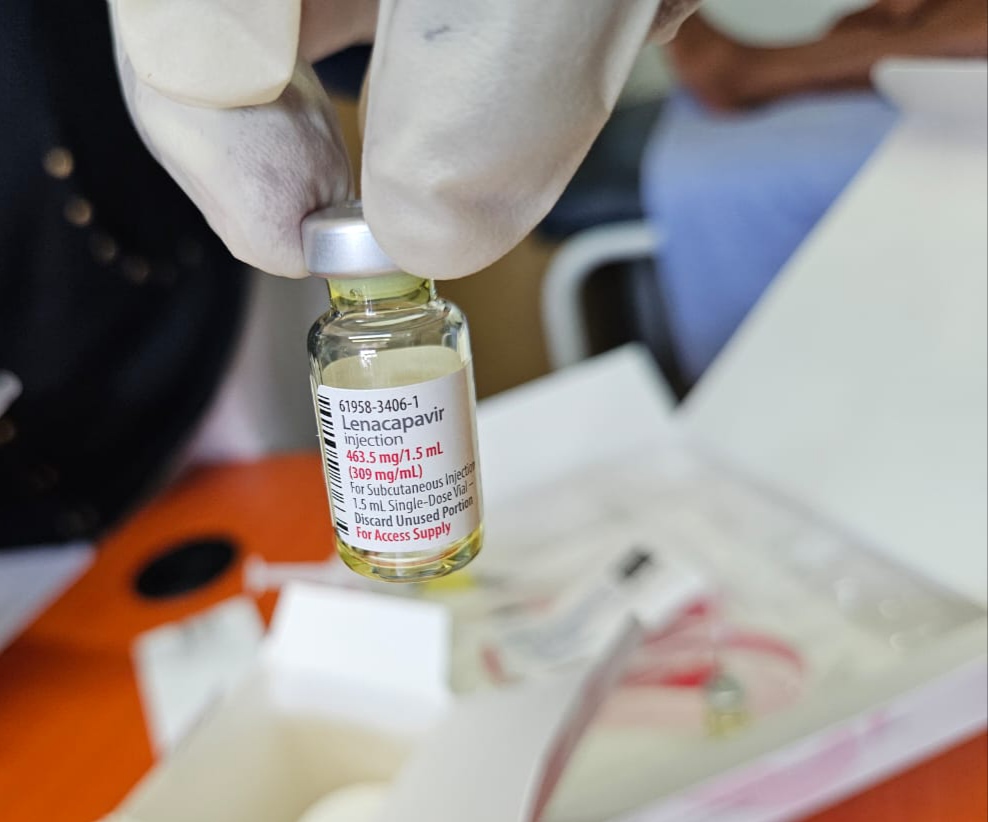
Researchers, through the Ministry of Health, have announced that Uganda has received 19,200 doses of Lenacapavir, the latest long-acting injectable medicine for HIV prevention. The drug is designed to protect HIV-negative individuals who are at high risk of acquiring the virus.
Lenacapavir was provided by the Global Fund through the Ministry of Health. The first shipment arrived in Uganda on March 17, 2026, and the drug was officially launched in the country on April 17, 2026. It has since been distributed to 103 health centres across the country to improve access to HIV prevention services.
The injectable medicine is administered once every six months, making it one of the longest-acting HIV prevention options currently available. During the initial phase of the rollout, it will be offered to populations at high risk of HIV infection, including pregnant and breastfeeding women, sex workers, truck drivers, members of the LGBTQ community, men who have sex with men, and other vulnerable groups.
Uganda is expected to receive a total of 36,000 doses. So far, 19,200 doses have already arrived, with another shipment expected next month. Health officials say all planned doses are expected to be delivered by the end of the year and distributed to health facilities across the country.
The United States government has committed to supporting access to Lenacapavir for at least two million people across 10 countries, including Uganda, over the next few years.
Health experts explained that when a person receives the Lenacapavir injection, they are also given two oral tablets to take on the first day and two more tablets on the second day. These tablets help the medicine reach protective levels in the body more quickly.
If a person receives the injection but does not take the accompanying tablets, the medicine may take up to one month to provide full protection. During this period, individuals remain at a high risk of HIV infection and are advised to avoid unprotected sex and other activities that could expose them to the virus until the medication becomes fully effective.
According to experts, Lenacapavir is not a vaccine, but a long-acting HIV prevention medicine that protects HIV-negative people from becoming infected with the virus.
Researchers explained that the clinical trials for Lenacapavir began with the PURPOSE 1 study in 2021, which enrolled adolescent girls and young women aged between 16 and 25 years who were at high risk of HIV infection.
The participants included women working in bars and factories, those living or working around gold mining areas, those interacting with soldiers and truck drivers, women in HIV-discordant relationships, and other vulnerable groups.
The PURPOSE 1 study was conducted among populations with high HIV incidence in sub-Saharan African countries, including Uganda and South Africa.
The PURPOSE 2 study later expanded to include other high-risk populations, including men who have sex with men, transgender men and women, and Gender non-binary individuals, in other countries. Researchers say the results from both studies demonstrated that Lenacapavir provides highly effective protection against HIV infection, leading to its approval and rollout as a long-acting HIV prevention option.
According to a Senior Research Scientist, at Makerere University–Johns Hopkins University Research Collaboration,( MU-JHU) Dr. Flavia Musoke Kiweewa, the process of developing, testing, and approving Lenacapavir has been a long journey driven by the need to find more effective HIV prevention methods.

She said that despite the availability of several HIV prevention options, many people especially young people continue to acquire HIV, highlighting the need for a more reliable and convenient preventive medicine.
Dr. Kiweewa explained to health journalists that taking an HIV prevention pill every day can be challenging due to stigma, forgetfulness, and the burden of daily medication. She said Lenacapavir, which is administered only once every six months, is expected to improve adherence and reduce new HIV infections.
She dismissed claims that researchers injected people with HIV to test the medicine’s effectiveness. Instead, she explained that clinical trials enrolled HIV-negative individuals who were at high risk of infection and divided them into different study groups receiving different HIV prevention methods.
According Dr. Kiweewa, none of the women and girls who received the Lenacapavir injection in the PURPOSE 1 study acquired HIV during the six-month study period, while some participants who were taking daily oral HIV prevention tablets became infected. She said these findings demonstrated that the injectable medicine was highly effective in preventing HIV infection.
Dr. Kiweewa added that following the successful clinical trial results released in 2024, the U.S. Food and Drug Administration (FDA) approved Lenacapavir for HIV prevention in 2025. In the same year, the World Health Organization (WHO) included the medicine in its HIV prevention guidelines.
She further noted that although the initial rollout is focused on populations at high risk of HIV infection, the Ministry of Health has made Lenacapavir available to anyone who believes they are at substantial risk of acquiring HIV, allowing more people to access the long-acting HIV prevention injection with confidence.
Similarly, Dr. Micah Kulubya, Director of Programs at the Uganda Key Populations Consortium, emphasized the need to prioritize sex workers in the rollout of Lenacapavir, noting that they remain among the populations at the highest risk of acquiring and transmitting HIV. He said prioritizing access to the long-acting HIV prevention injection for this group would significantly contribute to reducing new HIV infections.
Dr. Kulubya added that members of the sex worker community are eager to receive Lenacapavir because they recognize its potential to protect them from HIV infection.
He further noted that, according to the Ministry of Health, Uganda continues to record a high number of new HIV infections. He expressed concern that many people have become complacent and are no longer consistently using HIV prevention measures, increasing the risk of transmission.
Dr. Kulubya urged the public to remain vigilant by adopting responsible sexual behavior and utilizing available HIV prevention services. He said these efforts are essential if Uganda is to achieve its goal of ending HIV as a public health threat by 2030.
However, he acknowledged that demand for Lenacapavir has exceeded the available supply. As a result, many people in key and priority populations have not yet been able to access the medicine. He said discussions are ongoing with the Ministry of Health to identify ways of expanding access and ensuring that those at the highest risk receive the drug as more doses become available.
Meanwhile, patient advocate Moses Nsubuga, also known as “Super Charger,” expressed concern over the limited understanding of information about Lenacapavir among less-educated communities.
He noted that while awareness of the drug appears to be higher among educated populations, many people with lower levels of education are being left behind, despite also needing access to HIV prevention information and services.
He called for improved communication strategies that are more inclusive and easy to understand for all communities, especially those in rural and low-literacy settings.
Nsubuga also urged for greater compassion, care, and support towards people living with HIV in the country. He said this would encourage them to continue adhering to their medication as prescribed by health professionals, which in turn would reduce the risk of further transmission of the virus.