


Health
Uganda on High Alert After Confirmed Ebola Sudan Bundibugyo Virus Disease Outbreak

The Ministry of Health has today confirmed an outbreak of Ebola Sudan Bundibugyo Virus Disease.
The confirmed case is a 59-year-old Congolese man who was admitted to Kibuli Muslim Hospital on 11th May 2026. The development comes amid reports that 65 people have died from Ebola in the Ituri Province of the Democratic Republic of Congo (DRC).
According to Dr. Diana Atwine, the Permanent Secretary at the Ministry of Health, the patient presented with respiratory distress, episodes of fever, epigastric pain, nausea, and difficulty passing urine. While under admission, his condition deteriorated and he died on 14th May 2026 in the Intensive Care Unit (ICU), exhibiting bleeding symptoms.
The body was reportedly transported back to the Democratic Republic of Congo (DRC) at around 8:00pm on the same day.
Dr. Atwine said that on 15th May 2026, the Ministry of Health received reports of a suspected Ebola Virus Disease (EVD) case from public health authorities in the DRC. Following the reports, the Ministry decided to test an earlier sample that had been obtained from the deceased during his treatment.
“The sample was taken for testing at the Central Emergency Surveillance and Response Support Laboratory in Wandegeya, where it was confirmed as Ebola Bundibugyo. This is an imported case from the DRC. The country has not yet confirmed a local case,” said Dr. Atwine.
The Ministry of Health has since activated its emergency response mechanisms and deployed screening, surveillance, and rapid response teams at both official and unofficial points of entry, especially along the western border, major transit routes, and pilgrimage corridors.
The Ministry has also activated response systems at the national level and in high-risk districts, including the deployment of a mobile laboratory at Bwera Hospital, establishment of isolation facilities, strengthened infection prevention and control measures, and intensified risk communication campaigns.
Additionally, one high-risk contact, who is a close relative of the deceased, has been isolated, while all identified contacts linked to the index case are being quarantined and monitored.
“The Ministry of Health remains fully engaged and will continue to provide timely updates while implementing all necessary measures to protect the people of Uganda,” Dr. Atwine added.
About Ebola
Ebola is a severe viral disease that can be fatal if not treated early. It is transmitted through close contact with the blood, secretions, organs, or other bodily fluids of infected animals such as fruit bats, chimpanzees, gorillas, monkeys, forest antelope, and porcupines found ill or dead in the rainforest.
Human-to-human transmission occurs through direct contact, especially through broken skin or mucous membranes, with:
- Blood or body fluids of a person who is sick with or has died from Ebola
- Objects contaminated with body fluids such as blood, feces, vomit, or saliva from an infected person
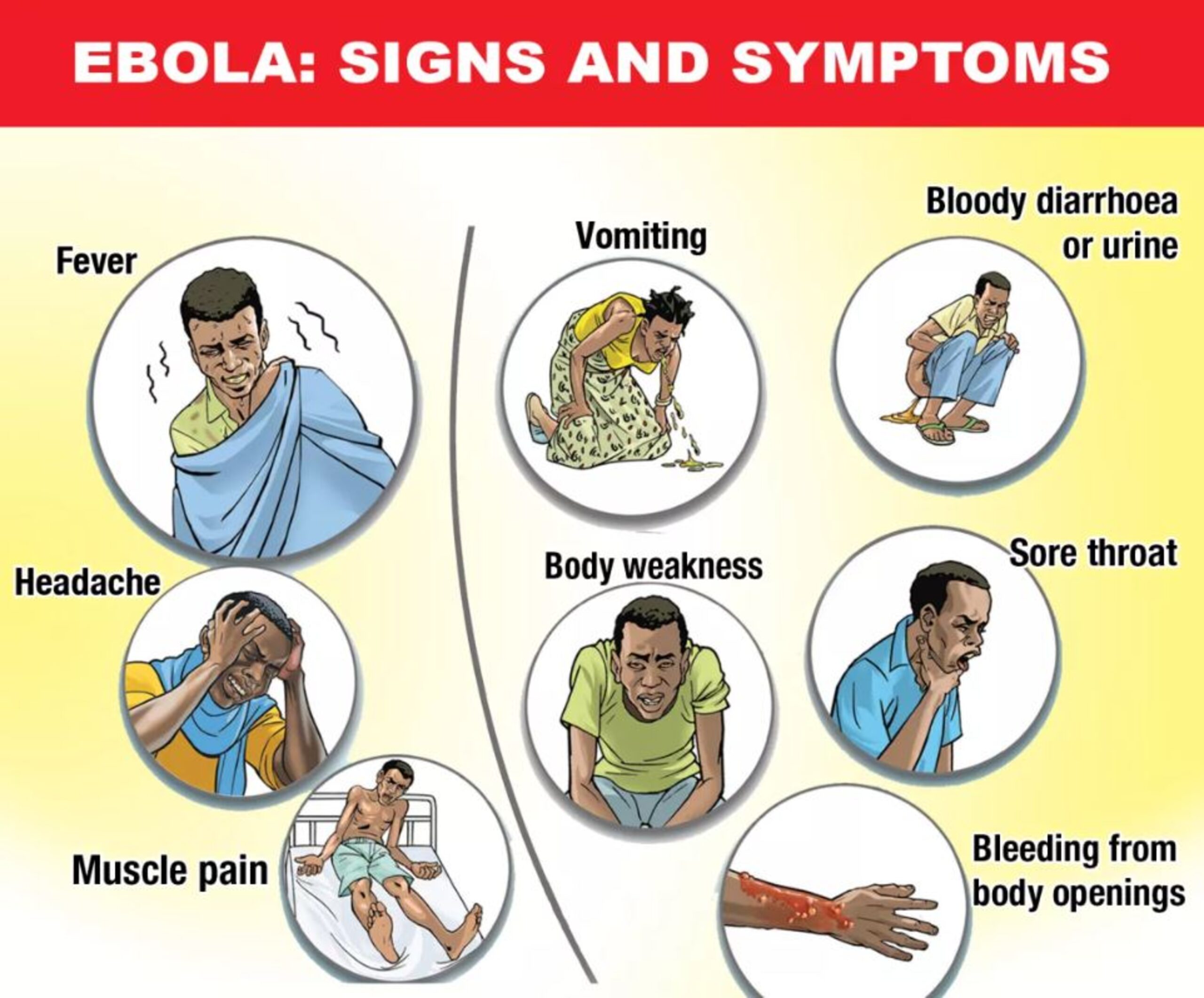
Symptoms of Ebola
A suspected Ebola case may present with the following symptoms:
- Sudden onset of fever
- Fatigue
- Chest pain
- Diarrhea
- Vomiting
- Unexplained bleeding
- Yellowing of the eyes
Bleeding manifestations are usually a late-stage presentation following the earlier symptoms.
The Ministry of Health has urged all health workers to maintain a high level of suspicion and strictly observe safety precautions. Private clinics have also been encouraged to adhere to Standard Operating Procedures and immediately report any suspected cases to the nearest district health authorities for further investigation and management.
The public has been advised to avoid physical contact with individuals showing Ebola-like symptoms, maintain proper hand hygiene, and avoid contact with bodily fluids such as urine, blood, sweat, saliva, vomit, and stool.
Anyone experiencing symptoms associated with Ebola Virus Disease has been urged to seek immediate medical attention.
The Ministry further advised that the handling of bodies suspected to have Ebola symptoms should only be conducted under the supervision of trained health personnel to ensure safe and dignified burials and prevent further spread of the disease.
All public places across the country have also been urged to install handwashing facilities on their premises.
For any suspected case, the public is advised to call the Ministry of Health toll-free line on 0800-100-066 or send a free SMS to 6767.