


News
RELON Uganda Reinforces Refugee Rights Advocacy with Capacity-Building Training

Leaving one’s family and fleeing to another country does not mean life has come to an end. Although the journey is often marked by loss, hardship, and uncertainty, many refugees find hope by embracing new beginnings and focusing on building a better future.
People flee their home countries for various reasons, including armed conflict, political instability, natural disasters, persecution, and the search for better education and employment opportunities.
While displacement is rarely a choice, welcoming host countries can provide refugees with opportunities to rebuild their lives through access to education, healthcare, livelihoods, and the freedom to establish new communities.
Uganda has earned international recognition for its progressive refugee policy and generous hospitality. The country is currently Africa’s largest refugee-hosting nation, providing refuge to more than 2 million refugees and asylum seekers. The majority originate from South Sudan and the Democratic Republic of the Congo.
Most refugees in Uganda live in settlements across more than 13 districts, including Terego, Yumbe, Madi Okollo, Lamwo, Koboko, Adjumani,among others while others reside in urban areas such as Kampala, Wakiso, and Mukono.
To support refugees in rebuilding their lives, numerous humanitarian and refugee-led organisations operate across the country, providing essential services such as education, healthcare, legal aid, psychosocial support, and livelihood opportunities. These efforts help refugees regain hope, become self-reliant, and contribute positively to their host communities despite being far from their homes.
Among the organisations working to improve the lives of refugees in Uganda is the Refugee-Led Organisations Network of Uganda (RELON Uganda). The network is dedicated to strengthening the capacity of refugees to effectively respond to the challenges facing refugee communities and Refugee-Led Organisations (RLOs).
Over the years, RELON Uganda has contributed to policy discussions affecting refugees, mobilised resources, and supported initiatives that promote refugee leadership and self-reliance across the country.
According to RELON Uganda, many leaders of Refugee-Led Organisations have limited knowledge of refugee rights, advocacy processes, and the appropriate channels for engaging with government authorities and humanitarian partners. This knowledge gap has often made it difficult for them to effectively represent and advocate for the communities they serve.

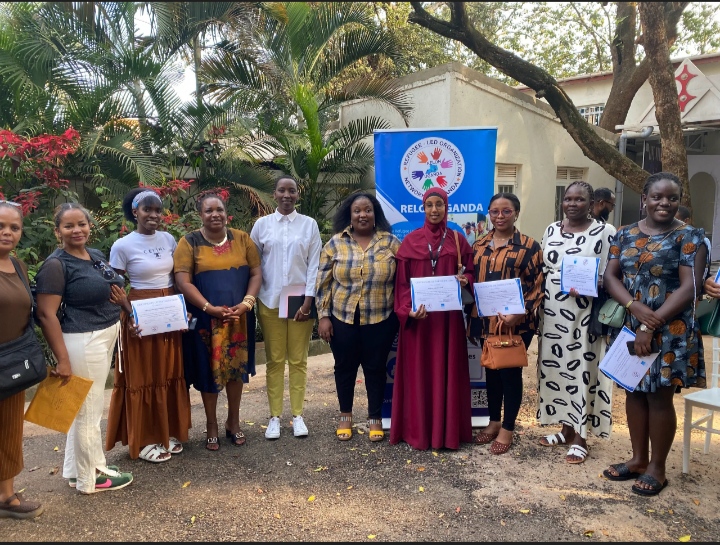
To address these challenges, RELON Uganda conducts a capacity-building training every two years. This year, the network organised a three-day training for leaders of Refugee-Led Organisations in Muyenga from 16 to 18 June to strengthen their knowledge of refugee rights, advocacy, policy engagement, and leadership.
The training aimed to equip participants with practical knowledge and skills on refugee rights, advocacy, policy engagement, and leadership.
During the training, participants learned how to engage policymakers and decision-makers constructively, understand the role of local actors in humanitarian response, and strengthen their advocacy skills. Facilitators also clarified key concepts and legal frameworks governing refugee protection in Uganda, enabling participants to better understand their rights and responsibilities.
While opening the three-day training, RELON Uganda Executive Director Lukendo Mbokeni Mparha said one of the key objectives of the biennial capacity-building programme is to empower refugee leaders with the knowledge and skills they need to understand, protect, and advocate for refugee rights.
“We want refugee leaders to know their rights and understand the appropriate ways to exercise them,” Mbokeni said. “When leaders are well informed, they are better equipped to serve and represent their communities.”
He encouraged participants to view advocacy as a constructive and strategic process rather than a confrontation. According to Mbokeni, effective advocacy requires dialogue, collaboration, and evidence-based engagement with policymakers and other stakeholders to advance the interests of refugee communities and strengthen the role of refugee-led organisations as local actors.
He also cautioned refugee leaders against engaging in unnecessary conflicts, noting that disputes often undermine progress and weaken community initiatives. Instead, he urged them to remain focused, united, and committed to promoting the welfare of the people they represent.
The training brought together leaders from several Refugee-Led Organisations, including Integrated Refugee Organization (IRO), Aider Refugee Initiative, Refugee Life Support Network (RLSN), Refugees for Prosperity (RFP), Fikra Refugees Initiative Community (FRIC) Organisation, and Amigo Women Empowerment, among others. At the end of the programme, participants were awarded certificates in recognition of their successful completion of the training.