


News
Child Protection Advocates Raise Alarm Over Rising Online Sexual Harassment Risks Facing Children in Digital Space

SVAC coalition noted that many children involved in online sexual activities are not willing participants, but rather victims of exploitation, coercion, manipulation, trafficking, and abuse, driven by underlying vulnerabilities such as poverty, weak child protection systems, and lack of awareness.
The coalition emphasized that addressing these root causes is essential to prevent further harm and ensure effective protection of children both online and offline.
The recent operations in Kampala have sparked renewed debate on the impact of high social media exposure among young people. According to the 2024 National Population and Housing Census, 43% of Ugandans aged 10 years and above approximately 13.6 million people own a mobile phone, significantly increasing children’s access to digital platforms and online spaces.
SVAC coalition also highlighted global and regional data showing the scale of the problem. The World Health Organization (WHO) reports that only a small proportion of children who experience violence receive formal support.
While between 23% and 54% disclose incidents to friends or family, only 1% to 25% seek help, and just 1% to 11% access formal support services.
In Eastern and Southern Africa, it is estimated that 1 in 10 children have experienced online sexual abuse. The International Association of Internet Hotlines (2023) further reported a 25% increase in online sexual exploitation cases across Africa, with countries such as South Africa and Kenya recording a 30% rise in child sexual abuse material cases.
In Uganda, the Disrupting Harm study by Safe Online found that 49% of children have accessed adult pornography online, with boys and older adolescents being the most affected groups.
Child protection advocates are now calling for stronger digital safety measures, increased awareness, and improved reporting systems to protect children from online sexual harassment and exploitation.
While recent arrests in Kampala have attracted significant public attention, SVAC coalition has urged the public and authorities not to view such cases as isolated incidents or solely through a criminal justice lens.
Instead, the coalition says they reflect a broader systemic challenge and should serve as a national wake-up call to strengthen the safety of children in digital spaces, homes, schools, and communities.
Further, SVAC coalition noted that Uganda’s rapidly expanding digital landscape driven by increased internet access and widespread use of social media platforms such as TikTok, Instagram, Facebook, X, and Threads has created new opportunities for learning, innovation, entertainment, and social interaction. However, the coalition warned that it has also increased children’s exposure to online predators, exploitative networks, harmful content, and unsafe digital environments.
According to SVAC coalition, many parents, caregivers, community leaders, policymakers, and even children themselves are not sufficiently aware of these risks or how to prevent them, leaving children more vulnerable to exploitation.
The coalition further explained that online sexual exploitation of children takes many forms, including commercial sexual exploitation, child sexual abuse material, online grooming for sexual purposes, sexting, sexual extortion, trafficking facilitated through digital platforms, and live-streamed sexual abuse. SVAC stressed that these forms of abuse can affect any child, regardless of age, gender, religion, social status, or economic background.
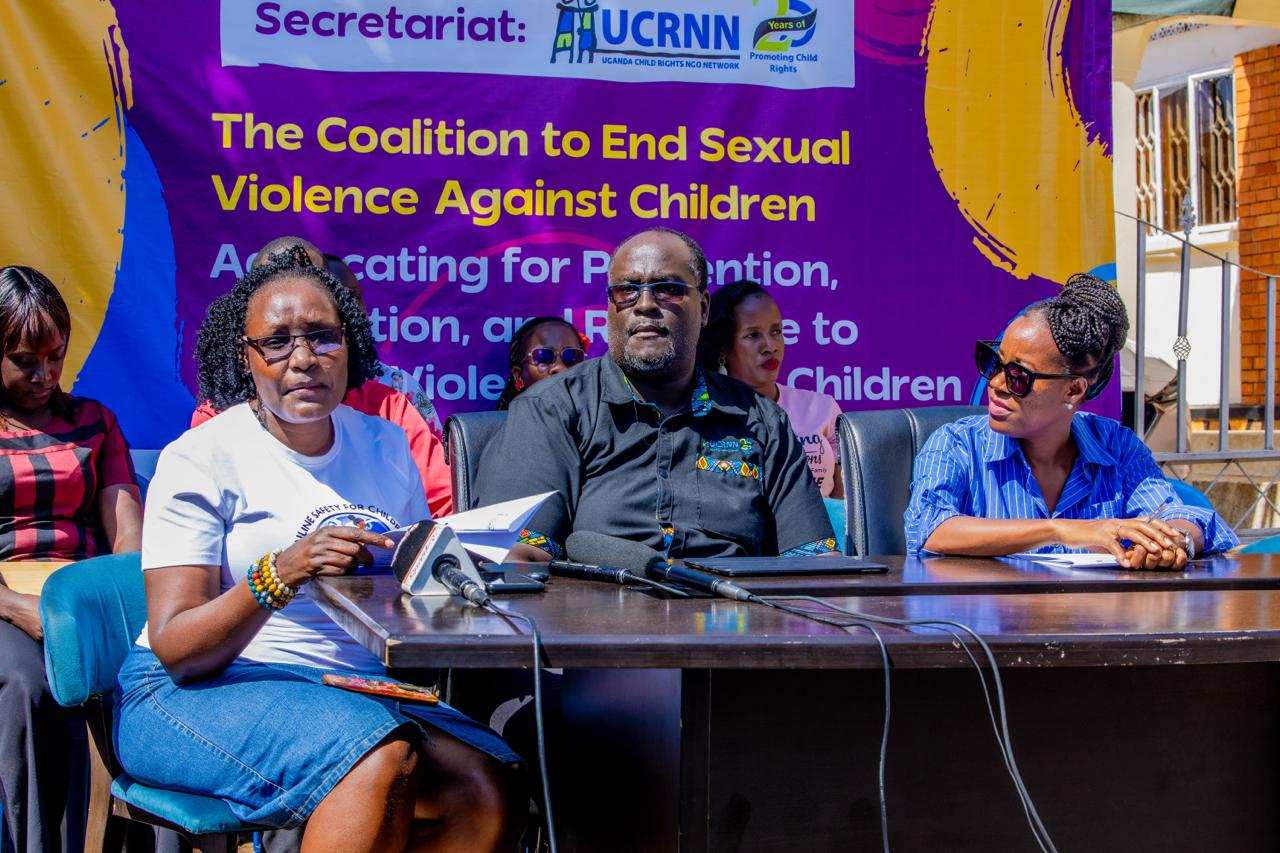
During a press conference on protecting children against online violence held on 17/06/2026 in Kampala, the Executive Director of the Uganda Child Rights NGO Network, Damon K. Wamara, said the recent incidents should trigger national dialogue and collective action to address the growing problem of sexual violence against children.
He noted that the Coalition to End Sexual Violence Against Children (SVAC) believes such cases call for urgent, child-centred responses that prioritize prevention, protection, rehabilitation, and psychosocial support for survivors.
“Sexual violence against children can have lifelong impacts, including trauma, depression, anxiety, social stigma, and school dropout,” Wamara said, adding that online sexual exploitation can further increase children’s vulnerability to trafficking and repeated abuse.
He emphasized that while civil society, the media, parents and caregivers, religious leaders, and teachers all have important roles in educating children about online risks and sexual exploitation, the responsibility for protection cannot rest on children alone.
In a similar perspective, the Executive Director of High Sound for Children, Hadijah Mwanje, said that while digital transformation of society is irreversible, the exploitation of children online is not. She emphasized that protecting children in the digital age requires immediate and collective action.
Mwanje urged government, technology companies, civil society organizations, communities, parents, and the media to work together to strengthen prevention efforts and build a robust child protection system that safeguards children both online and offline.
“The time to act is now, before more children are exposed to harm that could have been prevented,” she said, appealing for urgent and coordinated intervention to address online risks facing children.
Similarly, the Influencing Manager for Violence Against Children at Raising Voices, Tabitha Ssuubi, has called on the government through Parliament and in collaboration with the Uganda Communications Commission to strengthen legislation and regulations governing children’s engagement in digital spaces.
She emphasized the need to establish and enforce age-appropriate access to social media platforms, and to hold technology companies accountable for implementing robust safeguards to protect children from online exploitation, abuse, and other digital-related harms.
Ssuubi further urged parents and caregivers to educate themselves on online child protection, actively engage in their children’s digital activities, maintain open communication, and promote safe internet use practices.
She also called on schools to strengthen digital literacy education, while safeguarding learners by monitoring computer usage and blocking access to suspicious or unsafe websites.
In addition, Ssuubi appealed to media practitioners including journalists, editors, and media managers to ensure ethical reporting on children’s issues. She stressed the importance of protecting children’s identities, respecting their dignity and privacy, and avoiding sensational coverage that may further stigmatize victims.
She further noted that security agencies should treat children who have experienced sexual violence primarily as individuals in need of protection and support. She said they should be given access to rehabilitation services, psychosocial care, legal assistance, and opportunities for safe reintegration into society.