


News
Parliament Passes Controversial Sovereignty Bill

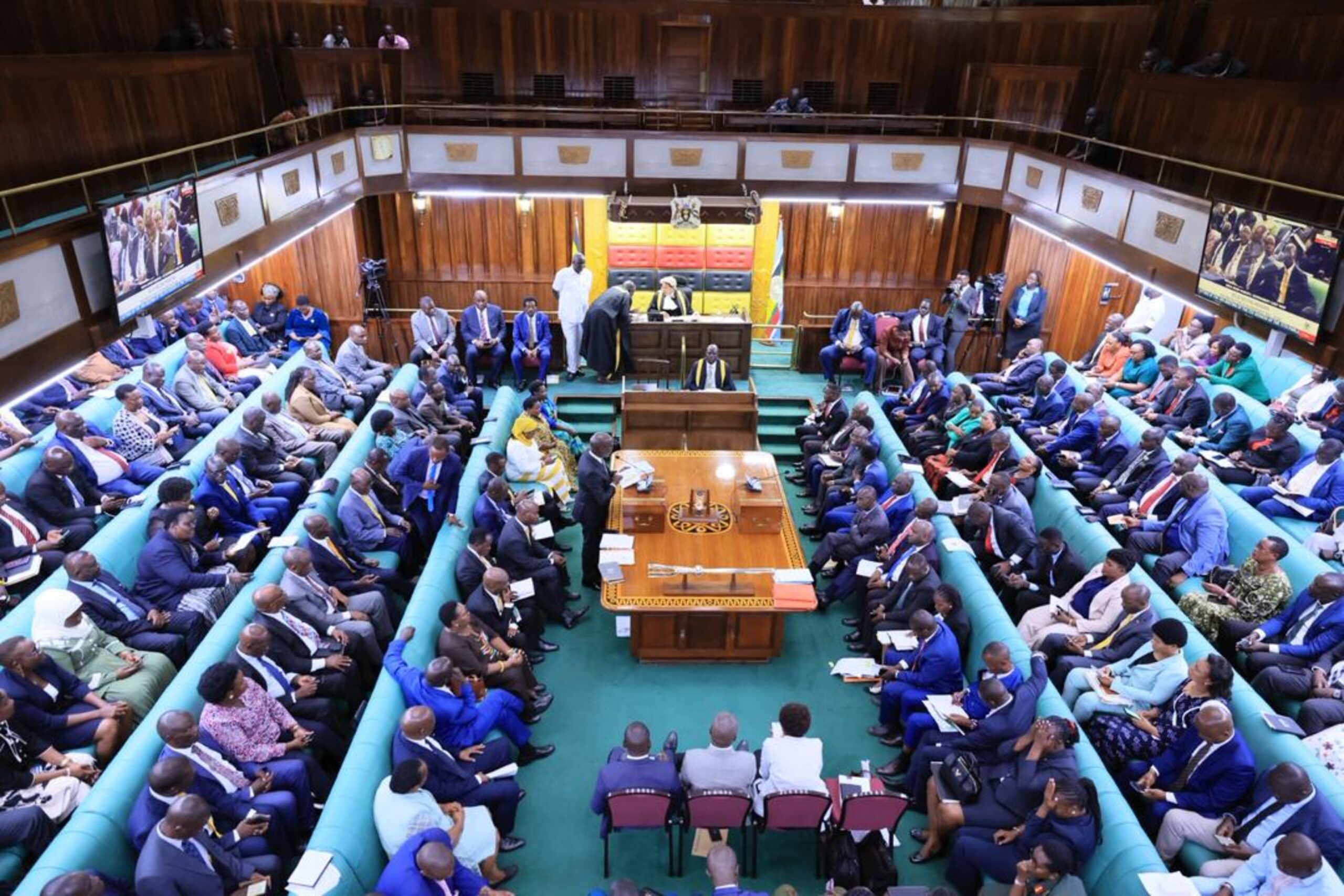
Parliament has passed the Protection of Sovereignty Bill, 2026, following hours of debate on Tuesday, 5 May 2026. The House adopted the report from the Committee Stage after completing clause-by-clause consideration. The Bill was then read for the third time and passed.
Speaker Anita Among credited the Attorney General, Kiryowa Kiwanuka, the Prime Minister, Robinah Nabanja, the committee, and the Government Chief Whip, Hon. Hamson Obua, for mobilising the numbers required to pass the Bill. She remarked that all she needed was “the number,” and once it was secured, the work was done. The Speaker confirmed that Parliament had a quorum, with 353 Members present, including eight attending virtually.
Hon. Gen. David Muhoozi, Minister of State for Internal Affairs, said the Bill seeks to address threats to Uganda’s ability to self-govern. He noted that it provides for preventing external influence, regulating foreign funding, safeguarding national security, addressing legal gaps, and managing digital misinformation.
Hon. Wilson Kajwengye (Nyabushozi County) presented the report of the joint committees on Defence and Internal Affairs, and Legal and Parliamentary Affairs. In contrast, Hon. Jonathan Odur (Erute South County) presented a minority report outlining dissenting views.
According to the minority report, the joint committee violated provisions of the Rules of Procedure during its consideration of the Bill. It states that the committee did not fully examine the Bill or conduct all necessary inquiries under Rule 135, and adopted substantial amendments without adequate scrutiny.
The report also referenced a public statement by President Yoweri Museveni questioning the Bill’s contents, raising concerns that extraneous matters may have been introduced during the legislative process. Hon. Odur described the President’s remarks—that the Bill was not the one presented to Cabinet—as professionally embarrassing for the Attorney General, likening the situation to a client publicly withdrawing instructions from a lawyer.
Last week, the Government amended the controversial Bill, removing a proposal that would have classified Ugandan citizens living abroad as foreigners and narrowing clauses that critics said were broad enough to criminalise ordinary association with foreign entities.
The Attorney General, Hon. Kiryowa Kiwanuka, presented the proposed changes on Thursday, 30 April 2026, before the joint parliamentary committees.
One of the most significant revisions concerned the definition of a “foreigner.” In the original draft, the Bill included Ugandan citizens residing outside the country. This provision has since been removed. Under the passed Bill, a foreigner is defined as a person who engages in, supervises, controls, finances, or subsidises specified activities, and includes non-Ugandan citizens, foreign governments, diplomatic missions, corporations registered outside Uganda, and international or multinational organisations.
Clause 13 of the Act prohibits economic sabotage, attracting a fine of Shs 2 billion for legal entities and Shs 1 billion for individuals, or a prison sentence of up to 10 years. Economic sabotage is defined as acts by an agent of a foreigner who knowingly publishes false information or engages in activities that weaken or undermine the country’s economic system.
The law requires individuals or entities acting as agents of foreigners to register with government authorities. It also mandates prior government approval for foreign funding above a prescribed threshold of about Shs 400 million annually, alongside strict disclosure and reporting requirements.
Additionally, individuals receiving foreign funding for political purposes must declare their sources and register as foreign agents. The law restricts participation in policy-making by individuals or groups linked to foreign interests without government approval, and grants authorities broad inspection, enforcement, and oversight powers over organisations and individuals.
Violations of the law attract heavy fines and prison sentences of up to 10 years.