


News
Women’s Probono Initiative Concludes Two-Day SRHR Mentorship for CSOs and Champions

SRHR issues have, on several occasions, been misinterpreted and challenged by competing narratives that have significantly affected people especially women from freely accessing these essential services.
Many SRHR topics face strong backlash, particularly from anti-rights movements that spread misleading information and create fear. This misinformation often prevents individuals from making informed decisions about their bodies.
Additionally, SRHR is sometimes used by different actors for personal or political gain. For example, some politicians exploit SRHR issues to win public support and votes.
Often, particularly within opposition politics, SRHR becomes a tool for shaping narratives and making promises such as providing sanitary pads to adolescents, improving maternal health services, expanding access to modern family planning methods, and enhancing overall healthcare. However, these promises frequently go unfulfilled, leaving communities with false hope.
Furthermore, access to SRHR services is increasingly undermined by coordinated misinformation campaigns led by anti-rights groups. These efforts often take place online, where fake accounts and organized messaging networks such as WhatsApp rumor chains are used to spread false narratives.
Common claims include framing SRHR as a foreign agenda or suggesting that sex education promotes immorality. Such narratives mislead the public and discourage individuals from making informed choices about their health and rights.
Anti-rights movements often employ common tactics to create fear among the public and discourage people from freely and confidently accessing SRHR services. These tactics include moral panic, policy capture, respectability politics, and the framing of SRHR as a “foreign agenda,” among others.
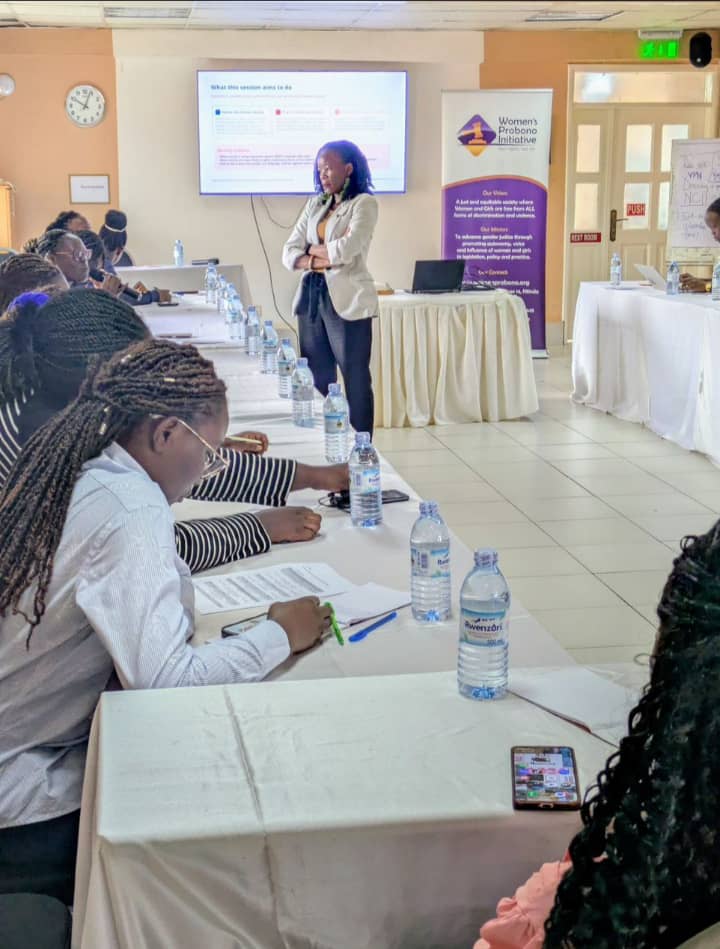
During a two-day mentorship for SRHR champions and civil society organizations (CSOs), organized by the Women’s Probono Initiative at Eureka Hotel in Ntinda, SRHR consultant Charles Owekmeno urged participants to tailor their messaging to the realities of the communities they serve.
He emphasized the importance of focusing on the specific challenges affecting communities rather than adopting narratives driven by political interests particularly those impacting women, girls, and young boys.
He also challenged CSOs to recognize their dual role. While they work to complement government programs, they must also be willing to critically engage with government actions when necessary. This, he noted, is essential in helping to reshape policies and ensure they better serve the needs and rights of citizens.
One of the facilitators and human rights lawyer, Angella Kyagera, noted that although communities continue to face numerous challenges related to SRHR, online safety, and security, there is a critical need to equip people with knowledge on how to effectively exercise their rights.
She emphasized the importance of understanding when and where to report violations, as well as the kind of support victims and survivors can expect.
This, she explained, is key to ensuring that perpetrators are held accountable.
Kyagera also challenged civil society organizations (CSOs) to engage donors more critically by prioritizing funding for issues that directly address community needs. She cautioned against simply aligning with donor agendas at the expense of urgent and relevant topics that require immediate attention.
In a similar vein, the Executive Director at Her Internet, Sandra Kwikiriza, warned CSOs and SRHR champions to remain vigilant against online harassment, which is often aimed at disrupting their work and damaging their reputations.
She highlighted key threats such as account hacking, doxxing, exposure of personal information, infiltration of closed social media groups, and data breaches that can further harm survivors.
She called on SRHR champions and CSOs to strengthen their digital security by protecting their accounts, personal data, and communications.
Additionally, she encouraged them to counter anti-rights narratives through solidarity, collective amplification, and strategic narrative-shifting, enabling them to confidently and safely occupy online spaces.
However, Maureen Kinume from SRHR Alliance called upon CSOs to prioritize training their staff in outcome harvesting so they can effectively track and assess their work during project implementation.
She explained that this approach enables organizations to evaluate the significance of their projects to beneficiaries, measure contributions by comparing situations before and after implementation, and gather evidence of achievements or shortcomings.
Maureen emphasized that outcome harvesting is essential for CSOs because it helps them witness change in communities firsthand, document their influence and impact, and capture contributions that may not have been initially planned.
She stressed the importance of equipping staff with these skills to strengthen accountability, learning, and overall project effectiveness.
One of the participants, Maria Naiga Matovu, Executive Director of Women Empowerment Rights Organization (WERO), expressed her appreciation to WPI for giving her the opportunity to be part of the conversations. She highlighted her concerns about the marginalization of sex workers in communities, noting that they are often judged and made to feel that what they do is inherently wrong.
She also raised concern about the violation of women both online and offline, pointing out that many people witness such abuse but choose to laugh it off instead of offering support to the victims. She called upon women to stand in solidarity with one another, especially when fellow women are attacked online, so that perpetrators can be held accountable.