
Opinion
When Telugu Meets AI: Bridging Countries from India to Uganda, and Beyond

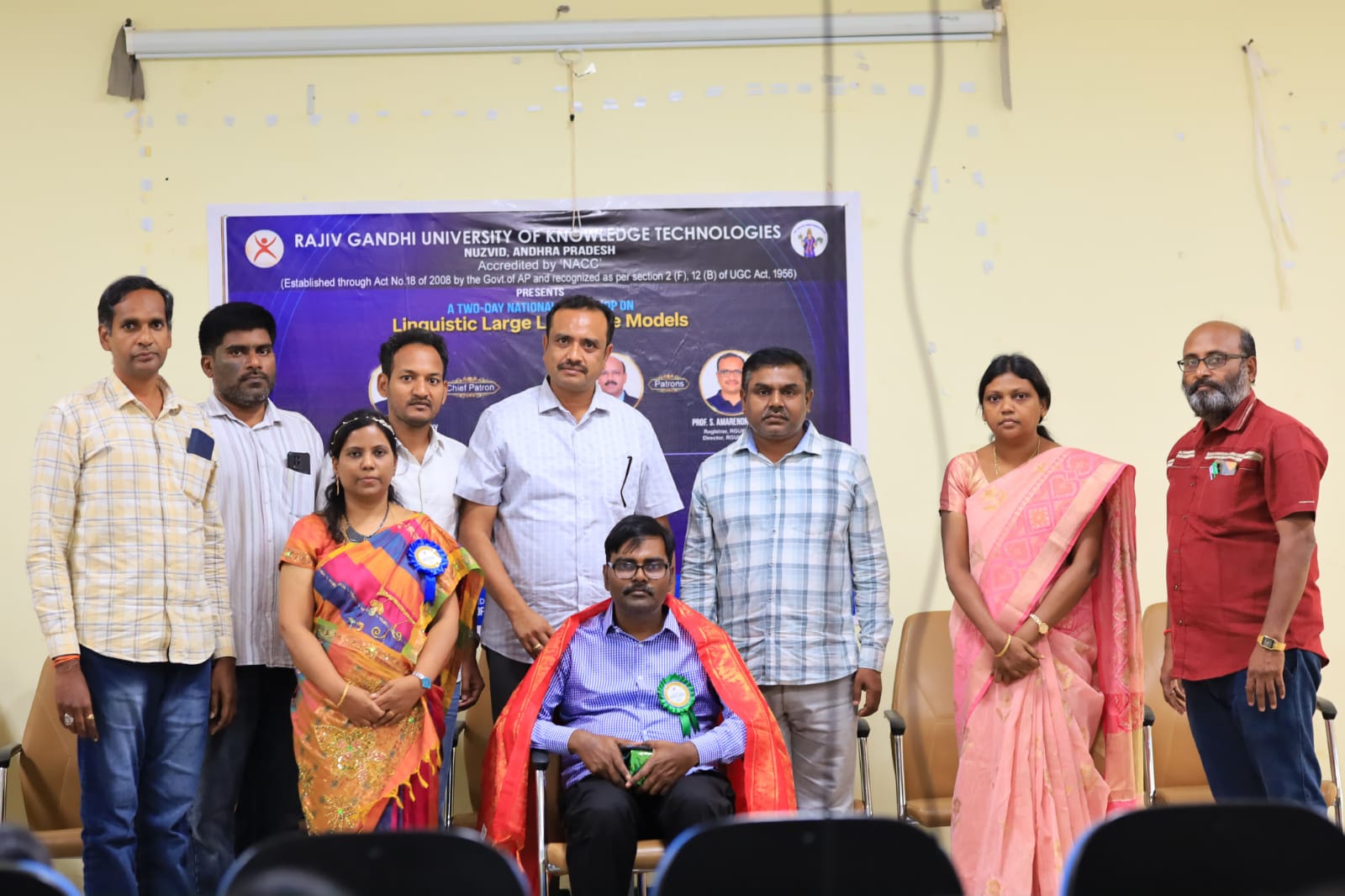
When the campus of RGUKT Nuzvidu stirred awake on Wednesday, 25th February, there was an energy that felt different from the usual urgency of deadlines or the quiet determination of exam season. A two-day national blended online and onsite workshop on Large Language Models (LLMs) was about to begin; a topic that sounded highly technical on paper but, in practice, drew students with curiosity, hope, and the underlying suspicion that there might be snacks.
The ceremonial lamp, Jyoti Prajvalana, was lit with the kind of reverence that reminded everyone that even as artificial intelligence (AI) evolves rapidly, some traditions remain timeless. And somewhere between the ancient warmth of the flame and the cool promise of machine learning, the event quietly set the stage for a conversation that stretched from Andhra Pradesh to the ears in Uganda, and elsewhere.

A Cultural Beginning for a Technological Leap
Workshop convener Dr. Udumu Jhansi welcomed participants with the calm authority of someone who knows how to shepherd academics, schedules, and student expectations. She laid out the conference’s purpose: understanding how language and technology intersect, and why that intersection matters now more than ever. More than 100 onsite participants were glued to their seats.
Academic Dean Dr. Sadhu Chiranjeevi and other dignitaries nodded approvingly, stressing that linguistics and AI are now spaces shaping governance, education, employment, and social development. It was a polite academic way of saying, “The world is changing fast; it best to keep pace.”
Where Linguistics Meets Everyday Life
The day’s first session took a deeply human turn. Dr. Devareddy Vijayalakshmi from the Central University of Hyderabad introduced linguistics not as a dry discipline, but as the pulse of human connection.
In the audience sat Shravani, a second-year humanities student who had grown up speaking Telugu at home, English at school, and a village dialect when listening to her grandmother’s stories. Linguistics, for her, was not abstract theory but lived experience. When Dr. Vijayalakshmi explained how words are born, evolve, change their meanings, or occasionally embarrass us, Shravani felt something click.

Her questions echoed those asked in places like Kampala, where many languages coexist: How do languages preserve identity in a globalised, digital world? How do they survive? How do they adapt? This was not just a technical workshop. It was a reminder that language is memory.
From Germany to Andhra Pradesh
And after lunch, an hour feared by speakers worldwide because of its effect on audiences, Dr. Thottempudi Ganesh from Heidelberg University appeared online. His camera flickered briefly, prompting students to smile knowingly, because even international Wi-Fi suffers post-lunch sluggishness. But he soon launched into an engaging explanation of LLMs.
He broke it down simply: LLMs learn from massive amounts of text, enabling them to answer questions, translate languages, write essays, and even tell stories. And yes, he added with a smile, they sometimes mispronounce Telugu, and must be forgiven.
More importantly, he spoke of how this technology could support farmers, assist patients, simplify government services, and bring educational resources closer to rural communities in India and Uganda alike.
I want to believe that universities such as Makerere University in Uganda are exploring similar AI applications, particularly in health, weather forecasting, and public service delivery. To the listening ear, the parallel was impossible to miss: two nations, thousands of kilometres apart, thinking the same thought at the same time.
Dreams and the Digital Frontier

The word “jobs” arrived like a jolt of electricity. Dr. Ganesh listed careers in Data Science, AI Engineering, Natural Language Processing, and Machine Learning. Students who had been slouching slightly sat up. One whispered, “AI Engineer sounds perfect for family WhatsApp groups.” Another googled salaries. A third googled other equally important things in today’s world.
Importantly, these opportunities are not confined to India. Uganda’s fast-growing tech ecosystem is opening similar doors. Young people in both countries face the same global job market, and the same chance to leap into it.
Two Nations, One Linguistic Adventure

What made the workshop extraordinary wasn’t simply the expertise shared. It was the shared humanity revealed through it.
In Nuzvidu, a student wonders whether Telugu will thrive in the digital age.
In Kampala, a student wonders the same about Luganda, Runyakitara, Luo, and the other smaller dialects.
Languages carry ancestors. AI carries possibilities. And the two don’t need to be in conflict. And workshops like this show how India and Uganda, each with vibrant, multilingual cultures and youthful populations, can use technology not to replace their languages but to protect them, digitise them, and reimagine their futures.
A Sense of Direction
As the first day concluded, faculty and students stepped out with ideas buzzing in their minds. What began as a formal inauguration had become a cross-continental conversation: Telugu and Luganda, tradition and AI, humour and scholarship, algorithms and identity, all sharing the same digital space.
Shravani walked back to her hostel thinking of her grandmother’s stories and wondering whether AI might one day understand that dialect too. For now, she decided she would understand it better herself.
And perhaps that is the workshop’s quiet achievement: reminding everyone that words, whether spoken, typed, coded, whispered, or translated, have the power to travel farther than people, to connect villages and continents, and to shape futures in ways we are only beginning to imagine. Day 2 brought newer conversations.
Mr. Lubuulwa is the Senior Public Relations Officer at NEMA Uganda, and a student of Journalism and Mass Communication at Andhra University.