


Gender
“We See You, We Hear You”: Uganda Celebrates Its Deaf Community

Uganda has joined the rest of the world in commemorating International Deaf Awareness Week 2025, an annual event designed to celebrate the achievements of Deaf persons, advocate for their rights, and promote the use and recognition of sign language.
The national celebrations will run from September 22nd to 26th, culminating in a major national event at Independence Park, Mbarara City, with Attorney General Hon. Kiryowa Kiwanuka presiding as Chief Guest.
This year’s theme, “No Human Rights Without Sign Language Rights,” highlights the crucial role of sign language in aiding the full realisation of rights and freedoms for Deaf individuals.
The theme, adopted from the global framework of the International Week of Deaf People, calls for bold and deliberate action to promote inclusive development, ensure equitable access to services, and bridge the communication gap between Deaf and hearing communities.
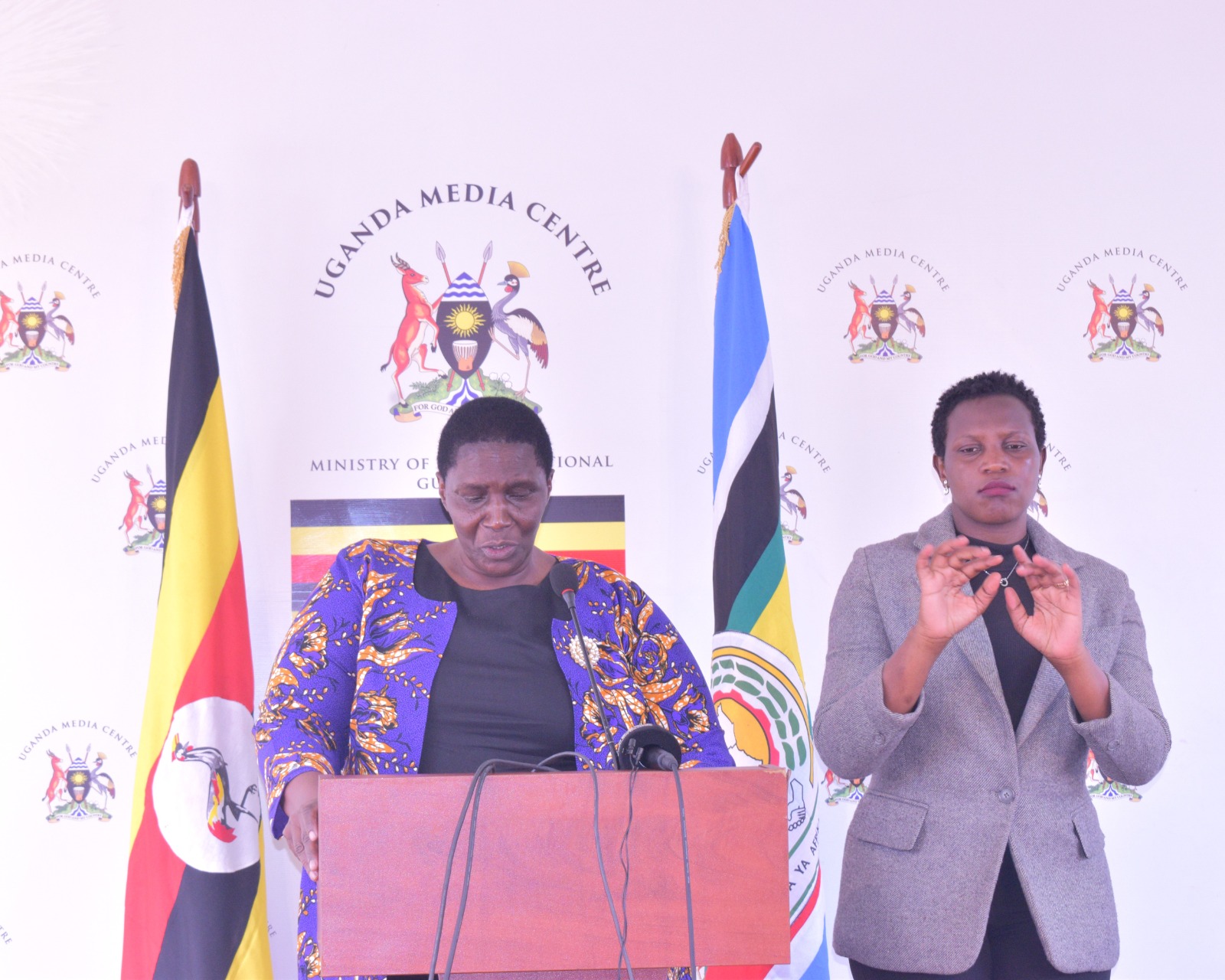
During a press conference held at Uganda Media Centre on Monday morning, Hon. Asamo Hellen, Minister of State for Disability Affairs, emphasised the importance of sign language as a critical foundation for the inclusion of Deaf people in all aspects of life, from education and healthcare to justice and governance.
“Sign language is not just a tool for communication,” Hon. Asamo stated. “It is a matter of human rights. Without it, access to education, healthcare, employment, and justice remains out of reach for millions of Deaf Ugandans. That is why this week is not just a celebration, it is a call to action.”
According to the Uganda National Housing and Population Census 2024, over 1.97 million people aged 2 and above, representing 4.7% of the population, have some form of hearing difficulty. This marks a significant rise from 1.08 million recorded in the 2014 census, emphasising the urgent need for inclusive systems and infrastructure.
“Such a significant portion of the population cannot be left behind,” Hon. Asamo noted. “Deaf persons contribute meaningfully to our nation’s development and deserve equal opportunities to thrive.”
Uganda has made commendable strides in promoting the rights of Deaf persons. At the heart of these efforts are strong legal and policy frameworks, including:
The Constitution of Uganda, which supports the development of sign language (Objective XXIV iii).
The Persons with Disabilities Act, 2020, mandates the use of sign language in public institutions and events.
The Communications Act 2013 enforces sign language accessibility on all television platforms.
The Revised National Policy on Persons with Disabilities prioritises protection from discrimination and abuse through enhanced communication tools.
Uganda also ratified the UN Convention on the Rights of Persons with Disabilities (UNCRPD) in 2007, reinforcing its international commitment to the elimination of discrimination and promotion of equal rights for persons with disabilities.
Hon. Asamo highlighted the government’s investment in education for the Deaf, particularly the establishment of two model secondary schools for Deaf learners in Mbale and Wakiso Districts.
These institutions have expanded access to secondary education for Deaf students, contributing to a steady increase in enrollment at universities and tertiary institutions under the affirmative action scheme.
Over 70 primary units and special schools currently serve Deaf learners, and Kyambogo University continues to lead the way in training professional Uganda Sign Language (USL) interpreters, a program that has become increasingly vital.
“Without qualified interpreters,” Hon. Asamo explained, “Deaf persons remain invisible in conversations that directly affect their lives. We must ensure these professionals are available across all sectors.”
Uganda’s commitment to accessibility has extended to several public institutions. The Uganda Police Force, for example, has partnered with Kyambogo University to train officers in sign language. Trained officers have been rewarded with incentives and promotions to encourage uptake.
In the health sector, over 500 Deaf persons have accessed services through sign language interpretation, and under the National Special Grant for Persons with Disabilities, at least 420 Deaf persons, including 213 men and 207 women, have received financial support. The Parish Development Model also reserves 10% of funds for persons with disabilities, including Deaf individuals.
The Electoral Commission has now taken steps to ensure full participation of Deaf citizens by providing interpreters during public election events. This is seen as a crucial step in strengthening democratic inclusion.
In partnership with the Uganda National Association of the Deaf (UNAD), Hon Asamo says that the Ministry of Gender, Labour and Social Development is now working on the standardisation of Uganda Sign Language. A Regulatory Impact Assessment is already underway to guide the development of official policies and potential legislation.
The Ministry has also requested that the Ministry of Public Service urgently recruit more sign language interpreters into the formal public service structure. While the Ministry of Health has already created such positions down to Health Centre III level, implementation remains stalled due to bureaucratic delays.
“We call upon the Ministry of Public Service to act now,” Hon. Asamo urged. “Without interpreters, access remains a dream, not a right.”
The national celebrations in Mbarara will feature a week-long lineup of activities aimed at raising awareness, fostering inclusion, and promoting Deaf culture. Key events include:
- Uganda Sign Language training workshops for service providers such as teachers, health workers, police officers, and local government officials.
- Community market cleaning, led by Deaf volunteers at Mbarara Market.
- Public lectures and panel discussions on Deaf inclusion, human rights, and sign language regulation.
- A football match between Bright Stars Deaf FC and a hearing team from Mbarara University of Science and Technology.
- A screening of the film “SPEAK”, which highlights the lives, struggles, and talents of Deaf individuals.
- A community health camp, themed “Sign Language for Better Health: Connecting Communities”.
- Radio and TV talk shows featuring Deaf activists, government officials, and sign language interpreters.
While progress has been made, Hon. Asamo acknowledged ongoing challenges including high dropout rates among Deaf learners, inadequate sign language services in the justice system, and unemployment.
“Government remains committed to closing these gaps,” she said. “But we cannot do it alone. We need all stakeholders—private sector, civil society, development partners, and citizens—to take part in this journey toward equality.”
In her closing remarks, Hon. Asamo extended an open invitation:
“I call upon all Ugandans to join us in Mbarara on September 26th for the climax of the celebrations. Let us celebrate, reflect, and commit to a Uganda where no one is left behind, because human rights must include sign language rights.”