


Gender
UMWA to Present Key Demands on Women’s Space in Media to Next Government

According to research conducted by UMWA under the Global Media Monitoring Project (GMMP), women account for only 26 percent of the people seen, heard, or spoken about in print and broadcast news.
This represents just a nine percentage point increase over the last 30 years, with only a two-point rise recorded in the latter half of that period.
Currently, the few women whose voices are heard in the media are often those who manage to navigate the system on their own. While their issues may be covered, many other women lack access to media platforms where their stories could be told and solutions explored.
For instance, many women experience gender-based violence, both physical and online, sexual harassment in workplaces, and discrimination in newsrooms and other professional spaces. However, their stories often go untold due to limited access to media platforms, fear of retaliation, stigma, or concerns about the consequences of speaking out publicly.
This situation has raised continued questions among different stakeholders, including UMWA, on how to set the pace for increasing women’s participation in the media space so that more women’s voices are amplified and heard, ultimately helping to address the challenges they face.
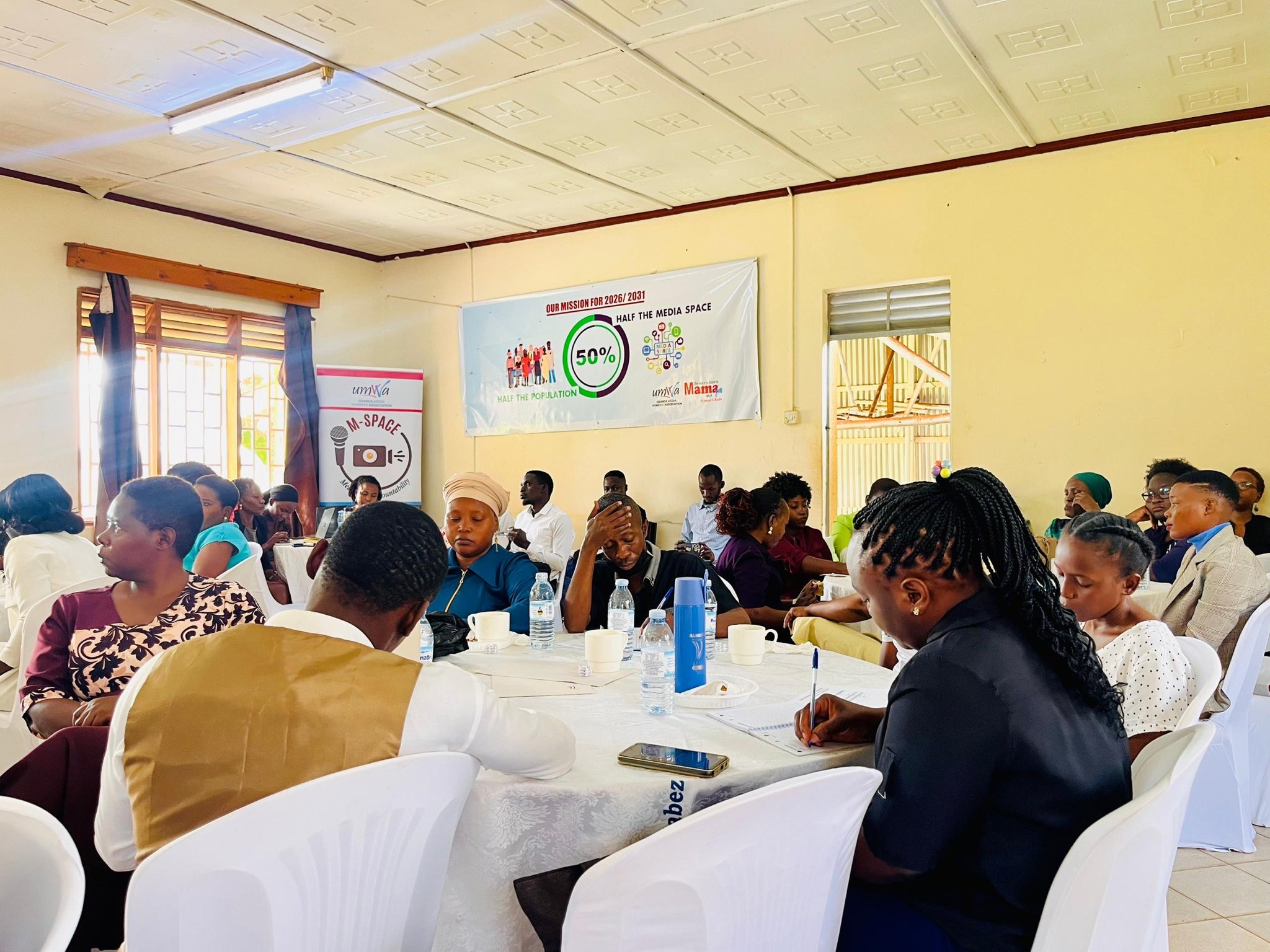
In response, on 12/01/2026, UMWA convened a meeting with media practitioners to discuss strategies for increasing women’s representation and coverage in the media.
The discussion focused on how women, who make up 50 percent of the country’s population, can be given adequate space in media platforms to ensure their issues are highlighted and addressed.
This year, UMWA launched a gender representation initiative in the media titled “Half the Population, Half the Media Space.”
The campaign highlights that, despite women making up 50% of the country’s population, they occupy only 25% of media spaces. During a session held under this theme, UMWA unveiled key advocacy asks it has developed, which it plans to present to the next government for consideration.
Among the key asks are fair representation and accurate portrayal of women in the media, improved safety and security for women in media spaces, and the recommendation that regulatory authorities such as the Uganda Media Council and the Uganda Communications Commission develop more gender-responsive policies and create additional platforms to amplify women’s voices.
These measures aim to foster a more inclusive and gender-responsive media industry.
According to UMWA Executive Director, Margret Sentamu, the Uganda Media Women’s Association (UMWA) is committed to making the media a gender-responsive and inclusive space.
The organization achieves this through training journalists in gender-responsive reporting and equipping women with the skills to engage with the media effectively.
Sentamu adds that as part of the Global Media Monitoring Project (GMMP), UMWA has been conducting research on gender representation in media since 2015. The studies examine how women and men are portrayed, revealing that out of 100 people quoted or featured in the media, only 20 to 24% are women, compared to about 80% men.
However, despite these efforts including the establishment of a women-focused radio station and extensive training programs women’s voices in the media remain disproportionately low. This underscores the need for sustained efforts to ensure that women’s participation in media is both visible and impactful.
UMWA Board Chair, Charity Kalebu, explained that in its efforts to help women gain more media space, UMWA has for several years conducted research on the challenges women face due to limited access to media platforms.
Kalebu urged different stakeholders to work together to remove the barriers that prevent women from fully occupying media spaces.