


Business
Uganda Secures $2 Billion in New World Bank Financing as IMF Praises Economic Resilience

Uganda is set to receive over US$2 billion in new concessional financing from the World Bank over the next three financial years, following the conclusion of the 2025 International Monetary Fund (IMF) and World Bank Annual Meetings in Washington D.C.
According to Ramathan Ggoobi, the Permanent Secretary and Secretary to the Treasury, the World Bank has renewed its commitment to supporting Uganda’s development agenda, with total ongoing investments now standing at US$4.9 billion.
“Concessional financing is back. In the next three financial years, the World Bank will disburse over $2 billion of new money to finance our development,” Ggoobi announced.
The new funds will support a range of critical sectors, including roads and bridges, electricity transmission and last-mile distribution, regional urban infrastructure, education, agriculture, irrigation, ICT, water, skilling, export guarantee schemes, and social protection.
Ggoobi highlighted that the World Bank Group President, Ajay Banga, has steered the institution towards a broader understanding of development, one that goes beyond projects to unlocking the private sector’s potential to create jobs.
In parallel, the International Finance Corporation (IFC) will extend long-term “patient capital” to private sector investors in areas such as mineral development, renewable energy, agro-industrialization, science and innovation, and will also co-invest with government in State-Owned Enterprises (SOEs).
The IMF, on its part, commended the global economy’s resilience amid policy challenges in major economies like the United States, citing private sector adaptability and the impact of artificial intelligence (AI) in enhancing productivity.
“AI is helping companies to cut costs and raise productivity. Singapore, the U.S., and Denmark are leading the way,” the IMF observed, according to Ggoobi.
On Uganda’s side, discussions are ongoing for a new Extended Credit Facility (ECF) program to be launched after the 2026 elections. The focus will be on domestic revenue mobilization, budget discipline, and continued financial sector strengthening.
The World Bank has also committed to backing Uganda’s tenfold growth strategy, which emphasizes investments in agriculture, tourism, minerals, and services (ATMS) and their enabling infrastructure.
Ggoobi reaffirmed that Uganda’s macroeconomic environment remains stable, with the IMF ranking Uganda among the fastest-growing economies in Africa and the world.
“Our macroeconomy is stable. The Fund continues to recognize Uganda’s strong growth momentum,” he stated.
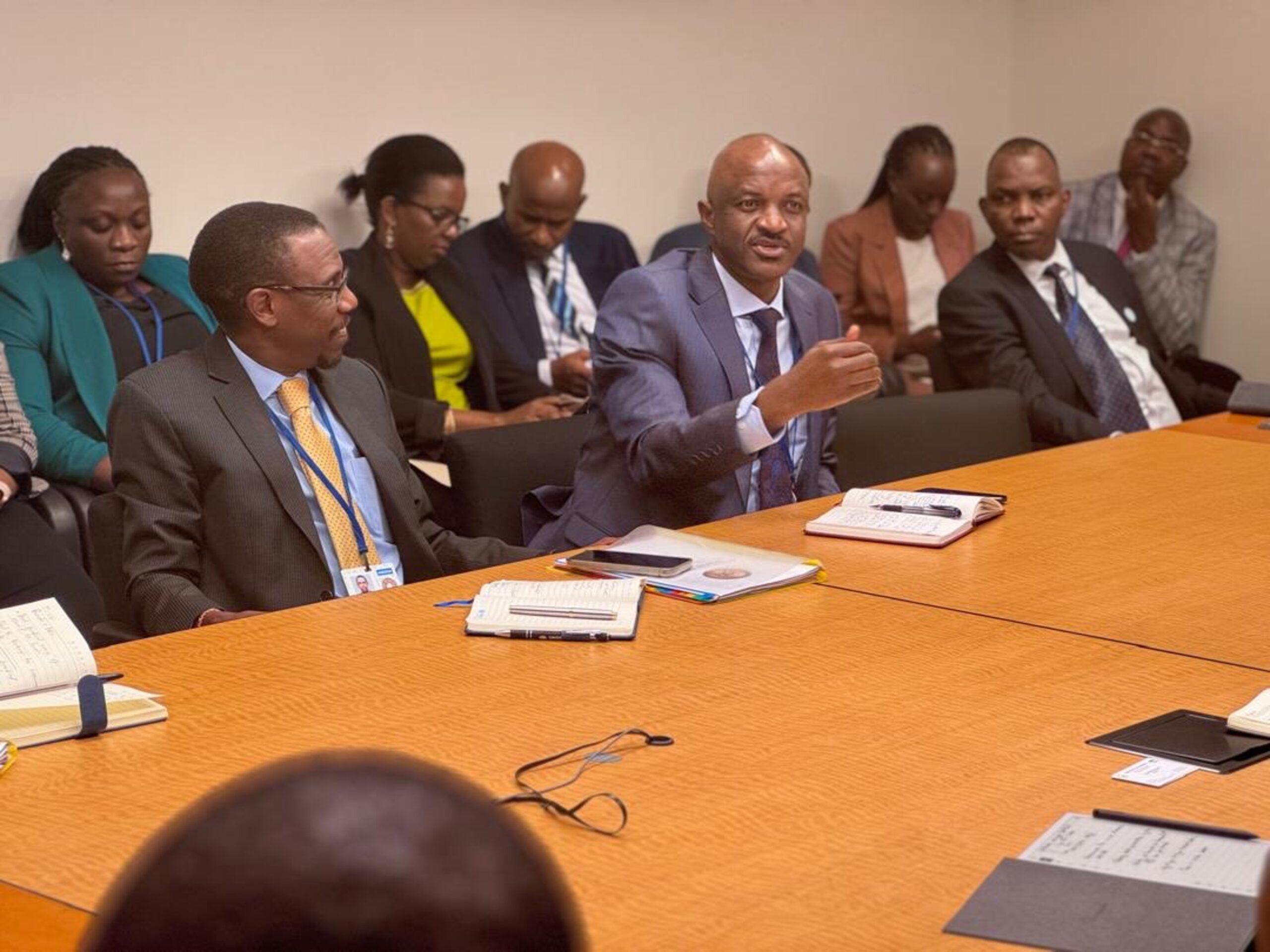
The Ugandan delegation also held engagements with Ugandans working at the IMF and World Bank to share updates on the country’s economic outlook and development trajectory.