


News
The Women’s Probono Initiative continues its efforts to empower young female law students in universities by equipping them with diverse life perspectives.

Through these engagements, students are sensitized on various aspects of personal and professional development, including maintaining personal hygiene, staying focused on achieving their goals, and accessing sexual and reproductive health and rights (SRHR) services, among other important issues.
The Brown Bag Discussions bring together experienced legal practitioners, activists, and public leaders to engage with students in informal conversations about navigating the legal profession and advancing women’s rights.
WPI works to promote access to justice for women and girls in Uganda and contributes to ending violence and discrimination against all women and girls.
The organization utilizes legal tools to promote and protect women’s rights, serves as a knowledge hub for research and knowledge management on women’s rights, and provides free legal advice as well as strategic litigation on issues affecting women and girls.
Its mission is to advance gender justice by promoting the autonomy, voice, and influence of women and girls in legislation, policy, and practice.
As outlined in WPI’s Strategic Plan (2022–2026), the mentorship of young female law students is one of the organization’s key strategies for strengthening women’s leadership in the legal profession.
The mentorship program equips students with the skills, knowledge, and confidence necessary to challenge patriarchal systems and gender-based barriers that often limit women’s opportunities within legal practice.
WPI conducts these mentorship sessions in partnership with universities, including Cavendish University and the International University of East Africa (IUEA), where the organization has formalized collaboration through a Memorandum of Understanding to support the professional development of female law students.
The Brown Bag Discussions provide an interactive platform where students engage directly with accomplished women leaders who share their personal and professional experiences. Past sessions have hosted distinguished speakers such as Miria Matembe and Hon. Winnie Kiiza, among other prominent figures in Uganda’s legal and governance sectors.
Through these engagements, students gain valuable insights into career development, ethical leadership, overcoming gender-related challenges in professional spaces, and championing women’s rights within Uganda’s legal and policy frameworks.
By fostering dialogue between emerging female lawyers and experienced professionals, WPI aims to inspire a new generation of legal practitioners who will actively contribute to advancing gender justice and expanding access to justice for women and girls across Uganda.
During one of the Brown Bag Sessions held at Cavendish University, from a legal perspective, the Executive Director of the Female Lawyers Network, Dr. Joyce Nalunga, urged students to remain focused on their goals regardless of the circumstances they face. She encouraged them to dream big and not allow their surroundings to limit their ambitions.
She further challenged law students to be intentional about joining professional and strategic networks that can support their career growth, emphasizing that the legal profession is largely built on strong relationships.
Dr. Nalunga also cautioned against associating with individuals who exhibit negative energy, noting that such influences can demotivate them from achieving their aspirations.
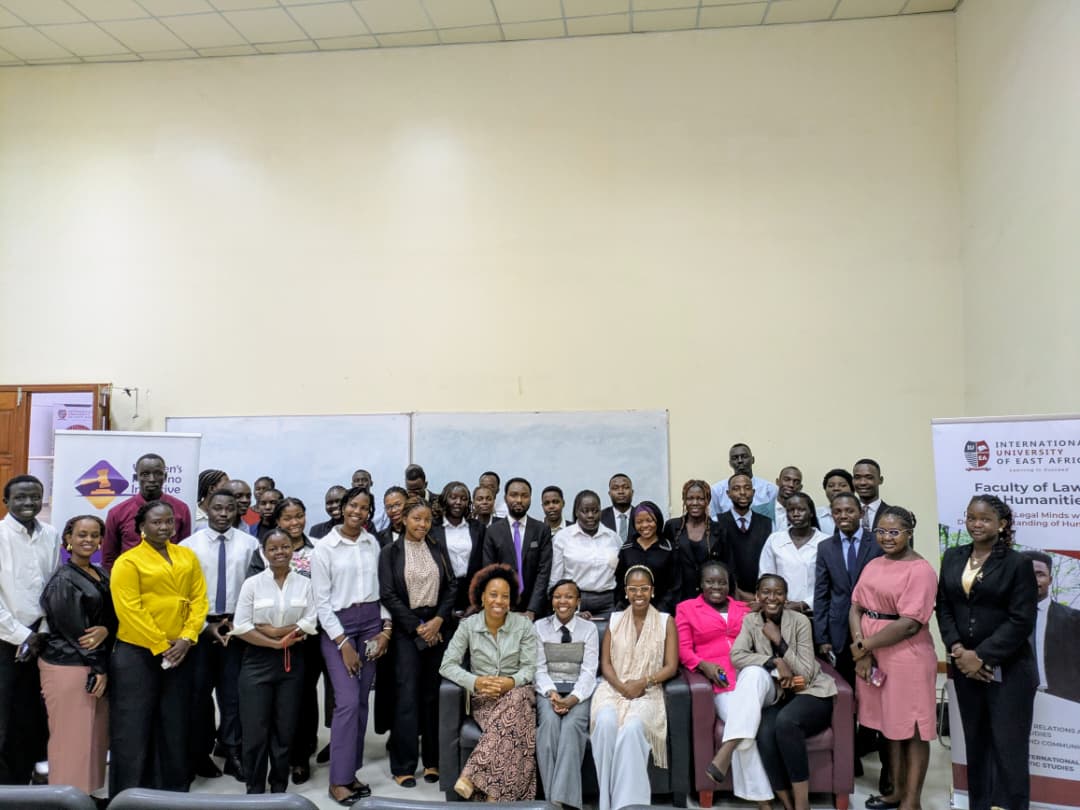
In another Brown Bag Discussion held at the International University of East Africa, participants explored the role of men and boys in promoting Sexual and Reproductive Health and Rights (SRHR) in Uganda.
Jordan Tumwesigye, a lawyer and Executive Director of Ngumokio Mentorship Program, advised men to make decisions that prioritize their own well-being rather than acting solely to impress women. He highlighted the importance of maintaining personal hygiene and accessing SRHR services for their own health before engaging in relationships.
He also expressed concern about the tendency of some men to focus on cleanliness and appearance primarily to attract women, emphasizing instead the need to empower men through open dialogue and peer engagement. Such discussions, he noted, can help men better understand their roles and responsibilities regarding their health and personal choices.
Additionally, during a similar discussion held on 16 March 2026 at the International University of East Africa Catherine Mutesi Mugabo, Associate Civic Advisory at CivSource Africa, delivered a presentation on the theme “Give to Gain: Philanthropy as a Catalyst for Women’s Rights.”
She examined how intentional giving can drive structural change, strengthen feminist movements, and advance long-term gender justice for women and girls.