


Gender
The untold stories of women suffering due to election violations

As Uganda heads toward the 2026 general elections, the country continues to prepare for the final decision-making day when citizens will elect their leaders at various levels. So far, Uganda has completed the voter registration and verification process, as well as the party nomination stage, and is currently in the campaign period.
Over time, the elections have become a do or die with citizens being denied of their right to participate in elective politics or even vote. For many women participating in the elections, they report physical and cyber harassment which often times results in trauma, and health complications.
This has been evident during both general elections and by-elections that have taken place in the country. A notable example is the Kawempe North by-election, which was held to fill the parliamentary seat left vacant after the death of Hon. Mohammed Sseggirinya who died in January 2025.
The candidates contesting for the position included Hajjat Faridah Nambi of the NRM, Elias Luyimbaazi Nalukoola of the National Unity Platform (NUP), Sadat Mukiibi (Kalifah Aganaga) of the FDC, Henry Mubiru Kasacca of the DP, Ismail Musiitwa of the PPP, and Hanifah Karadi Murerwa, an independent candidate, among others.
Out of the six candidates wanting to represent Kawempe North, it quickly became evident that it was a two-horse race between Faridah Nambi of the NRM and Elias Luyimbazi Nalukoola of the National Unity Platform, who eventually won the election.
But before this, the campaign period which lasted almost three months was marked by frequent conflict and chaos between supporters of the NRM and the NUP.
The two groups often clashed head-to-head at various campaign events, and whenever one side held a rally, supporters of the opposing party would sometimes launch physical attacks resulting in injury and bloodshed.
A striking example of this violence occurred in Komamboga, Kwata zone in Kawempe division where women mobilizers campaigning for Nambi were brutally attacked by NUP supporters both during rallies and while they moved around the community to solicit support for their candidate.
Nakazibwe Rukia was one of Hajjat Nambi’s mobilizers. After she lost her husband, Nakazibwe became the sole provider for their seven children.
During the rally held on Kwata village on in one of the days in February, a big group of opposition party supporters descended upon them and beat them thoroughly. As she tried to flee, she fell and broke her left leg . She also sustained head injuries.

She has lived with these complications ever since then yet the income she used to get from the poultry she was keeping is no more since she has spent all her capital in medical bills which have not yet yielded because she is still suffering the pain. In addition, Lukia lost her job of sweeping along Komambogo road which was being paid by KCCA because of the pain she feels in her leg.
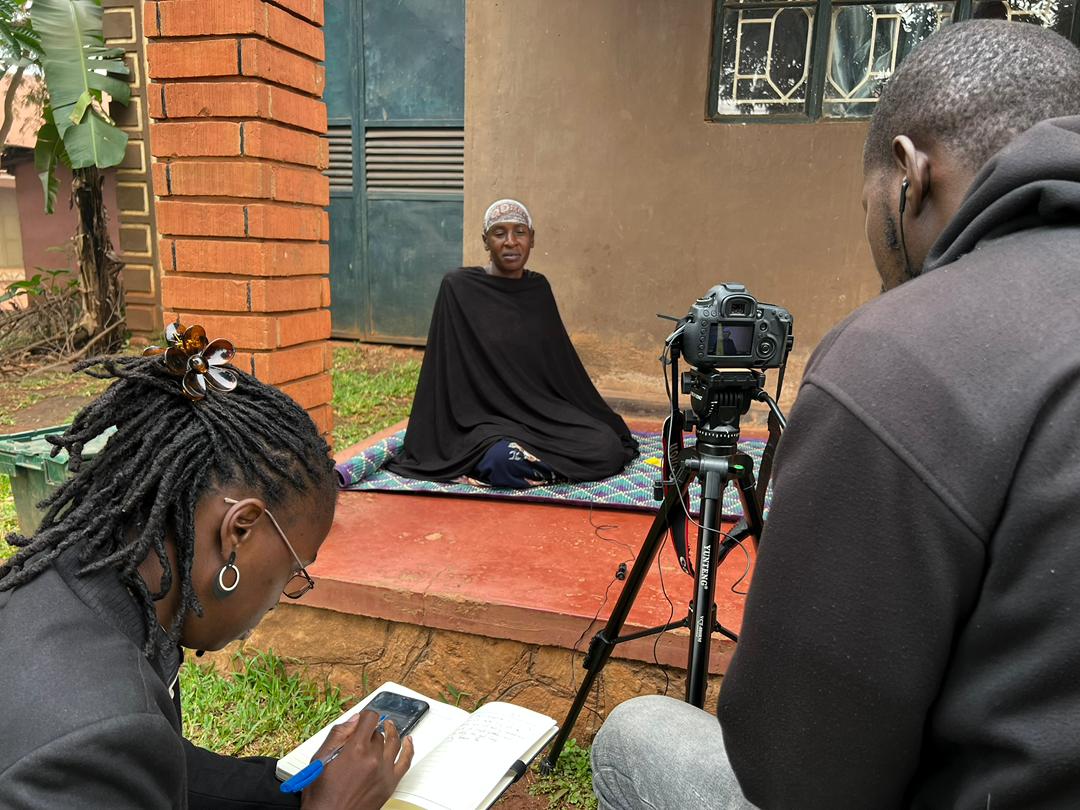
“I have spent all the money I had including my capital in medical bills yet I still need more, my children are no longer going to school since iam the only one talking care of them, look at where politics is taking me.” She breaks

Another election conflict survivor Namaganda Grace, a resident of Komamboga and a senior NRM mobliser. Grace explains the pain she is going through as she broke her left leg during the attack of the supporters of one of their opponents.
She notes that as she was running for her life, she fell in a pit and got a fracture in her knee athing that has disturbed her ever since the election period.
Grace expresses her worry for failure to get money to pay for the recommended check ups yet she is a widow of one girl and 7 orphans she is talking care of.

Josephine Nkinzi was also a mobiliser for the NRM candidate Nambi. Josephine narrates the trauma she is going through due to the continuous attacks she faced during the moblisation process.
Josephina notes that she started the moblisation process with hope that she would earn from her efforts, but she was disappointed to see that she was only rewarded with attacks and assaults from the people who doesnot believe in NRM party.
“I can no longer move freely in my own village because people keep throwing words at me claiming that my team and I are keeping the yellow government which is mistreating them in power.
“I can no longer visit my mother during day, only to come at night when people cant see me” She explains.
Josephine further expresses dissatisfaction over the disappointment from their candidate Nambi who never looked back to them when she lost in the elections.
“When we tried to call her to complain about what we are going through, she did not pick our calls. She did not even call back. The only time she answered, she told me never to bother her again but call Elias Nalukoola since he is the one we voted for. I hate elections.” She broke

Despite narrating their painful experiences, none of these women have had their stories told in the media, nor have they approached any party offices to forward their complaints or seek help. This is largely because they lack access to the media, fear visiting party offices, and, most importantly, are afraid of the potential consequences of reporting incidents to the police.
However, Shamim Wookobera, a board representative of little persons at National Union of Persons with Disabilities (NUDIPU), says that the challenges go beyond physical, mental, and cyber harassment. Women with disabilities often suffer silently during elections, particularly at polling stations where they are not provided with specific arrangements or designated locations to line up and vote safely for their preferred candidates.
Wookobera emphasized that the Electoral Commission (EC) should plan inclusively for people with disabilities, to create a conducive environment that allows them to participate in the electoral process and have a voice in selecting the country’s leaders.
Dr. Richard Ssewakiryanga, the Executive Director at Centre for Basic Research (observed that women, in particular, are often invested in the election process. Many dedicate a lot of time to mobilization and campaigning that they neglect their families and personal safety which makes them vulnerable.
Dr. Ssewakiryanga told us that he has observed women moving across different areas campaigning for their candidates, often spending entire days in risky situations. He acknowledged that women have the right to freely exercise their right to participate in choosing their leaders, but he cautioned them to prioritize their personal safety.
Similarly, the Police spokesperson Kituuma Rusoke said that most of the violations and conflicts are caused by supporters of the candidates as they mobilise for them.
“Many of those responsible for these incidents start conflicts and then run back into their groups to avoid being identified. We therefore warn anyone planning to engage in such acts during the election period to be aware that the police will not hesitate to arrest and detain them in order to ensure a peaceful election process and protect people’s lives.” Kituuma cautioned.
According to the Electoral Commission of Uganda (EC), as of 2020, there were 17,658,527 registered voters nationwide. Of these, 9,218,963 were female representing 52.21, while 8,439,564 were male, accounting for 47.79% of the total registered voters.
The production of this story was made possible through financial support from the Finnish Foundation for Media and Development (VIKES), in partnership with the Uganda Media Women’s Association (UMWA)”