


Religion
Should Choir Members Be Paid? Bishop Bonsu Calls for Balance Between Devotion and Justice

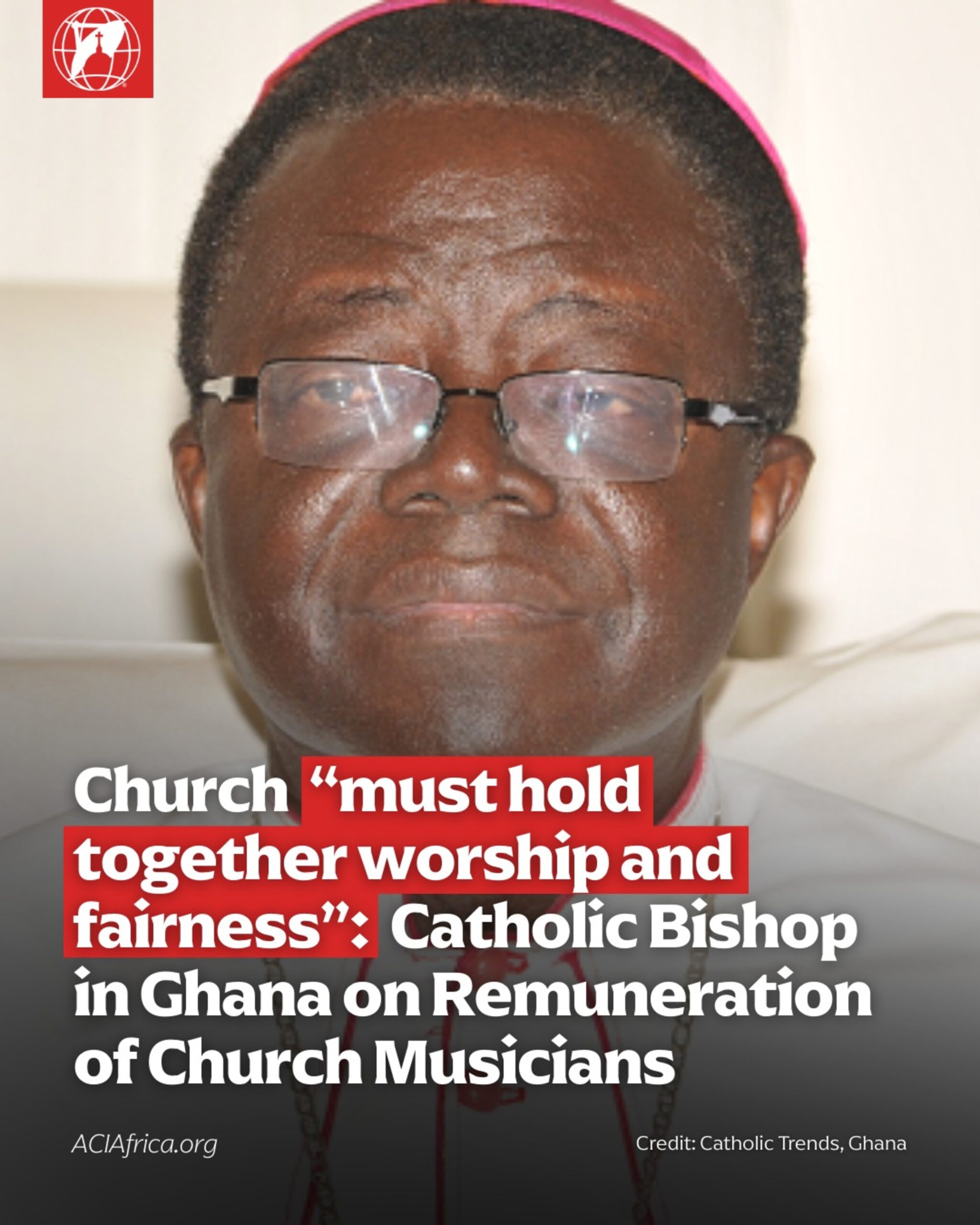
Bishop Joseph Osei-Bonsu has weighed in on the debate over remunerating liturgical musicians, saying the Church must balance worship with fairness in compensating those who serve through music, ensuring they are neither exploited nor treated merely as commercial assets.
The Bishop Emeritus of Ghana’s Konongo-Mampong Diocese was responding to a question from Fr. Bonaventure Quaidoo of the Archdiocese of Accra, who asked whether the Church should pay those who sing during the liturgy or whether their services should be offered freely.
In a response published on Saturday, March 7, Bishop Osei-Bonsu said the Church should recognize the distinction between musicians who offer their talents primarily as acts of worship and those who, while making significant contributions to the Church’s musical life, also require fair remuneration.
“Both approaches are valid when rooted in devotion and justice,” he said, adding that “the Church must hold together worship and fairness so that musicians are neither exploited nor commercialized.”
“When devotion and justice remain in balance, sacred music uplifts worship, enriches the assembly, and directs hearts toward God. It reminds us that music in the Church is both gift and service—freely offered yet responsibly sustained—always for the glory of God,” he explained.
Bishop Osei-Bonsu further noted that the question of whether Church musicians should receive remuneration or offer their services freely is both pastoral and theological, touching on the dignity of labour, the nature of ministry, and the Church’s responsibility toward those who serve it.
He said striking a balance between devotion and justice is essential for preserving the sacredness of music while respecting the contributions of those who provide it.
The Ghanaian Catholic bishop also highlighted the importance of music in the liturgy, citing the Second Vatican Council’s Sacrosanctum Concilium, which describes sacred music as “a treasure of inestimable value” and states that it is “more holy in proportion as it is more closely connected with the liturgical action.”
According to Bishop Osei-Bonsu, this teaching underscores that sacred music is not merely decorative but an integral part of worship, directing hearts toward God, supporting the proclamation of the Word, and fostering the active participation of the faithful.
He emphasized that Church musicians are more than performers; they exercise a genuine ministry. Their work requires preparation, rehearsal, and fidelity to liturgical norms, as well as a deep understanding of the liturgical calendar, the needs of the assembly, and the theological meaning of the texts they sing or accompany.
The Bishop Emeritus stressed that whether paid or serving voluntarily, Church musicians make an important contribution to the life of worship.
Bishop Osei-Bonsu also noted that throughout history many musicians have offered their gifts to the Church freely, motivated primarily by devotion. At the same time, he affirmed the Church’s longstanding recognition of the legitimacy of remunerating musicians whose professional work sustains liturgical life.
“The labourer deserves his wages,” he said, referencing the Gospel of St. Luke and the First Letter of St. Paul to Timothy, adding that professional training, rehearsal, and leadership in sacred music constitute real labour that deserves recognition.
He cautioned, however, that remuneration should never overshadow the spiritual nature of the ministry. A free offering is virtuous only when it is genuinely voluntary, while compensation should be understood as an act of justice rather than a fee for worship.
The bishop stressed that the Church must avoid exploiting goodwill while preserving devotion. Volunteers who freely offer their talents should be honoured and encouraged, while professional musicians whose livelihood depends on their service must receive fair support.
Bishop Osei-Bonsu added that two extremes must be avoided: sacred music should never be reduced to a commercial performance detached from prayer, and dedication should not be assumed without recognition or support.
A balanced approach, he said, “recognizes the legitimacy of both voluntary and professional service. Volunteers contribute out of love for God, while professionals help maintain consistent standards of excellence and leadership.”
He recommended that parishes and dioceses establish clear guidelines regarding stipends, training, and pastoral support to ensure fairness while preserving the devotional character of the ministry.