


Environment
Scientists and Journalists Collaborate to Improve Reporting on Crop Pests and Diseases in Uganda

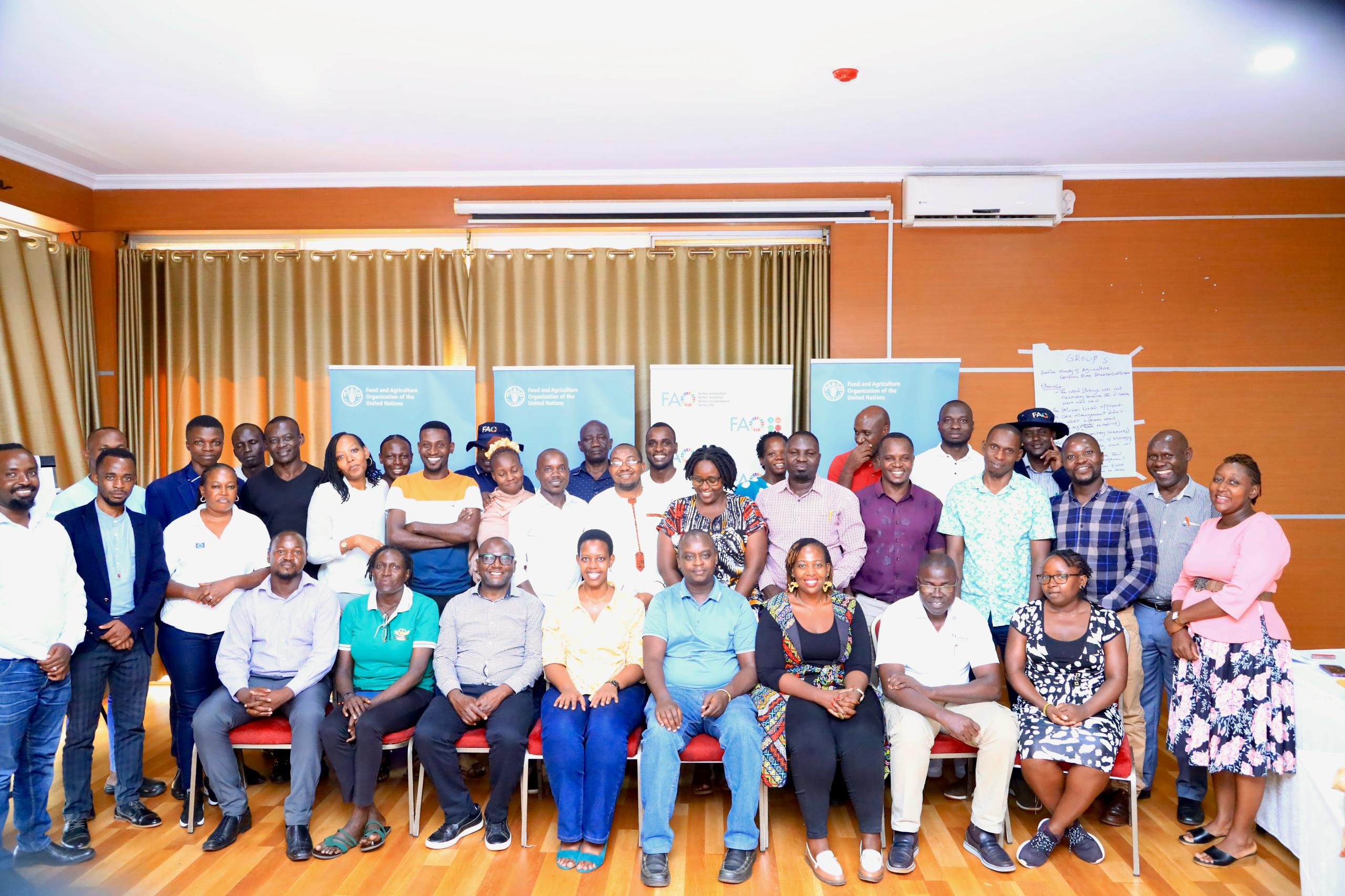
Scientists and journalists have joined forces to enhance the accuracy and effectiveness of reporting on crop pests and diseases in Uganda. This collaboration was formalized during a training workshop organized by the Food and Agriculture Organization (FAO) and the Ministry of Agriculture, Animal Industry, and Fisheries (MAAIF) at Source of the Nile Hotel in Jinja.
During the workshop, scientists and journalists defined their respective roles and clarified complex scientific terms that journalists often struggle to explain in their reports. Scientists also addressed common inaccuracies in reporting on disease outbreaks, equipping journalists with the knowledge necessary to disseminate precise and timely information. The participants emphasized that accurate reporting is critical for early warning and rapid response efforts, including early detection, timely intervention, and the prevention of further spread.
Ugandan farmers contend with a variety of crop pests and diseases, including leaf miners, stem borers, armyworms, bean pests, and fruit flies. Additionally, diseases such as coffee wilt, banana bacterial wilt, and cassava brown streak disease significantly impact staple crops like coffee, bananas, and cassava across different regions of the country.
As the rainy season begins and farmers prepare for planting, scientists caution that achieving a successful harvest is often more challenging than anticipated. Fred Muzira, a Senior Agricultural Inspector at MAAIF, explained that while farmers ideally expect to prepare their fields, plant seeds, and yield a safe and profitable harvest, nature presents unforeseen challenges.
“A few weeks after planting, farmers will encounter ‘uninvited guests’—pests, diseases, and weeds—that disrupt the ideal farming process,” Muzira noted. He added that a significant portion of a farmer’s time is spent managing these threats.
Muzira emphasized the importance of Integrated Pest Management (IPM) as a sustainable approach to pest and disease control. However, he observed that many farmers rely heavily on chemical pesticides, sometimes even applying them preemptively before the season begins.
Under the IPM framework, farmers should adopt proactive measures at the start of the season—or even beforehand—to strengthen crops against pests and diseases. Muzira highlighted two key components of IPM: host plant resistance and cultural practices.
“Host plant resistance involves selecting and planting disease-resistant crop varieties at the outset of the season. Cultural practices, such as proper field preparation and crop rotation, are also essential,” he explained. “For instance, growing the same crop repeatedly on the same land can lead to a buildup of soil-borne bacterial infections. In such cases, rotating to a different crop is the best management strategy.”
Some farmers also employ biological control methods, such as using fruit fly traps that leverage sex pheromones. “These traps contain substances that mimic female fly pheromones, attracting and capturing hundreds of male flies. This method utilizes semiochemicals, which modify natural scents to enhance pest control,” Muzira elaborated.
Muzira noted that while farmers may not eliminate chemical pesticide use, adopting IPM practices allows them to reduce their reliance on pesticides. “By selecting the right products, implementing preventive measures, choosing resistant crop varieties, and properly monitoring pest levels, farmers can significantly decrease the frequency of pesticide application—from 4 sprays per season to just 2,” he explained. “The goal of IPM is to integrate different pest management strategies to minimize pesticide dependence”
Dr. Ivan Lukanda, a Senior Lecturer in the Department of Journalism and Communication at Makerere University, stressed the mutual dependence of scientists and journalists in effectively informing the public. He pointed out that research confined to academic shelves is of little use unless communicated to the public. Therefore, scientists must trust journalists to disseminate their findings accurately and effectively.
Agatha Ayebazibwe, Head of Media at FAO, also underscored the need for strong collaboration between scientists and journalists. She emphasized that journalists play a critical role in ensuring that farmers, policymakers, and the public receive timely and accurate information, particularly during pest and disease outbreaks. However, she urged journalists to exercise patience, as scientists may require time to compile and verify their comments to prevent unnecessary public panic.
This partnership between scientists and journalists represents a significant step toward improving agricultural reporting, ultimately contributing to better pest and disease management for Ugandan farmers.