


News
Remembering Janani Luwum: Museveni Reflects on Idi Amin’s Rule and Leadership Failures

President Yoweri Kaguta Museveni today led Ugandans in commemorating the 49th anniversary of the martyrdom of Janani Luwum in Kitgum District, honoring his courage, faith and ultimate sacrifice during the brutal regime of former dictator Idi Amin.
The President was accompanied by the First Lady and Minister of Education and Sports, Janet Kataaha Museveni.

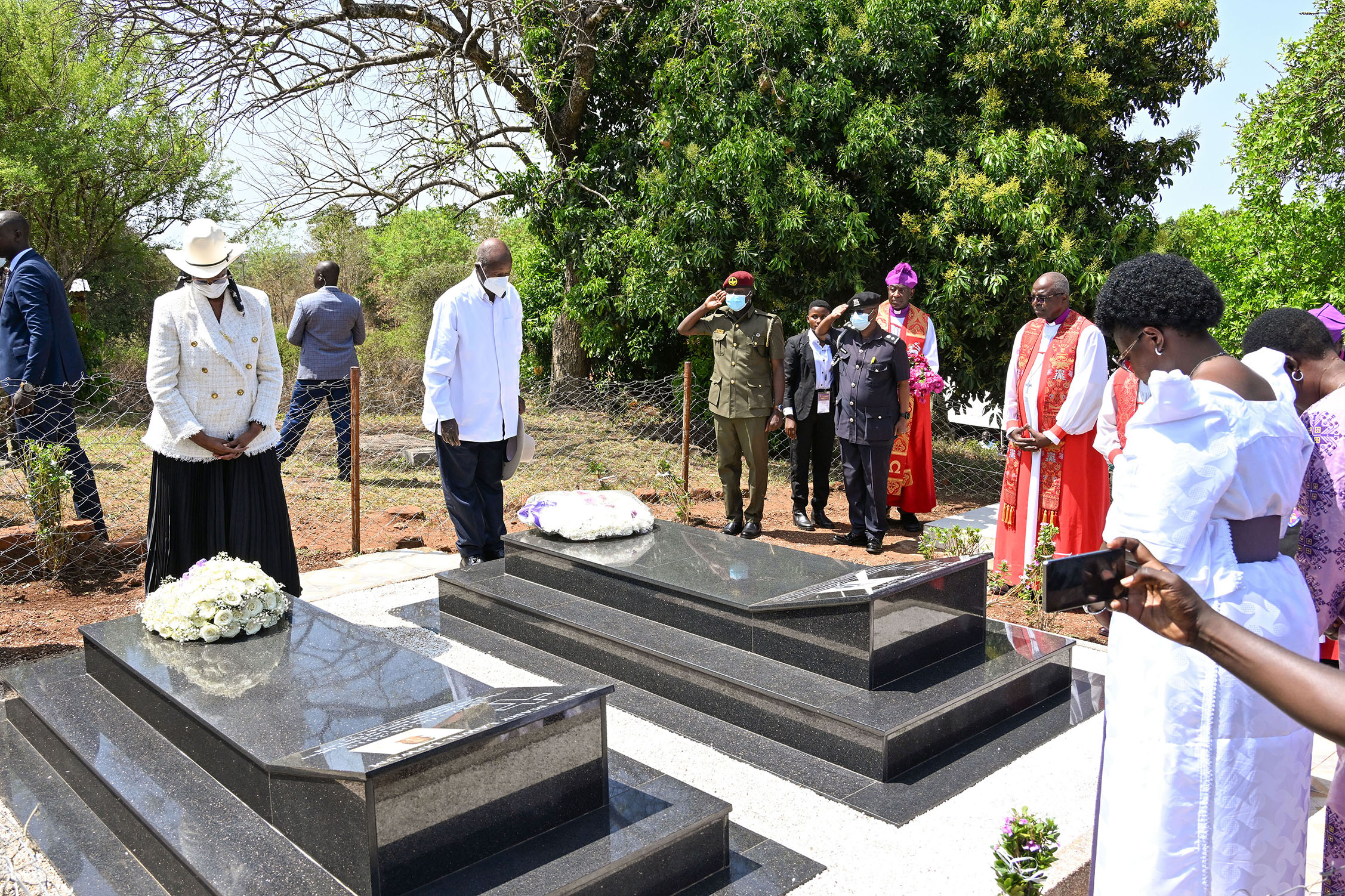
The national event, held under the theme “Anchored in Christ for Stability, Peace and Unity” (Ephesians 2:14–17), began with a main church service. The President and the First Lady later laid wreaths at Wii-Gweng in Mucwini, the final resting place of Archbishop Luwum and his wife, Mama Mary Lawil Luwum.
St. Janani Luwum Day, observed every February 16, honors the Archbishop who was killed in 1977 after openly condemning human rights abuses, arbitrary arrests and killings under Amin’s regime.
In his address, President Museveni said Ugandans had gathered to honor Luwum’s unwavering faith and courage, and to reflect on the dangers of authoritarian rule. He described Amin’s first mistake as imposing himself on the country through military force in the 1971 coup.
President Museveni, who was then serving as a research assistant in the President’s Office, recalled that on January 25, 1971, he learned of the coup while preparing to go to work from his residence in Kireka. After confirming that Amin had taken power, he contacted student leaders and resolved not to accept the new regime. Within two days, he withdrew money from the bank and left for Tanzania with four others to begin organizing resistance.

“Amin ruled me only for a few hours,” President Museveni said, emphasizing that leaders should not impose themselves on citizens but instead persuade them through service delivery and good example. Citing biblical teaching, he said leaders must let their good deeds shine before others and warned that any leader who relies on intimidation repeats the same mistake Amin made.
The President described Amin’s second major mistake as using killings to silence opponents. While acknowledging Uganda’s history of armed struggle, he said he has consistently rejected assassinations and attacks on individuals outside the battlefield. He recalled rejecting a proposal by some fighters to assassinate then–army commander Oyite Ojok at his home, insisting that such actions would amount to cowardice. Even in conflict, he said, both the cause and the methods must be just.
President Museveni said he remains satisfied that those responsible for atrocities during Amin’s regime ultimately failed in their mission, noting that the sacrifices of leaders such as Luwum and Ben Kiwanuka were not in vain.
Turning to development, the President thanked the people of Northern Uganda for their electoral support, attributing it to sustained government efforts in infrastructure and service delivery. He cited the extension of electricity beyond Lira, improved roads, schools, health centers and clean water systems that helped eliminate diseases such as guinea worm.

According to the President, national efforts to transition households into the money economy have significantly reduced poverty levels, with programs such as the Parish Development Model targeting households still outside the cash economy. He also pledged to address reports of cattle rustling in East Acholi, saying the matter would receive his personal attention.
The President fulfilled his Shs60 million pledge to the priests of Kitgum Diocese.
Archbishop Janani Luwum remains one of Uganda’s most prominent religious martyrs. After presenting a protest letter condemning state violence under Amin’s government, he was arrested and later killed in 1977. Nearly five decades later, the commemoration serves both as a remembrance of sacrifice and a reflection on leadership — anchored, as the theme declared, in unity, peace and stability.
On his part, the Archbishop of the Church of Uganda, Stephen Samuel Kaziimba Mugalu, welcomed pilgrims and believers from across the country.
“As the Church of Uganda, we continue to celebrate the life and martyrdom of Archbishop Janani Luwum,” he said.
The Archbishop highlighted institutions that bear Luwum’s name, including churches and schools in Kampala and beyond, emphasizing that the celebration “is not just about an individual; it is about faith, justice and the values he preached.”
He expressed gratitude for the public recognition of Luwum’s legacy, noting that the anniversary provides an opportunity for Ugandans to reflect on the life of the Christian martyr and remain anchored in Christ for unity, stability and peace.
The Bishop of Lango Diocese, Rt. Rev. Dr. Alfred Olwa, commended the organizing committee for a job well done.
“As we approach the golden jubilee of Luwum’s martyrdom, may this commemoration renew us in courage, unity and service,” he said.
Hon. Rose Lilly Akello, Minister of State for Ethics and Integrity, welcomed participants and congratulated President Museveni on his recent electoral victory. She praised Northern Uganda for overwhelmingly supporting the President in the recent election.
“Let us protect the peace and prosperity ushered in by the NRM covenant,” she said.
Hon. Akello also highlighted plans to develop Janani Luwum’s site into an international pilgrimage center.
“The family of Archbishop Luwum offered the land, a draft master plan has been drawn, and projects for a primary school, hospital and administrative block are underway. We are hopeful that by the next commemoration, construction will have commenced,” she said.
She acknowledged the collaborative efforts of church leaders, local committees and congregants, as well as evangelical missionaries from Nebbi, Lango and other regions who preached during the celebrations.

Hon. Lillian Aber, Minister of State for Disaster Preparedness, Relief and Refugees and Kitgum District Woman MP, praised Luwum’s enduring moral and spiritual influence, particularly among the Acholi people. She highlighted infrastructure and development initiatives that have improved the region.
“For over two decades, the region suffered insurgencies under the LRA, but because of your steadfast commitment to peace and stability, we now enjoy peace and security,” she said.
Hon. Aber noted that the commmemoration celebrated not only Archbishop Luwum’s religious contributions but also his moral courage, faith and advocacy for justice.
“The unwavering faith and moral conviction of Janani Luwum continue to guide the Acholi people and all Ugandans,” she concluded.
The day’s events included prayers, sermons and community participation from across Uganda, reaffirming the enduring spiritual and civic influence of Archbishop Janani Luwum. The event was also attended by ministers, Members of Parliament, religious and cultural leaders, and other dignitaries.