


International News
One Billion Meals Wasted Daily as World Faces Food Waste Crisis

As the world marks International Day of Zero Waste, countries continue to grapple with a growing waste crisis driven by unsustainable production and consumption patterns, with humanity generating up to 2.3 billion tonnes of municipal solid waste every year.
This year’s International Day of Zero Waste shines a spotlight on food waste, examining what people eat, what they discard, and how reducing waste can support environmental protection, economic stability, stronger community resilience, and more efficient food systems.
The observance was established following a 2022 resolution by the United Nations General Assembly, led by Türkiye alongside 105 Member States. Since 2023, the day has been marked annually on March 30, jointly facilitated by the United Nations Environment Programme and UN-Habitat to raise awareness and promote zero-waste initiatives at all levels.
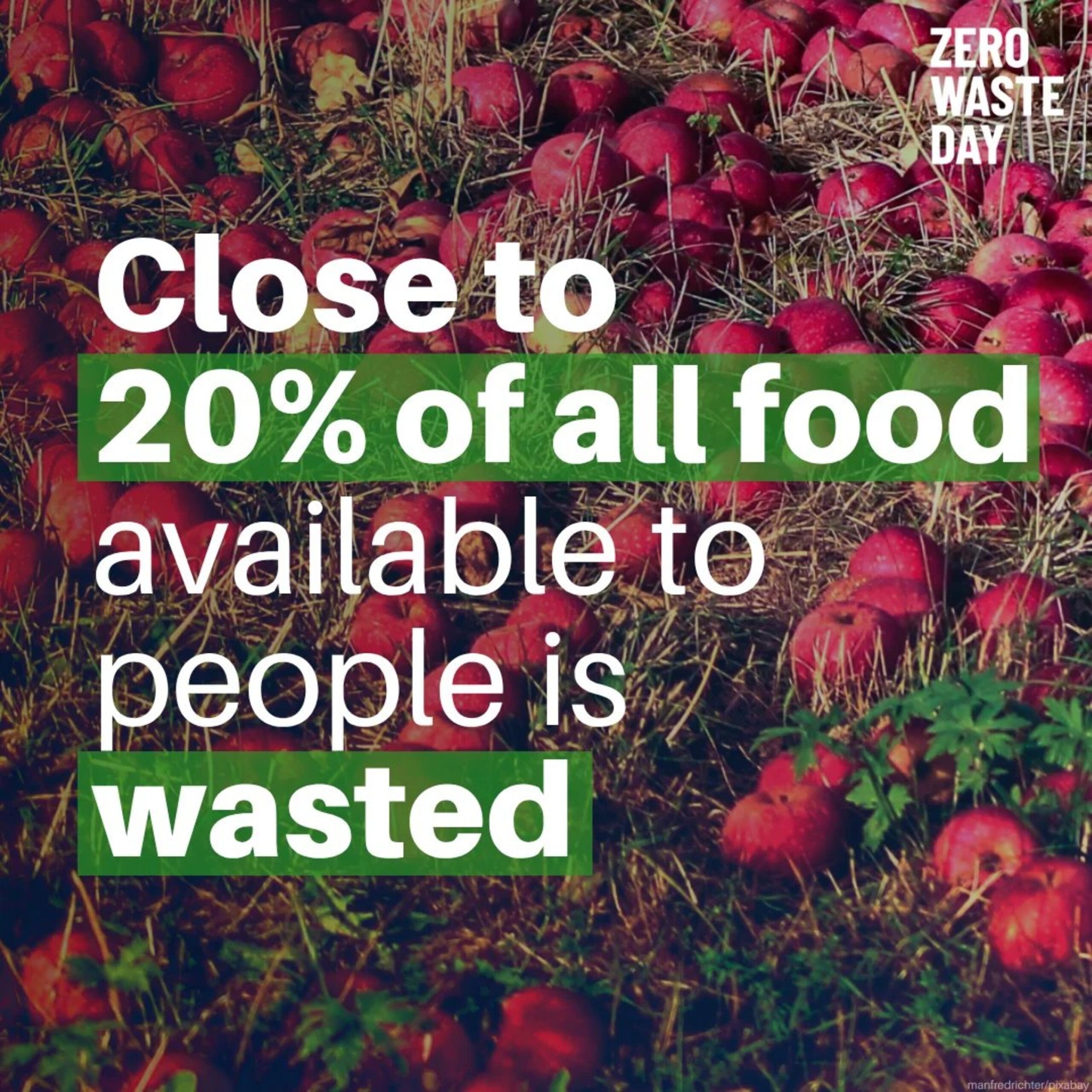
Despite widespread hunger affecting hundreds of millions globally, more than one billion tonnes of food are wasted each year, equivalent to 19 percent of food available to consumers. An additional 13 percent is lost after harvest but before reaching retail markets. Households account for the largest share of food waste at 60 percent, followed by food service at 28 percent and retail at 12 percent. Globally, households alone waste over one billion meals every day.
In a message marking the day, Emine Erdoğan emphasised the human cost of waste. “In every wasted bite lies the right of someone whose life depends on it. It also holds the echoes of the cries of those suffering from hunger and thirst in war zones,” she said.
António Guterres called for urgent action across all sectors. He urged consumers to adopt mindful shopping and cooking habits, while encouraging retailers to improve efficiency and redistribute surplus food. He also highlighted the role of cities in scaling organic waste separation and governments in embedding food waste reduction into climate and biodiversity strategies.
Food loss and waste are also a major driver of climate change, contributing between 8 and 10 percent of global greenhouse gas emissions—nearly five times that of the aviation industry. Food waste alone is responsible for up to 14 percent of global methane emissions, a gas significantly more potent than carbon dioxide over a 20-year period.
According to Inger Andersen, the economic cost of food waste stands at approximately US$1 trillion annually. She noted that reducing waste not only delivers climate benefits but also strengthens food security and supports a transition to a circular, zero-emissions economy.
Highlighting urban solutions, Anacláudia Rossbach said cities that integrate food systems, water services, and waste management are demonstrating practical, scalable approaches. These include recovering surplus food, reducing water loss, and converting organic waste into compost or energy, efforts that also create jobs and support livelihoods, particularly for informal workers and waste pickers.
Global commemorations included a high-level event at UN Headquarters in New York, organized by UNEP and UN-Habitat in partnership with Türkiye and the Zero Waste Foundation. The event focused on innovative strategies to reduce waste across food value chains.
In a related development, UNEP and UN Tourism launched the “Recipe of Change” initiative to mobilize tourism businesses and supply-chain actors to measure and reduce food waste. Fourteen major companies, including Hilton, Accor, and Radisson, have joined the effort, collectively representing US$56.5 billion in annual revenue and serving around 600 million guests each year.
Events were also held across the globe, including in Istanbul, Osaka, Brasilia, Geneva, and Nairobi, among other locations, engaging communities, policymakers, and young people in discussions on tackling food waste.
Ahead of the day, 20 cities were named in the inaugural “20 Cities Towards Zero Waste” initiative, led by the Secretary-General’s Advisory Board on Zero Waste with support from UNEP and UN-Habitat. The initiative recognizes cities advancing innovative, circular approaches to waste management.
Some countries are already demonstrating progress. Japan reduced food loss and waste by 53 percent between 2000 and 2022, while the United Kingdom has achieved a 22 percent reduction since 2007 through strong collaboration between the public and private sectors.
However, many countries including several G20 economies, still lack reliable data to track progress towards halving food waste by 2030, highlighting a major gap in global action.
Through initiatives such as the Food Waste Breakthrough, launched at the UN Climate Change Conference (COP30), global efforts are underway to cut food waste by half by 2030, reduce methane emissions, and build more sustainable and resilient food systems.