The Government has announced plans to establish a High Court Division dedicated to environmental justice, in a move aimed at shifting environmental regulation from policy on paper to compliance in practice.
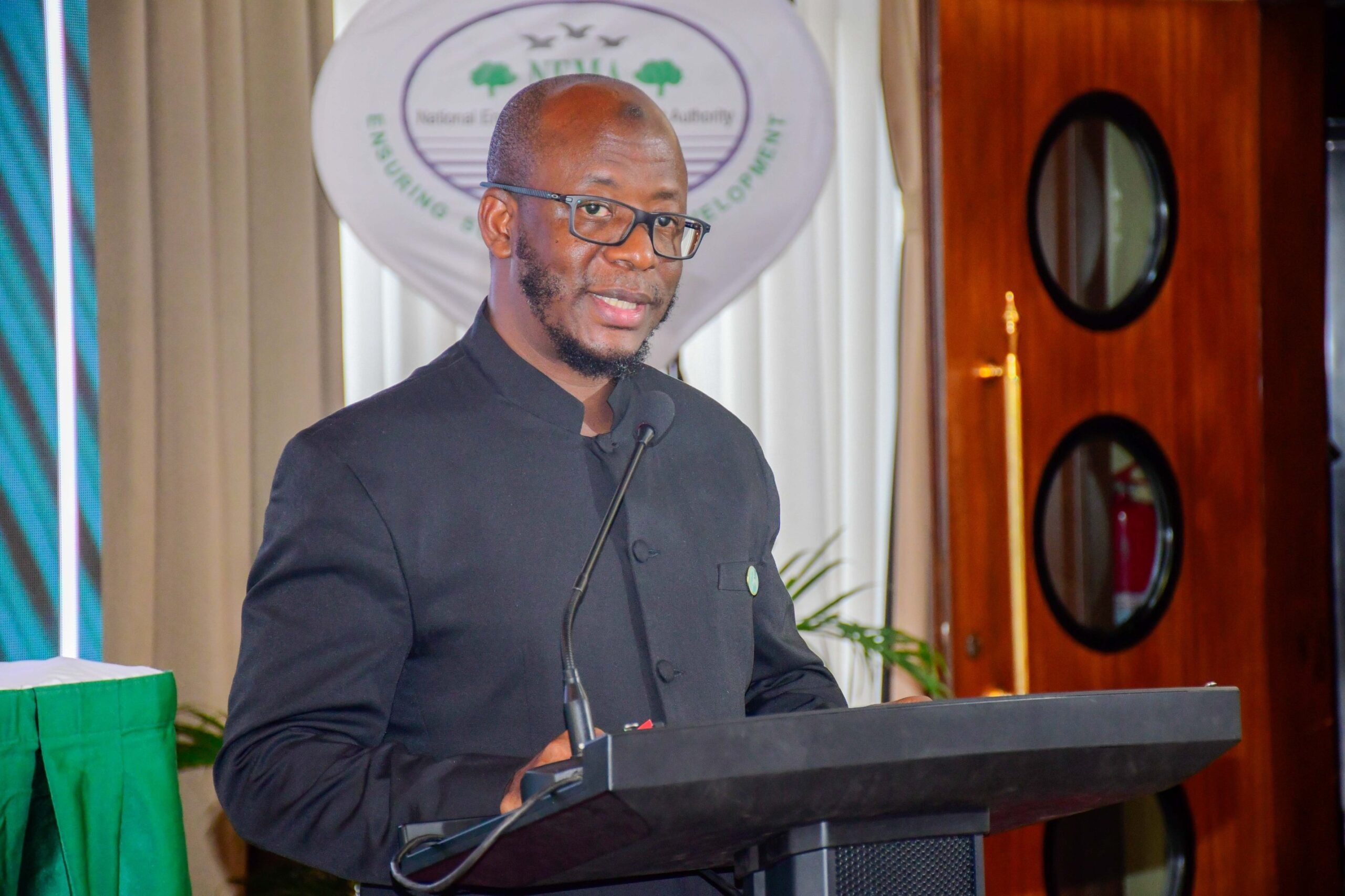
The development was revealed by Akankwasah Barirega (PhD), Executive Director of the National Environment Management Authority (NEMA), during the launch of the Authority’s Strategic Plan 2025/26–2029/30 and the Environment Donors’ Group Breakfast held on Thursday morning at the Sheraton Hotel.
Akankwasah noted that NEMA has an elaborate institutional framework for environmental management and has recently undergone a major transformation and restructuring to respond to current demands. He said this has contributed to a significant rise in environmental crime prosecution, from 69 cases in 2021 to over 600 cases annually as of 2025.
He explained that rapid population growth, urbanisation, industrialisation, and climate change are placing enormous pressure on Uganda’s ecosystems.
“Our population of 46 million people today is projected to exceed 70 million by 2040, and this will inevitably increase demand for land, water, energy, and infrastructure. The question, therefore, is not whether development will happen, because it will, but whether it will happen sustainably,” he said.
Despite these pressures, Akankwasah noted that Uganda has made significant progress in environmental management and conservation over the years, particularly through strengthening the governance framework and enacting legislation to protect the environment.
He also revealed that the Government has intensified national efforts in afforestation and reforestation. Programmes such as the national tree planting campaign, the “Running Out of Trees” initiative, and restoration efforts in degraded ecosystems are gaining momentum.
Millions of trees are planted annually across the country through public-private partnerships, community programmes, and landscape restoration initiatives.
“This has seen Uganda’s forest cover decline halted and reversed into a positive trajectory. In 2015, Uganda had only 9% of its land surface forested, we were almost running out of trees, as the programme name suggests. We’ve since reversed this trend, and now approximately 13% of our land surface is forested, which is extremely important for climate change mitigation and watershed protection,” he said.
On wildlife conservation, Akankwasah said Uganda remains one of Africa’s success stories, with significant recovery in wildlife populations.
“Mountain gorillas, for example, have recovered significantly, leading to an improvement in their International Union for Conservation of Nature (IUCN) classification from critically endangered to endangered. Uganda hosts more than half of this population. Key species such as elephants, buffalo, and antelopes have also shown strong recovery trends in protected areas. Uganda is now reintroducing rhinos in areas like Kidepo, among others,” he said.
He thanked development partners, particularly the European Union, for their continued support.
During the same meeting, Mr Kamugisha Godwin, Manager of Strategic Funding and Partnerships at NEMA, presented the Authority’s strategic priorities for the Financial Years 2025/26–2029/30.
The plan includes reducing degraded wetlands, increasing compliance to 85%, expanding environmental mainstreaming among lead agencies, enhancing farmer resilience to climate change, and reducing greenhouse gas emissions, among other targets.
Its implementation will cost UGX 295 billion, with UGX 270 billion already appropriated by the Government of Uganda, leaving a funding gap of UGX 24 billion.
For the FY2025/26 to 2029/30 period, NEMA will focus on five key areas: environmental governance and coordination; environmental quality and ecological integrity; environmental education, awareness, and mainstreaming; compliance with environmental laws and standards; and institutional systems and capacity.
Cross-cutting issues such as gender, climate change, innovation and ICT, disability, anti-corruption, and HIV/AIDS have been integrated into the plan. The Strategic Plan, launched at the Sheraton Hotel in Kampala, was attended by representatives from government, development partners, embassies, and non-governmental organisations.
Tremayne Stanton-Kennedy, Climate and Nature Lead at the British High Commission, noted that the launch marks an important first step, recalling that NEMA had been hosted at a recent meeting where environmental data was discussed.
“Uganda’s environment is critical to the country’s success, both for its people and the economy,” she said. She challenged NEMA and development partners to explore ways of creating value within the private sector, noting that the world can no longer rely on abundance.
“We are no longer at a point of abundance. Climate change is only going to make that constraint worse. So we want people to engage with us and listen to environmental and climate change champions,” she added.
Like this:
Like Loading...