


Politics
Museveni Calls for Patience on Salary Increments as He Concludes West Nile Campaign Tour

President Yoweri Kaguta Museveni has reaffirmed his government’s commitment to improving the welfare of public servants, including teachers, but emphasized that Uganda must first consolidate its development foundations before implementing further salary increases.
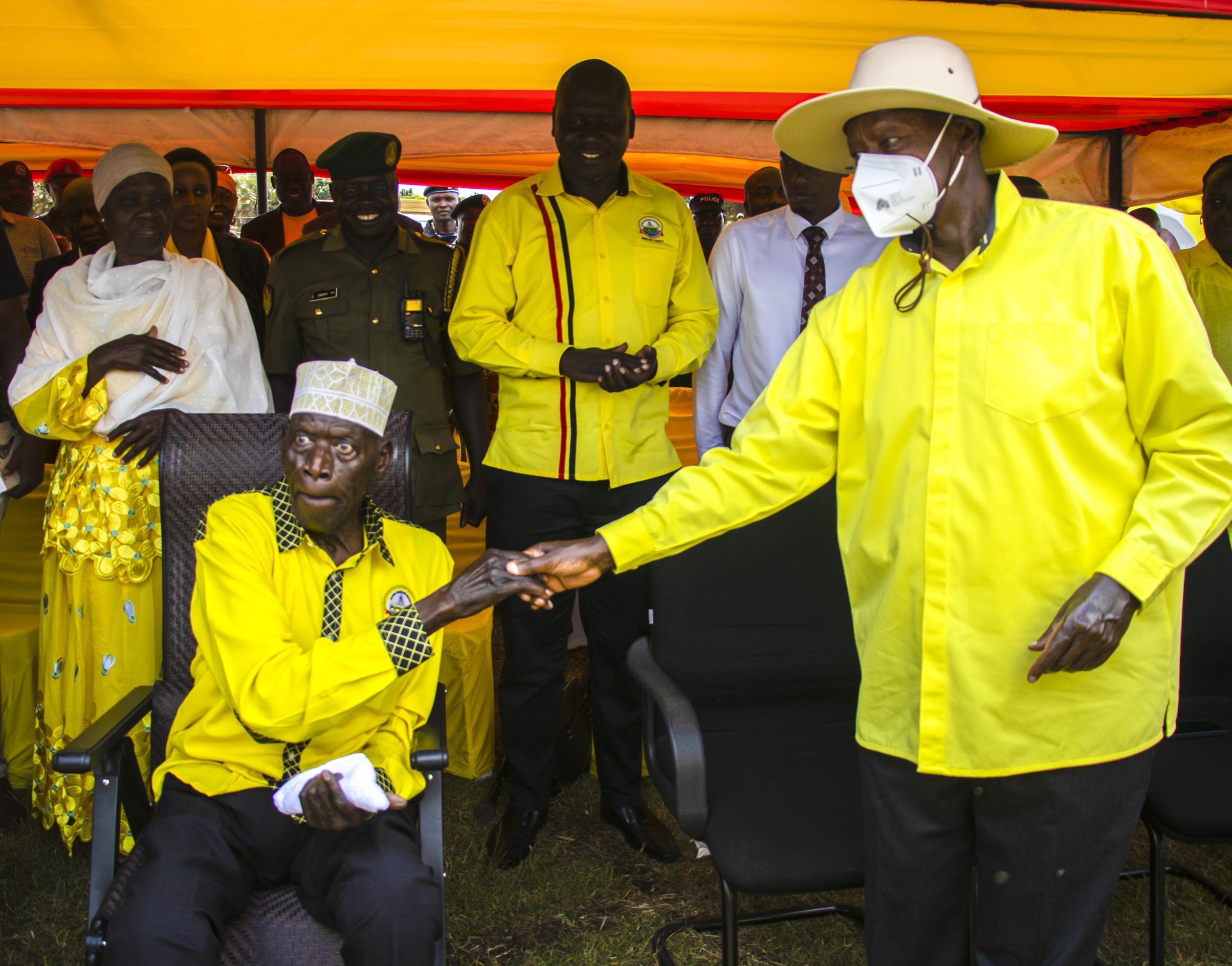
Speaking at a mega campaign rally at Paridi Stadium in Adjumani Town Council, the President, also the National Resistance Movement (NRM) presidential flagbearer for the 2026 elections, concluded his West Nile sub-region campaign trail with a call for patience and focus on national priorities that sustain peace and shared growth.
“We are not against the salaries of public servants, but first of all, peace, roads, electricity, health, and schools, then we can add on other things,” Museveni said.
He acknowledged the growing calls for salary increments, especially from striking teachers, but warned against short-term demands that could derail long-term national transformation.
“You have heard teachers striking, saying they want more salary. But is it correct to pay public servants more money when the roads are not done? Is it fair?” he asked, drawing loud applause from supporters.
The Adjumani rally marked the climax of Museveni’s campaign tour across the West Nile sub-region, during which he championed the NRM’s core campaign themes: peace, development, and wealth creation.
Flanked by top NRM officials, the President explained why government spending priorities remain anchored in infrastructure and social services. Drawing from his experience in the Uganda People’s Defence Forces (UPDF), he said officers had endured low pay for decades in the interest of national peace.
“We in the UPDF have been fighting for no pay or low pay for the last 55 years because we could not demand a high salary from our mother, Uganda, when she did not have enough,” he said.
He likened the national budget to a family purse that must first cater for essential needs like roads, electricity, and schools before other expenditures.
“The money of Uganda is public; it is in the budget. Roads must be tarmacked, and murram roads maintained because roads affect everyone,” he emphasized, pledging government intervention for key projects such as the Pakele–Pabo and Adjumani–Obongi roads.
Museveni noted that before NRM came to power, the tarmac road network ended at Gulu but now extends northwards to Atiak, Adjumani, Laropi, Moyo, Yumbe, and Koboko, opening up trade and improving security in border areas.
“Once we agree on what comes first, things will move. If there’s extra, we can do other things. But let’s do the minimum first, roads, electricity, schools, and hospitals,” he said.
Turning to peace and national unity, Museveni described Uganda’s current stability as “a historic achievement unmatched in over a century.”
“It’s the first time in 100 years that the whole of Uganda is peaceful,” he said, tracing the country’s history from the Bacwezi dynasty through post-independence turmoil to the relative calm under the NRM government.
He credited Uganda’s peace to the NRM’s inclusive ideology of patriotism and Pan-Africanism, which, he said, unites people beyond tribe or religion.
“That’s why we can win elections nationally in the first round,” Museveni remarked, adding that no single tribe or region could achieve that alone.
The President cited Uganda’s population growth as evidence of social development.
“In 1969 and 1970, the whole of Madi, Moyo, Adjumani, and Obongi, had only 90,000 people. Now Adjumani alone has 300,000. Why? Because of immunization. Children no longer die from preventable diseases,” he said.
He highlighted health and education as pillars of NRM’s social agenda but admitted challenges such as drug theft in government health facilities.
“The one problem in health is the stealing of drugs. I’m thinking of getting religiously inclined people to monitor this in the 1,400 health centers,” he revealed.
Reaffirming his commitment to free education, Museveni said every sub-county without a secondary school and every parish without a primary school would be catered for in the next term.
“Since 1996, I’ve been telling you about free education, but some people still charge money in schools. That’s why children drop out,” he said, citing the Presidential Skilling Hubs such as the Olia Hub in Adjumani that train school dropouts with practical skills.
Museveni also proposed a new initiative to support unemployed university graduates, saying the government would create a fund to assist those jobless for more than two years.
The President urged Ugandans to embrace household income programs like the Parish Development Model (PDM), which he described as the culmination of earlier poverty-alleviation initiatives including Entandikwa, NAADS, Operation Wealth Creation, Emyooga, and the Youth Livelihood Fund.
“Each year, we shall bring 100 million shillings per parish. In five years, that’s 500 million. If you borrow one million and pay back with a small interest, that money will stay in your parish and grow,” he explained.
Museveni also proposed introducing a Shs 15 million fund for local parish leaders and a separate initiative to support religious leaders in wealth creation.
Highlighting Uganda’s oil discovery as a major milestone, Museveni said production would begin next year, further boosting development funding.
“The British tried to find our oil from 1920 to 1956 but failed. When NRM came, we discovered it, and it will start flowing next year,” he said, noting that the government had achieved much even without oil revenues.
The rally drew senior NRM officials, ministers, and MPs from West Nile and neighboring regions, including Gen. Moses Ali, Second Deputy Prime Minister, and NRM Secretary General Rt. Hon. Richard Todwong, who described Museveni as “a symbol of stability and progress.”
“In President Museveni, we vote for hope, stability in our homes, the future of our children, good health, and progress,” Todwong said.
Hon. Hamson Obua, NRM Vice Chairperson for Northern Uganda, hailed the massive turnout and praised Museveni for transforming Adjumani “from a district that once produced refugees to one that now hosts them peacefully.”
“The Bible tells us of the ten lepers healed by Jesus, but only one came back to say thank you. The turnout today shows that West Nile has come to say thank you, for the peace and transformation you brought,” Obua said.
Mr. Akuku Charles, NRM Chairperson for Adjumani District, pledged full support for Museveni’s re-election and requested more tractors to boost agricultural productivity.
“Your Excellency, the people of Adjumani are fully behind you. We ask for more tractors to increase land under cultivation and improve livelihoods,” Akuku said.