


Environment
Mourning Jane Goodall: A Global Woman Whose Roots Grew Deep in Uganda

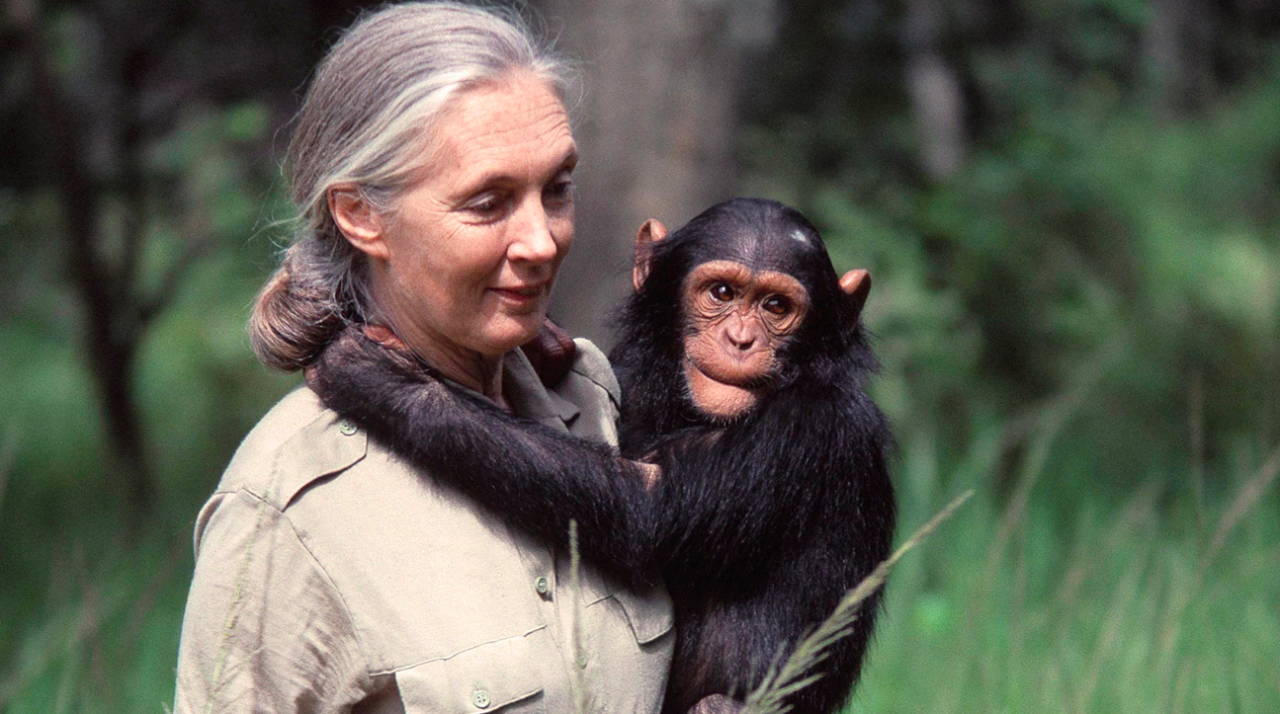
The forest has fallen silent. Dr. Jane Goodall, considered the world’s foremost expert on chimpanzees, and the woman who made these animals famous and humans slightly embarrassed about their own behaviour, has swung off the branch of life at 91, leaving us staring at the empty canopy. If there is a forest in heaven, she is surely perched there right now, socializing with angels and reminding them that bananas are for sharing.
Death has a very strange sense of humour. It snatches away those who make life livable and leaves behind the toxic crowd who still think a tree is best celebrated as timber; and that fellow human beings must be mistreated. Death caught up with Dr. Goodall in the US on part of her speaking tour. In Uganda, the news of her passing has landed with the weight of a falling muvule tree. To say we are heartbroken, to me, is a huge understatement.
Woman of Simplicity
Dr. Goodall has studied the social and family interactions of wild chimpanzees for more than 60 years! For decades, her Jane Goodall Institute Uganda has worked with communities, the National Environment Management Authority (NEMA), and schools to remind us that forests are not just timber yards, chimpanzees are not just bush-meat, and wetlands are not dumping grounds for kaveera or boda boda used spare parts. She gave us ‘Roots & Shoots’, that cheerful little army of children planting seedlings with the stubborn hope that the trees would outlive them, and hopefully outlive the ugly decisions of many politicians.
Her genius was disarmingly simple. While the rest of us were busy categorising animals into “wild meat” or “zoo things,” the chimpanzist looked into their eyes and saw cousins with families, tempers, love lives, and very strong opinions about who gets the last fruit. She named them Flo, David Greybeard, and Goliath as if she were introducing us to cousins at a family reunion.
Her style of conservation was tender. She looked at chimpanzees not as wild or specimens but as beings with names, moods, and reputations. If she had come to my home, I know she would have parted me on the back for naming my own family of dogs: Vida, Lupe, Troy, and Bianca. She would have understood the tears I shed when their two colleagues Luna and Gaddafi, my loyal companions, bowed out a few months ago after a misfortune struck. That was Jane’s gift: she validated grief for animals as real, as necessary, as human grief.
NEMA Mourns
Her Institute’s work in Greater Bunyoro rang alarm bells about forest loss and chimpanzee habitat destruction, warnings that landed directly on NEMA’s desk. She never shied from speaking the truth, and in doing so she pushed environmental regulators to sharpen their teeth. NEMA found in her a friendly but firm aunt who reminded us that environmental permits must not be reduced to mere ink on paper – they are promises to nature itself.
Speaking on the loss, Dr. Barirega Akankwasah, the NEMA Executive Director, said: “We share the grief as conservationists. The passing of Dr. Jane Goodall is not just the loss of a global primatologist but a personal wound for Uganda’s conservation family. She was a true chimpanzee defender who gave voice to creatures that cannot attend press conferences or write petitions, yet whose survival is tied to our very existence. Through the Jane Goodall Institute and her work with communities, she reminded us that enforcing the law is not enough. We must also inspire compassion. Today we mourn her, but we also rededicate ourselves to keeping her vision alive in Uganda’s environment space.”
Her Loss is Painfully Personal
I first met Dr. Goodall at a national environment event in Masindi, and I confess I liked her immediately. She arrived with that calm, grandmotherly aura that could silence even the most possessed kadodi dancer mid-way. By the time she finished talking about chimpanzees with the tenderness of a mother introducing her children, I was already converted into a lifelong admirer.
Dr. Goodall reminds me so much of my own mother – Kathleen Namawejje. Had Kathleen lived to October 1, 2025, she would have been 92 years old – just a year older than Dr. Goodall. I sometimes imagine that if Jane had grown up in Nsanvu village, where my mother was laid to rest 15 years ago, the two of them might have played Kwepena together, laughing and dodging the ball with the same energy they later poured into life. In fact, I always dreamed that if Dr. Goodall ever visited NEMA House again, I would persuade her to accept the name Namawejje, in memory of my mother. That is why her death feels painfully personal to me, as though I have lost another mother.
Yet even in her sternness, Jane carried humour like a secret torch. She once said that when you lose hope, you might as well pack up and move to Mars. And hearing her say that, you believed her. Now she has left us, and for a moment, it feels as though hope itself has slipped out the back door.
Uganda and Goodall
Uganda will remember Dr. Jane Goodall not as a distant scientist, but as a grandmother of conservation whose fingerprints are on every sapling ‘Roots & Shoots’ has planted, every chimpanzee corridor defended, and every child who looks at a tree and sees a friend, not firewood or charcoal.
The pain of losing her is sharp, like a hoe cutting into stubborn murram. It makes you want to weep, and laugh through the tears, because Dr. Goodall would not have wanted us to drown in sorrow. She would have wanted us to act, and to keep planting, keep protecting, and keep fighting for the environment.
Goodbye Jane
May you swing among the eternal branches, where the canopy never thins and the chimpanzees never fear human beings. And may Uganda, with NEMA at the forefront, honour your memory not just in speeches but in every tree we save, every animal we nurture, every wetland we guard, and every child we inspire.
Mr. Lubuulwa is the Senior Public Relations Officer at NEMA.