


Health
Journalists Urged to Champion Responsible Reporting on Access to Safe Abortion Services

Often, the term abortion is surrounded by misinformation. This misinformation has, in many cases, led women to seek unsafe abortions from unskilled health workers, resulting in long-term health complications.
Because many women lack accurate information about abortion, they hold differing and sometimes incorrect understandings of the subject. Some believe that abortion is entirely illegal and fear that seeking services at health facilities may lead to self-reporting or legal consequences.
Others fear stigma, harassment, or judgment from midwives and other health workers at health centers. Additionally, some women lack the financial means to access post-abortion care, among other reasons.
Research shows that both married and unmarried women, particularly those aged 20–24, are more likely to engage in unsafe abortions due to various challenges and limited alternatives. Furthermore, over the past 15 years, studies indicate that out of every ten women admitted to labor suites, three are teenagers or adolescents.
Many of these young women are unable to continue with their pregnancies, which increases their likelihood of resorting to unsafe abortion practices.
Research also indicates that Uganda records nearly 300,000 induced abortions annually, representing about 54 abortions per 1,000 women of reproductive age.
This high rate is closely linked to the low uptake of modern family planning methods. Out of every 100 women, only 38 are able to access modern family planning services, which contributes significantly to unintended pregnancies and unsafe abortions.
However, many women who undergo unsafe abortions do not seek post-abortion care. Reasons include harassment and stigma from unprofessional health workers, lack of knowledge about the importance of post-abortion services, and fear of stigma within their communities, among others.
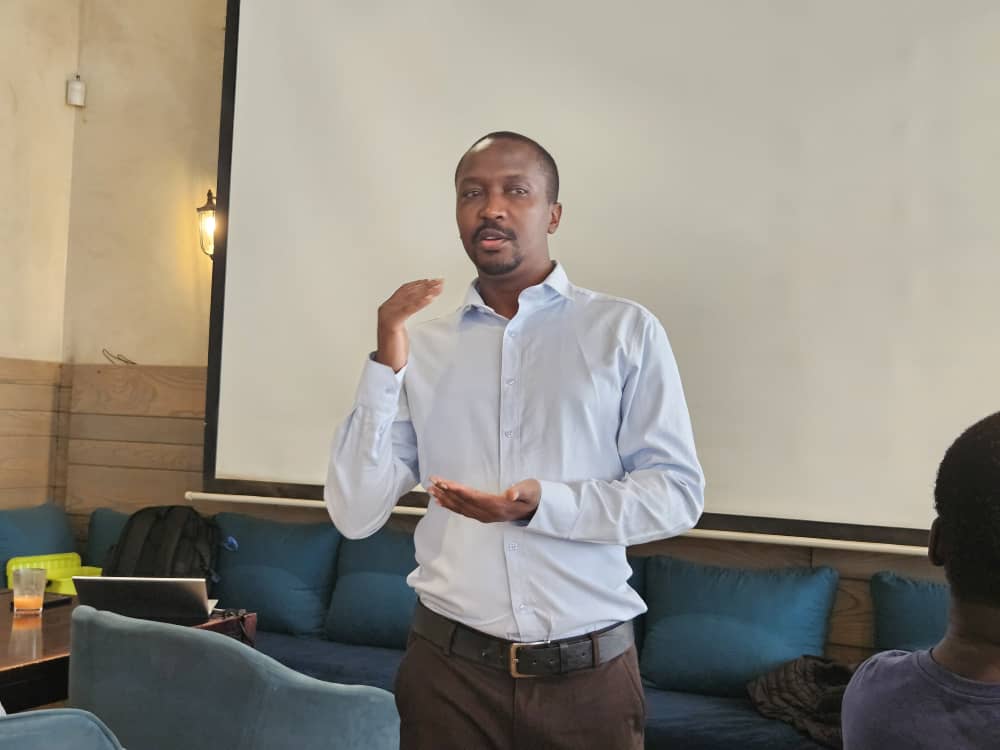
According to Dr. Simon Peter Kayondo, a gynecologist in Uganda, post-abortion care is mandatory for every woman whenever it is needed. He emphasized the importance of ensuring that all women have access to these services in order to save lives. “Stopping abortion is not the goal; stopping complications and saving lives is the goal,” he stressed.
During a media cafe organised by the Health Journalists Network Uganda (HEJNU) in Kampala, Dr. Kayondo noted that the large amount of money the country spends each year treating complications from unsafe abortions could instead be invested in building well-equipped hospitals that would contribute significantly to the health and well-being of the population.
He further challenged journalists to help shape public perception and to destigmatize negative attitudes toward individuals who have undergone abortion within their communities.
He explained that this can be achieved by providing accurate information and countering misinformation about abortion, which would encourage more women to feel safe and confident accessing lawful and safe abortion services.
According to the law, abortion is permitted under certain circumstances, including when a woman’s health is at risk, in cases of defilement where a young girl’s body cannot safely sustain a pregnancy, and in instances of rape by a stranger, among others.
However, Uganda’s Penal Code Act (Cap. 120) contains several provisions that define abortion-related offences and their corresponding penalties. Section 141 criminalizes attempts to procure an abortion, while Section 142 prescribes punishment for a pregnant woman who attempts to procure her own miscarriage. Section 143 addresses the supply of drugs or instruments intended to cause an unlawful miscarriage, and Section 212 concerns the killing of an unborn child during delivery.
Under these provisions, a person who unlawfully causes an abortion faces up to 14 years’ imprisonment, a woman who terminates her own pregnancy may be imprisoned for up to 7 years, and any person who supplies drugs or materials for an unlawful abortion faces up to 3 years’ imprisonment.
However, the law provides exceptions where the procedure is performed to save the life of the mother and, more ambiguously, may allow exceptions in cases of rape or incest. The absence of clear statutory or judicial guidance on these exceptions has resulted in inconsistent interpretation and enforcement of the law.
The President for HEJNU Ester Nakkazi explained that this cafe is an introduction of more cafes they are to organise during the project both in Kampala and upcountry with an intention of making journalists understand a bigger pictures of issues such as reproductive justice, abortion care, srhr, and much more, with hope that by the end of the project, journalists will be having enough knowledge on how to report responsively on such issues.
The President of HEJNU, Ester Nakkazi, explained that this café serves as an introduction to a series of cafés that will be organized throughout the project, both in Kampala and upcountry.

She added that the aim is to help journalists gain a broader understanding of issues such as reproductive justice, abortion care, SRHR, and related topics. She added that by the end of the project, journalists are expected to have sufficient knowledge and skills to report on these issues responsibly.