


Environment
Investing in Nature and Climate Could Save Millions of Lives, Boost Global GDP

The most comprehensive assessment of the global environment ever conducted has found that investing in a stable climate, healthy ecosystems, and a pollution-free planet could generate trillions of dollars in additional global GDP, prevent millions of deaths, and lift hundreds of millions of people out of poverty and hunger.
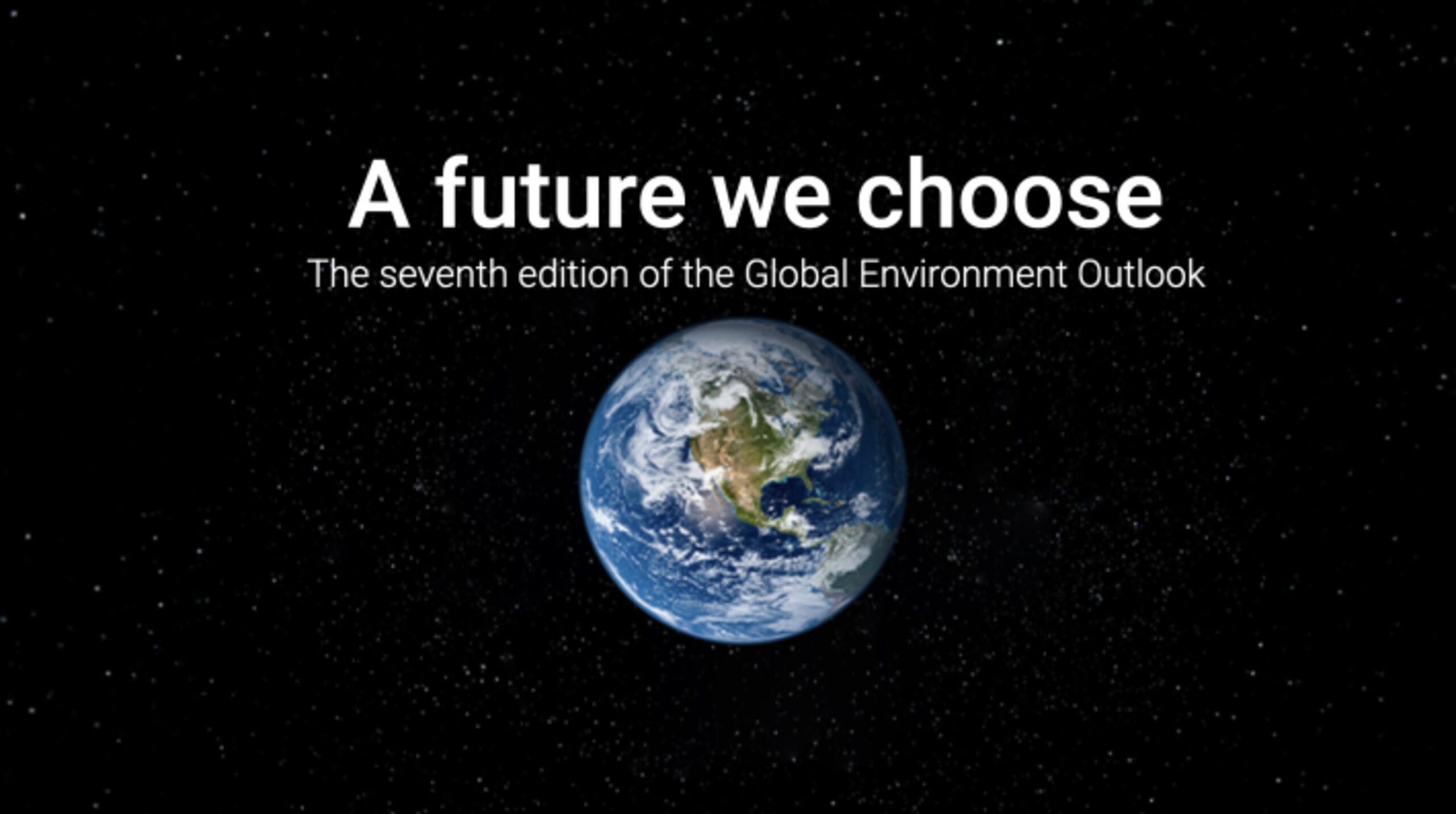
The Global Environment Outlook, Seventh Edition: A Future We Choose (GEO-7), released during the seventh session of the UN Environment Assembly in Nairobi, draws on analysis from 287 multidisciplinary scientists across 82 countries.
According to the United Nations Environment Programme (UNEP), climate change, biodiversity loss, land degradation, desertification, and pollution are already inflicting trillions of dollars in annual damages. Staying on the current development trajectory will only deepen these crises.
However, adopting whole-of-society and whole-of-government approaches to transform systems of economy and finance, materials and waste, energy, food, and the environment could generate global macroeconomic benefits of up to US$20 trillion per year by 2070, with gains continuing to grow thereafter.
A crucial enabler of this shift is moving beyond GDP to indicators that capture human and natural capital, incentivizing circular economies, clean energy transitions, sustainable agriculture, ecosystem restoration and other long-term investments in planetary health.
“The Global Environment Outlook lays out a simple choice for humanity: continue down the road to a future devastated by climate change, dwindling nature, degraded land and polluted air, or change direction to secure a healthy planet, healthy people and healthy economies. This is no choice at all,” said Inger Andersen, UNEP Executive Director.
She added that the world has already made significant progress, from global agreements on climate, biodiversity, land, pollution and waste, to real-world advancements such as the expansion of renewable energy, wider protected-area coverage and the phasing out of toxic chemicals. She urged nations to build on this momentum and “drive their economies towards a thriving, sustainable future.”
The report outlines two possible transformation pathways: one emphasizing behavioural change to reduce material consumption, and another relying more heavily on technological innovation and efficiency.
Under both pathways, global macroeconomic benefits begin to emerge around 2050, reach US$20 trillion annually by 2070, and could surge to US$100 trillion per year in the longer term. The models project reduced exposure to climate risks, lower biodiversity loss by 2030, and an expansion of natural lands.
By 2050, the transformations could prevent nine million premature deaths, largely through reduced air pollution, lift nearly 200 million people out of undernourishment, and pull more than 100 million people out of extreme poverty.
Achieving net-zero emissions and ensuring adequate biodiversity conservation and restoration will require annual investments of about US$8 trillion through 2050, far less than the cost of inaction.
- Economy and finance: Move beyond GDP to comprehensive inclusive wealth metrics; price positive and negative externalities to value goods correctly; and phase out and repurpose subsidies, taxes and incentives that result in negative impacts on nature.
- Materials and waste: Implement circular product design, transparency and traceability of products, components and materials; shift investments to circular and regenerative business models; and shift consumption patterns towards circularity through changing mindsets.
- Energy: Decarbonize the energy supply; increase energy efficiency; back social and environmental sustainability in critical mineral value chains; and address energy access and energy poverty.
- Food systems: Shift to healthy and sustainable diets; enhance circularity and production efficiency; and reduce food loss and waste.
- Environment: Accelerate conservation and restoration of biodiversity and ecosystems; back climate adaptation and resilience, leaning on Nature-based Solutions; and implement climate mitigation strategies.
The report emphasizes that these solutions must be co-developed and co-implemented across sectors and levels of society. Incorporating Indigenous and Local Knowledge is vital to ensuring just transitions that protect both environmental integrity and human well-being.
It calls on governments, multilateral institutions, the private sector, civil society, academia and Indigenous Peoples to recognize the urgency of the environmental crisis, build on progress achieved, and collaborate to design and implement integrated policies and actions for a more sustainable future.
Drawing on multiple data sources, GEO-7 highlights the accelerating impacts of business-as-usual development.
Greenhouse gas emissions have risen by 1.5 per cent annually since 1990, reaching a record high in 2024 and intensifying climate impacts. Extreme weather events linked to climate change cost an estimated US$143 billion each year over the past two decades.
Between 20 and 40 per cent of global land is degraded, affecting more than three billion people, while one million of the planet’s estimated eight million species face extinction.
Pollution accounts for nine million deaths annually. In 2019 alone, air pollution caused health-related economic losses of US$8.1 trillion, about 6.1 per cent of global GDP.
If the world continues on its current path, environmental decline will accelerate. Global temperatures are likely to rise more than 1.5°C above pre-industrial levels by the early 2030s and surpass 2°C by the 2040s. Climate change could cut 4 per cent from global GDP by 2050 and 20 per cent by 2100.
Land degradation is also expected to worsen, with the world losing fertile land equivalent to the size of Colombia or Ethiopia each year, even as climate change threatens to reduce per-capita food availability by 3.4 per cent by 2050.
Plastic pollution, already at 8 billion tonnes, will continue to accumulate, further raising the estimated US$1.5 trillion in annual health-related losses linked to toxic chemicals in plastics.