


News
FAO Karamoja Vaccination Campaign Hits 75% Coverage Amid Push to Eliminate PPR by 2030

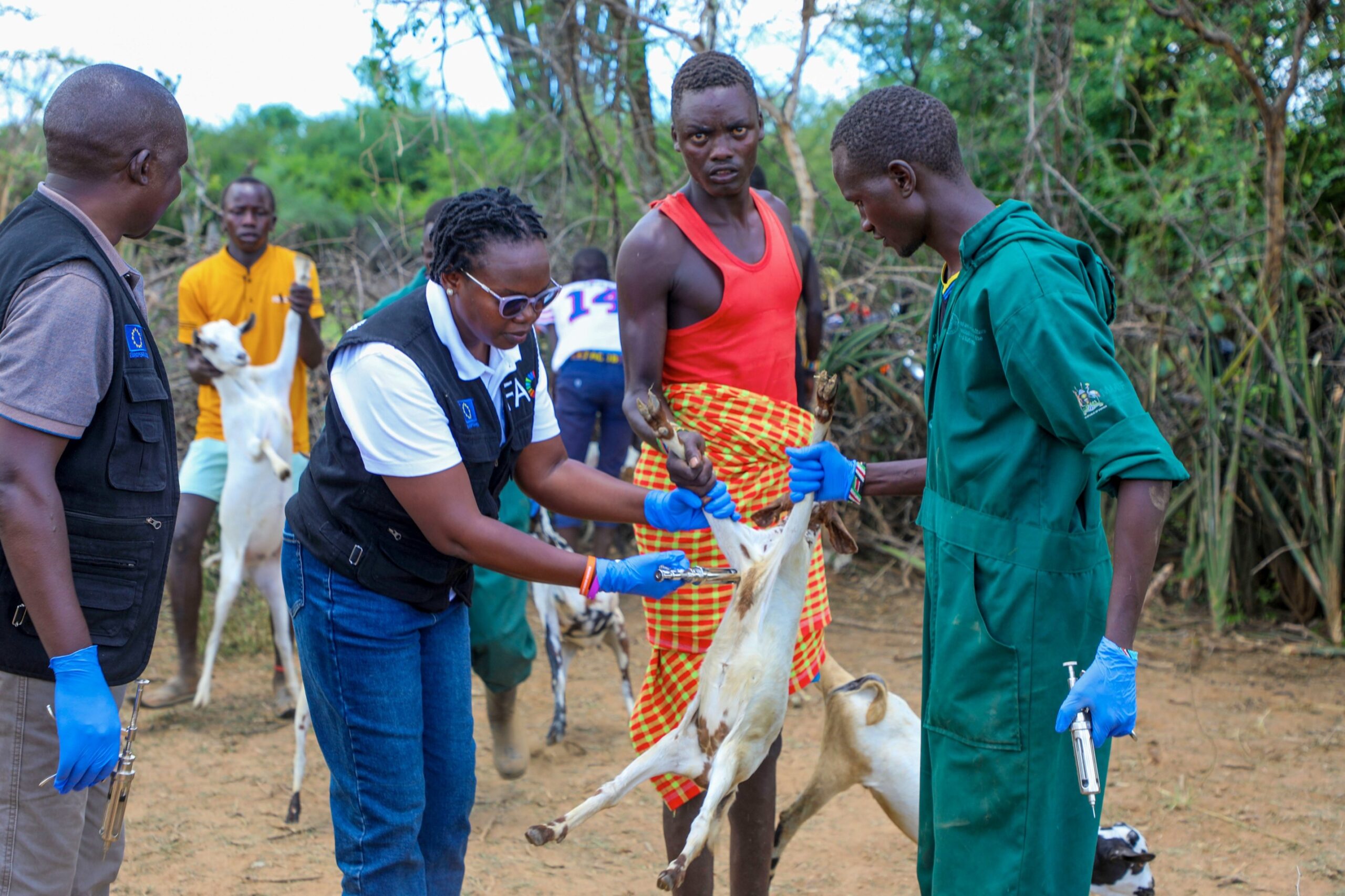
The government of Uganda, with support from the Food and Agriculture Organisation (FAO), has launched a 20-day vaccination campaign in the Karamoja sub-region as part of its plan to eradicate Peste des Petits Ruminants (PPR) in livestock by 2030.
The campaign targets goats, sheep, and cattle across the region, which is estimated to have more than 1.2 million goats, 400,000 sheep, and about 600,000 cattle. However, due to limited vaccine supplies, authorities are implementing a risk-based vaccination approach to prioritize the most vulnerable areas.
So far, more than 240,000 goats and sheep have been vaccinated against PPR out of the 275,000 doses allocated to the region. In addition, at least 27,000 cattle have been vaccinated against Contagious Bovine Pleuropneumonia (CBPP). Officials say the exercise has reached about 75% coverage, signalling steady progress.
PPR is a highly contagious viral disease that affects small ruminants, particularly goats and sheep. It can impact up to half of the livestock population in affected areas, with infected animals often dying within two weeks. Common symptoms include diarrhoea, coughing, mouth sores, and discharge from the eyes. Vaccination offers protection for between one and three years.
During a monitoring visit that took place from 25th to 28th March 2026, the District Surveillance Focal Point Person, Daniel Osoku, led a team from the Food and Agriculture Organisation (FAO) and the Ministry of Agriculture, Animal Industry and Fisheries (MAAIF) to inspect a cold chain facility in Ngongosoni Parish, Amudat District. The solar-powered facility, supported by 34 panels and 6 batteries, is used to store vaccines and serves several districts in the region. The government plans to expand such facilities to all districts to strengthen vaccine storage capacity.
The team also visited a laboratory where samples from suspected infected animals are tested to support disease surveillance.
Before the campaign, the Food and Agriculture Organization (FAO) conducted pre-vaccination assessments to determine immunity levels among livestock. Post-vaccination monitoring is also planned to evaluate whether the animals develop adequate immunity, expected to last about one and a half years.
The campaign is part of a wider cross-border initiative involving Uganda, Kenya, South Sudan, and Ethiopia, aimed at controlling livestock diseases within the Karamoja cluster.Top of Form
Bottom of Form
According to the Food and Agriculture Organization (FAO) team lead in Uganda, Benson Willington Ojok, they are supporting the Government of Uganda to assess the ongoing vaccination campaign and ensure it achieves its intended outcomes. He said the assessment is aimed at identifying gaps, addressing challenges, and improving future vaccination efforts across the country.
He added that due to cross-border livestock movement from neighboring countries, more animals than initially planned have been presented for vaccination. Despite this, farmers have responded positively to the campaign, which has so far achieved over 75 percent coverage. However, the unexpected increase in animal numbers has affected the initial vaccine projections.
Benson commended field technicians for their commitment to ensuring the smooth implementation of the campaign, as well as the support provided by district authorities. He noted that FAO has strengthened the exercise through enhanced surveillance systems and effective emergency response measures to manage potential disease outbreaks.
However, he pointed out that the limited number of days allocated to each district and the shortage of vaccination personnel remain key challenges. He assured that FAO will work closely with partners, including the Ministry of Agriculture, Animal Industry and Fisheries (MAAIF), to address these issues and improve future campaigns.
Dr. Annarose Okrut, a Commissioner at the Ministry of Agriculture, Animal Industry and Fisheries (MAAIF), expressed concern over the sharp increase in the number of animals presented for vaccination compared to the initial projections. She warned that this could affect the success of the campaign, as reaching the intended targets may become more difficult.
However, she revealed that in 2024, the government released approximately 400 billion shillings to the ministry to support the rollout of the Foot and Mouth Disease vaccine. The ministry procured about 53 million doses, with plans to vaccinate livestock twice a year to ensure adequate protection. She noted that the program has already been rolled out.
The Acting Commissioner for Animal Disease Control in the Ministry of Agriculture, Animal Industry and Fisheries, Dr. Grace Asiimwe, commended farmers for their positive response to the vaccination exercise. She emphasized that Karamoja, which has one of the largest livestock populations in the country, remains a priority for the ministry to ensure animals are protected against diseases and to improve livestock health in the region.
Meanwhile, Amudat District Chairperson Nangole Joseph Lobot praised farmers in Karamoja for abandoning long-held misconceptions about vaccination. He noted that in the past, many farmers believed that vaccines would kill their animals or reduce herd sizes, which led to low turnout during mass vaccination campaigns. He said this perception is now changing, with more farmers embracing the exercise.
However, some farmers raised concerns about logistical challenges. One farmer in Nakoyen Parish, Moroto District, who owns more than 2,000 cattle, appreciated the government’s initiative but said the three days allocated for vaccination in his area were insufficient. He noted that veterinary teams could not cover all his animals within the limited timeframe.