


Politics
Electoral Commission Adjusts Polling Dates for Special Interest Group Elections, Launches Voter Location Slips Exercise

The Electoral Commission has revised the polling dates for elections of representatives of Special Interest Groups at both Parliamentary and Local Government Council levels.
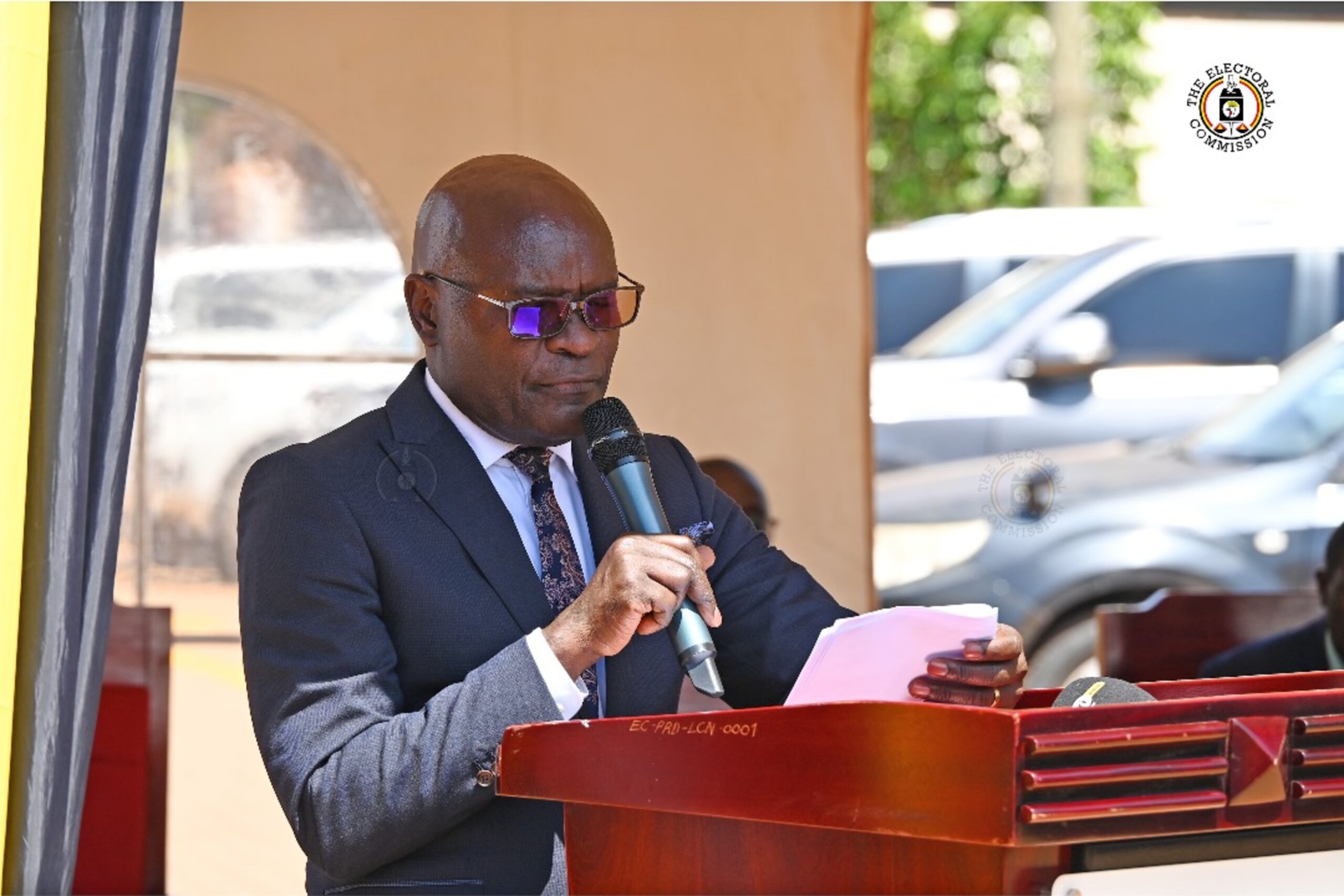
In a statement on Wednesday, Electoral Commission Chairperson Justice Byabakama Mugenyi Simon announced that the National Conference for the Election of Persons with Disabilities (PWDs) Representatives to Parliament, originally scheduled for 19th January 2026, has been postponed to 3rd February 2026.
Similarly, elections of Councillors representing Special Interest Groups—namely Youths, Older Persons, and PWDs, at Sub County/Town/Municipal Division level, previously set for 19th January, will now take place on 30th January 2026.
Other adjustments include:
National Conference for Election of Workers Representatives to Parliament: moved from 21st January to 19th January 2026
National Conference for Election of National Female Youth Representative to Parliament: moved from 8th January to 6th February 2026
Regional Conferences for Election of Regional Youth Representatives to Parliament: moved from 6th February to 28th January 2026
Justice Byabakama explained that these adjustments aim to allow members of the affected elective categories to participate fully in the General Elections (universal adult suffrage) as well as their respective electoral college elections.
Meanwhile, the Electoral Commission has also begun issuing Voter Location Slips (VLS) to voters nationwide, helping them identify their polling stations in advance. The exercise commenced on 15th December 2025 and will conclude on 13th January 2026. VLS will be distributed at each Parish/Ward according to the schedules provided by the respective Parish/Ward Supervisor.
Justice Byabakama highlighted that the VLS responds to complaints from previous elections, where voters struggled to locate polling stations. Each slip includes voter particulars such as photograph, full names, date of birth, and polling location (district/city, constituency, sub-county, parish, and polling station).
“The VLS also features a unique barcode readable by Biometric Voter Verification (BVV) machines, which will be deployed at all polling stations across the country,” said Justice Byabakama.
The VLS will be used by voters in four rounds of the 2026 General Elections:
- Presidential and Parliamentary elections
- District/City Chairpersons and Councillors elections
- Municipality/City Division Chairpersons and Councillors elections
- Sub-county/Town/Municipal Division Chairpersons and Councillors elections
Justice Byabakama emphasized that the VLS is free of charge and must be collected in person from the Parish/Ward Supervisor, an Electoral Commission employee. “Voters are urged to safeguard their slips to avoid barcode tampering. Only individuals whose details appear on the Polling Day Register will receive a VLS,” he said.
The Electoral Commission has procured 109,142 Biometric Voter Verification Kits (BVVK) for the 2025/2026 General Elections. These kits use fingerprint and facial recognition technology to authenticate voter identity, ensuring that only registered individuals vote and that no person votes more than once, upholding the One-Man/One-Woman-One-Vote principle.
Training for officials who will operate the kits, from national to polling station level, is already underway, Justice Byabakama confirmed.