


Religion
Easter Triduum Begins as Catholics Mark End of Lenten Season

After 40 days of fasting, Catholic faithful have officially concluded the Lenten period and entered the shortest yet most significant season of the Church calendar, the Easter Triduum.
According to Fr Paul Nsubuga, the Triduum spans three days, Holy Thursday, Good Friday, and Holy Saturday, and marks the suffering, death, and resurrection of Jesus Christ.
“So in this very short period, we are going to celebrate the core of our Christian faith,” he said.
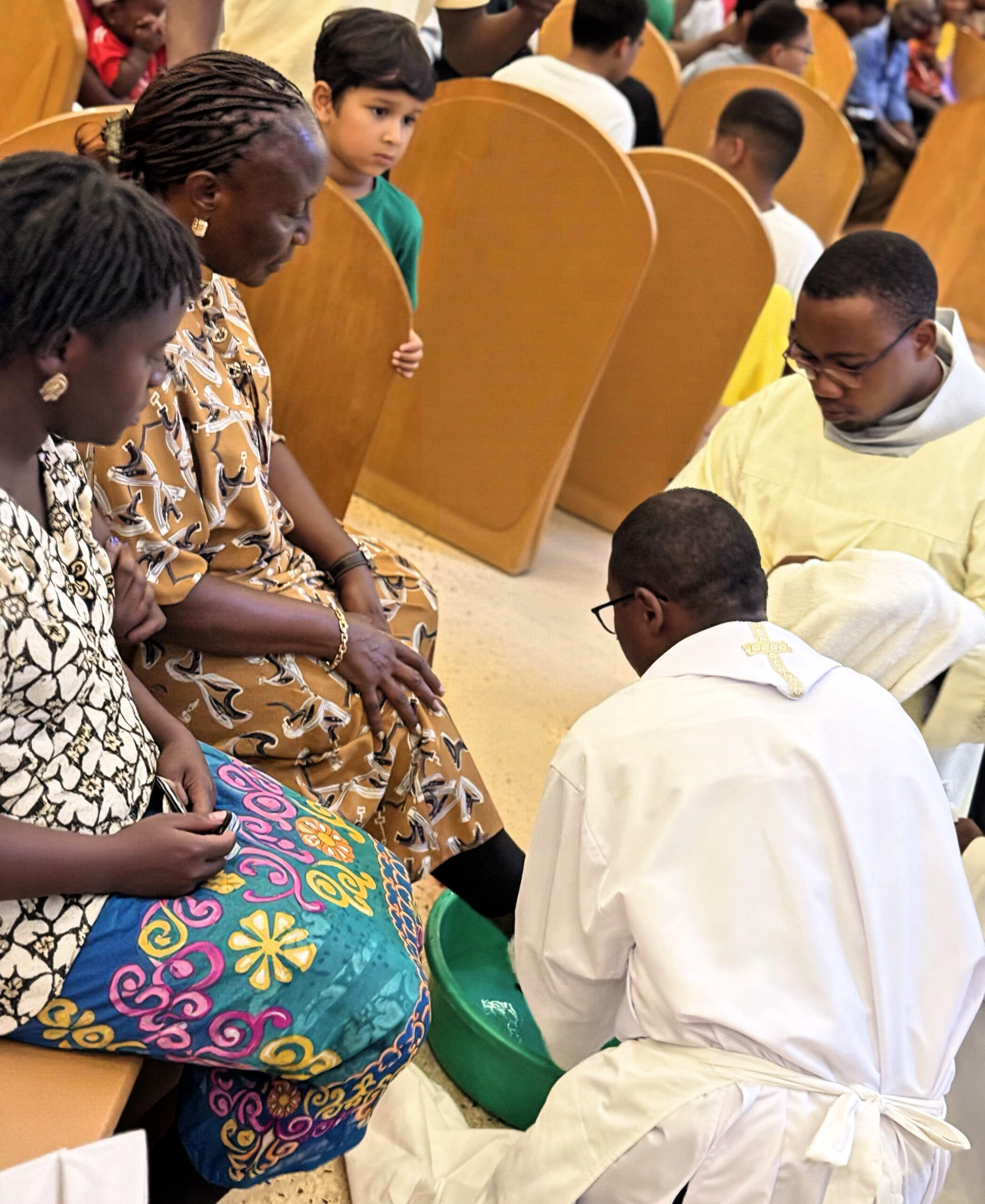
While presiding over the Holy Thursday Mass at Munyonyo Martyrs Shrine–Minor Basilica on Thursday evening, Fr Nsubuga explained the uniqueness of the celebration.
He noted that Holy Thursday Mass is considered the longest in the Church because it does not conclude with a final blessing. Instead, the liturgy continues through Good Friday until the Easter Vigil.
“We actually are not going to finish, because we won’t have a blessing. When we come to the end, we shall leave in silence with a procession and go to the place of repose of the Blessed Sacrament. So this celebration we have started will end with the Easter Vigil. It is one of the longest liturgical celebrations that we can ever have,” he explained.
Fr Nsubuga further highlighted three key aspects that the Church invites the faithful to reflect upon on Holy Thursday, also known as the Lord’s Supper. These include the institution of the Eucharist, the institution of the priesthood, and the new commandment of love given by Jesus Christ.
He explained that when Jesus instituted the Eucharist, He also instituted the priesthood.
“That is why when we celebrate the institution of the Eucharist, we also celebrate the institution of the priesthood. If Jesus had not instituted the priesthood, there would be no priests,” he said, adding that the Gospel also presents the new commandment given to believers to love as Jesus does.
Drawing from the first reading, Fr Nsubuga explained that while God instructed His people to sacrifice an unblemished lamb in the Old Testament, Christ became the sacrificial lamb in the New Testament.
“We’ve heard in the first reading that they were to slaughter an unblemished lamb, eat it as a family, and smear its blood on their doorposts. That night, God would strike Egypt, but He would pass over any home marked with the blood of the lamb. In other words, the blood of the lamb saved them from death,” he said.
He added that in the New Testament, Jesus becomes that lamb whose sacrifice saves humanity, not from physical slavery, but from the bondage of sin.
Referring to the second reading from the letter to the Corinthians, Fr Nsubuga noted that early Christians continued to celebrate the Eucharist even after Jesus’ death, resurrection, and ascension.
“Jesus, being a Jew, observed the Passover annually. However, at the Last Supper, no lamb was slaughtered because Jesus Himself became the lamb. At that moment, He instituted a new covenant,” he explained.
He emphasized that Jesus’ words during the Last Supper, “Do this in memory of me”, established a lasting command for believers to continue celebrating the Eucharist.
Fr Nsubuga also addressed doubts about the real presence of Jesus Christ in the Eucharist, urging Catholics to trust in Christ’s words.
“Jesus says, ‘Take this, eat it; this is my body.’ He does not say it is something that looks like His body,” he said.
He described the priesthood as a profound and demanding calling, noting that fully understanding its significance can be overwhelming.
“When Jesus instituted the Eucharist, He also instituted the ministerial priesthood. And when we think about what we do as priests, it is something profound and even frightening if we truly understand it,” he added.
Fr Nsubuga encouraged the faithful to remain committed to prayer and to support priests through intercession.
“There are times when you go to the Perpetual Adoration Chapel and find people already deep in prayer, even praying for priests by name. Let us continue to pray for our priests, just as we also pray for you,” he said.
He explained that priests have a duty, guided by Church law, to pray for their parishioners, including offering Mass intentions for them.
Looking ahead to Good Friday, he reflected on Jesus’ words on the cross.
“When Jesus says, ‘I thirst,’ it is not for water, but a deeper desire to do even more for humanity, though He had already given everything,” he said.
During the Mass, members of the Executive presented gifts to the priests of Munyonyo, continuing a long-standing tradition. Holy Thursday commemorates the Last Supper and the institution of the ministerial priesthood.
Earlier in the day, the Archdiocese of Kampala held the Chrism Mass at Lubaga Cathedral. During the celebration, the Archbishop of Kampala, His Grace Paul Ssemogerere, urged Christians to keep their eyes fixed on Jesus and to proclaim God’s love to the poor, the blind, and those in prison.