


Health
Akina Mama wa Afrika Concludes Make Way Project, Empowering over 800 Youths on SRHR

More than 800 Ugandan youths have benefited from the Make Way Project, an initiative introduced in Uganda in 2020 to promote inclusive Sexual and Reproductive Health and Rights (SRHR).
The project, coordinated by Akina Mama wa Afrika (AMwA), sought to promote the adoption and use of an intersectional feminist approach to SRHR, one that ensures the needs of historically marginalised groups such as women, girls, LGBTQI people, youth, persons with disabilities, and people from low-income communities are adequately considered in planning, budgeting, and service delivery processes.
The Make Way programme achieved this by building the advocacy and lobbying capacity of marginalised communities and ensuring their representation in decision-making processes. It also strengthened the capacity of Civil Society Organisations (CSOs) to lobby for the changes they wanted to see at local, national, regional, and global levels. Several youth-led organisations were supported throughout the project.
A key demand of the programme was for duty-bearers at subnational, regional, and global levels to formulate and implement policies, strategies, and plans with an intersectional lens, ensuring SRHR services are available, accessible, and acceptable for all.
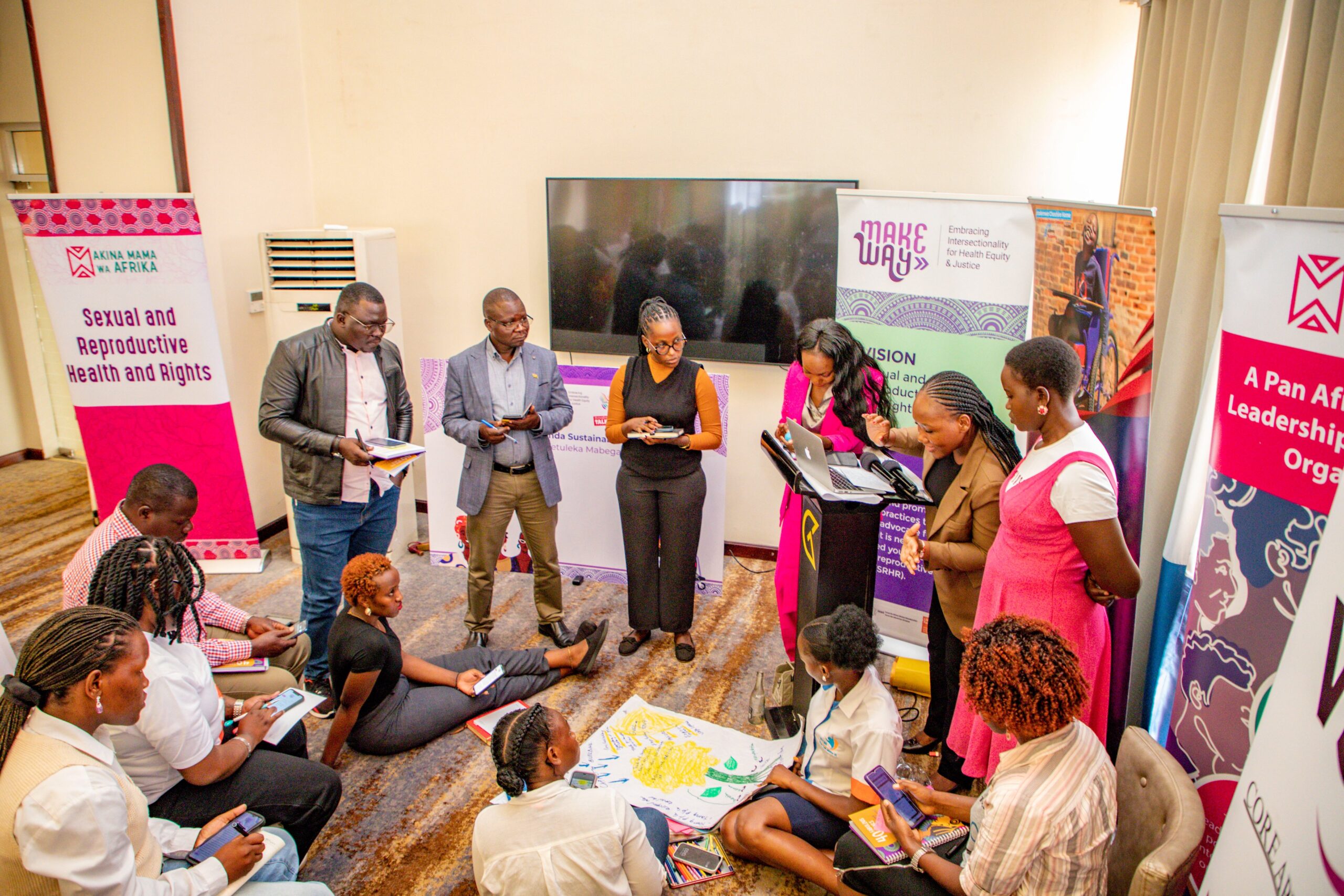
The project officially concluded on Tuesday, 7th October 2025, during a partners’ event held at the Golden Tulip Hotel in Kampala.
According to Olabukunola Williams, the SRHR Lead at Akina Mama wa Afrika, the project focused on empowering young people to use their voices to advocate for better SRHR services in their communities. She noted that AMwA also engaged with duty bearers to push for policy implementation and financing.
“At one point, we led a delegation of Members of Parliament to the islands of Kalangala to engage directly with the youth and hear their concerns,” Williams said.
She added that as a result of the project, society has become more open to discussing SRHR, and more people, including parents and health workers, are now speaking out on related issues. Through the programme, over 1,400 youths gained access to SRHR services.
However, the youths highlighted several challenges during field engagements, including laxity in the implementation of laws. They noted that while Uganda has progressive laws in place, many remain poorly enforced.
Following interactions with vulnerable young people across project districts, including Kampala, Kalangala, Mukono, Mbale, and Terego, the Youth Panel found that young people continued to face stigma and discrimination from health workers, a lack of sign language interpreters, absence of youth-friendly spaces in health facilities, and limited access to condoms.
The MakeWay youth panel was an advisory structure which consisted of three youth members selected to represent young people and amplify their voice throughout the implementation and evaluation of the programme.
They recommended that the government, through relevant ministries, implement targeted interventions to improve inclusive SRHR access. These include:
- Training health workers in inclusive SRHR practices;
- Institutionalising sign language and disability-friendly materials in all health centres;
- Creating dedicated youth-friendly corners with trained personnel; and
- Designing discreet, accessible, and stigma-free condom distribution systems.
During the closing ceremony, several partners were recognised with certificates of appreciation for championing the SRHR campaign throughout the project’s lifespan. They were also urged to continue their advocacy efforts despite the end of project funding.
Uganda, with a population of about 40 million people, has the second youngest population in the world, with an average age of 15.8 years (UBOS, 2016).
While the country has made notable progress in the area of SRHR, including successful campaigns that reduced HIV prevalence from the 1980s to the late 1990s, and a decline in female genital mutilation and child marriages, significant challenges remain.
Factors such as education, income levels, geographical location, and regional disparities continue to determine access to quality sexual and reproductive health services across the country.