


News
A Mother’s Lesson: Aisha Explains the Harmful Impact of Election Violations to Her Daughter

It was on 15th August 2025 when tear gas was spread all over Buwenge Town. This followed an incident involving a political prisoner who tried to escape from the police cells. As the police
attempted to disperse the mob that was trying to help him escape, they shot him dead, which triggered a demonstration.
During this incident, tear gas was spread throughout Buwenge Town, affecting several areas, including Buwenge SDA Primary School, where some children lost consciousness and were rushed
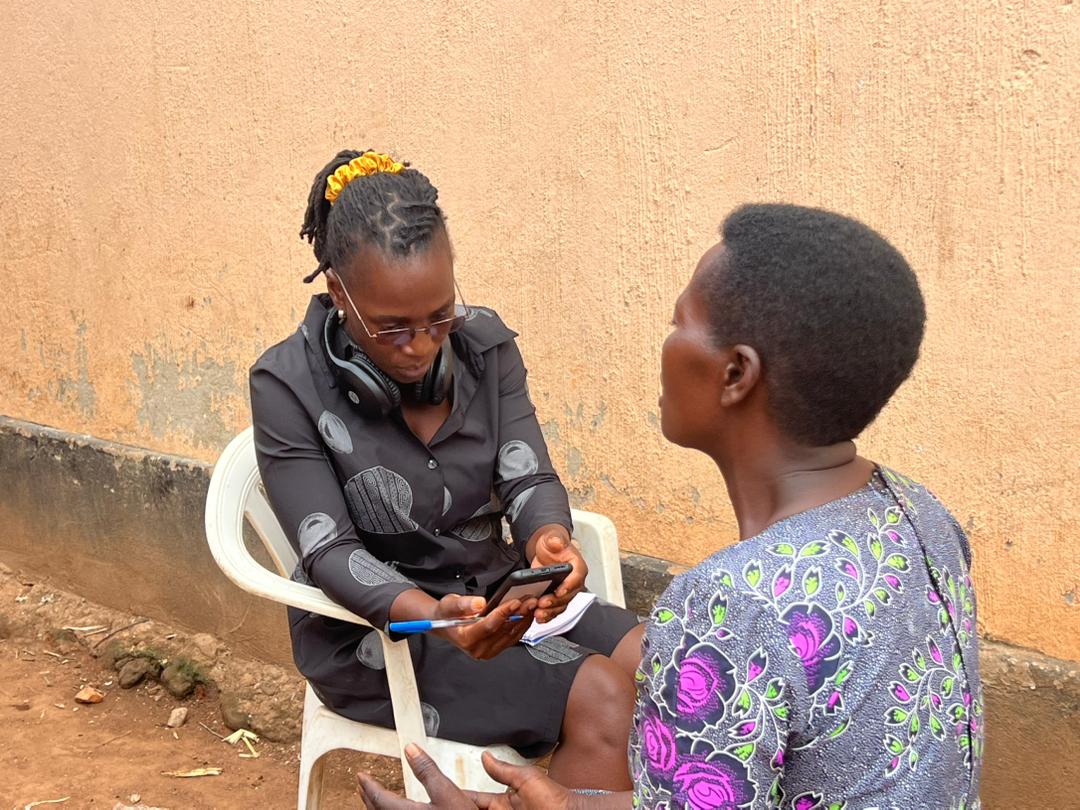
to nearby hospitals for treatment. We managed to reach out to the parent of one of the survivors, who revealed that her daughter was a victim of the tear gas that was released while she was at school that day.
Aisha Nakazibwe, commonly known as Maama Swabullah, narrated that the chaos had actually started a day earlier, during the party primaries. One man had been arrested during the primaries on allegations of being involved in conflicts and was detained at the Buwenge Police Station.
The following day the fateful day the suspect was instructed to clean the cells as part of the daily routine at the station. However, he refused, claiming that he had committed no offense and therefore should not be treated like a prisoner.
As a result, he attempted to escape, prompting the police to chase him. When he got a short distance away, one of the officers shot him dead.
This incident sparked chaos as the youth of Buwenge tried to seize the body and carry it to the officer allegedly responsible for the shooting. When the police tried to forcibly retrieve the body from the angry mob, they released tear gas, which spread across the entire town of Buwenge.
One of the schools in town, Buwenge SDA Primary School, was greatly affected as tear gas canisters were thrown into the school compound, leading to the collapse of five girls who were inside at the time.
Maama Swabullah narrates that tear gas and gunshots covered the entire town, and no one could move out of their houses. The town was filled with shock and fear. She revealed that, in the morning, a teacher named Mr. Bwire, together with the headmaster of the school, called to inform her that four girls, including her daughter Swabullah, had been affected by the tear gas and that her daughter was unconscious.
They had all been rushed to Buwenge Health Centre for treatment. “I was so shocked to hear such news,” she recalls. “I didn’t wait even a minute — I rushed straight to the health centre to see my daughter.

When I entered the ward, I saw two girls lying on hospital beds, one shaking and the other completely still. My Swabullah was not among them.” She continued, “I ran to another ward where I finally found Swabullah. She was shaking slightly, and I couldn’t hold back my tears. I cried out to the doctor to help my daughter.
The medical team did their best to stabilize the girls, and after some time, they all began to recover. However, we were advised to continue their medication and keep monitoring them closely.
We wanted to take them home immediately, but the doctors warned us not to, since tear gas was still being released in the area and the girls could be affected again.” “When the time finally came to take them home,” she added, “a man offered to help the parents of the affected girls. He helped me carry Swabullah home as I followed.
But when we arrived, Swabullah was not the same girl who had left home that morning
for school. It took her a long time to return to normal. “Even now,” she said, “Swabullah easily gets startled by any sudden noise. I remember a few days ago when thunder struck she held onto the wall in fear and couldn’t move until I helped her sit down.
She was trembling and covered in shock. In fact, she missed school for an entire week because she hadn’t fully recovered, and I also had to miss work to take care of her during
that time.”
How My Family Was Affected
Ever since the incident, Maama Swabullah explains that her family has never been the same. She continues to pay for her daughter Swabullah’s medical treatment repeatedly, which has
become a financial burden.
What worries her most is that every time she takes her daughter for a medical review, the doctors prescribe even more medication—an indication that the condition is not improving as expected.
She is deeply concerned because doctors have hinted that if Swabullah’s episodes of shock and fear continue, she may need to undergo a heart check-up, a procedure that is expensive and beyond her means. “I don’t know what will happen to my life if my daughter is diagnosed with a heart problem,” she says tearfully.
“I am a low- income earner who cannot afford such bills, and there is no one to help me. Whenever she gets scared, she shakes and tears start rolling down her eyes, which doctors suspect could be linked to
high blood pressure. I am really worried.”

Advice to Parents
Maama Swabullah advises parents to always protect their children from political conflicts, especially during election seasons. She notes that some parents allow their children to freely engage in political activities, not realizing that when violence breaks out, these children can easily be affected often
resulting in long-term health complications that become costly to manage.
“I advise parents that whenever they are going out for political activities, they should ensure that their children remain safely at home,” she says. “In case of any conflict, it is easier for parents to protect themselves rather than risking their lives looking for their children amidst chaos.” She further urges parents to stay away from active political confrontations.
For those who cannot completely avoid involvement, she advises: “Go to your polling station, cast your vote, and return home. Do not loiter around polling areas because it puts you at risk of being caught up in violence.”