


News
99.69% of Candidates Pass 2025 UCE Exams

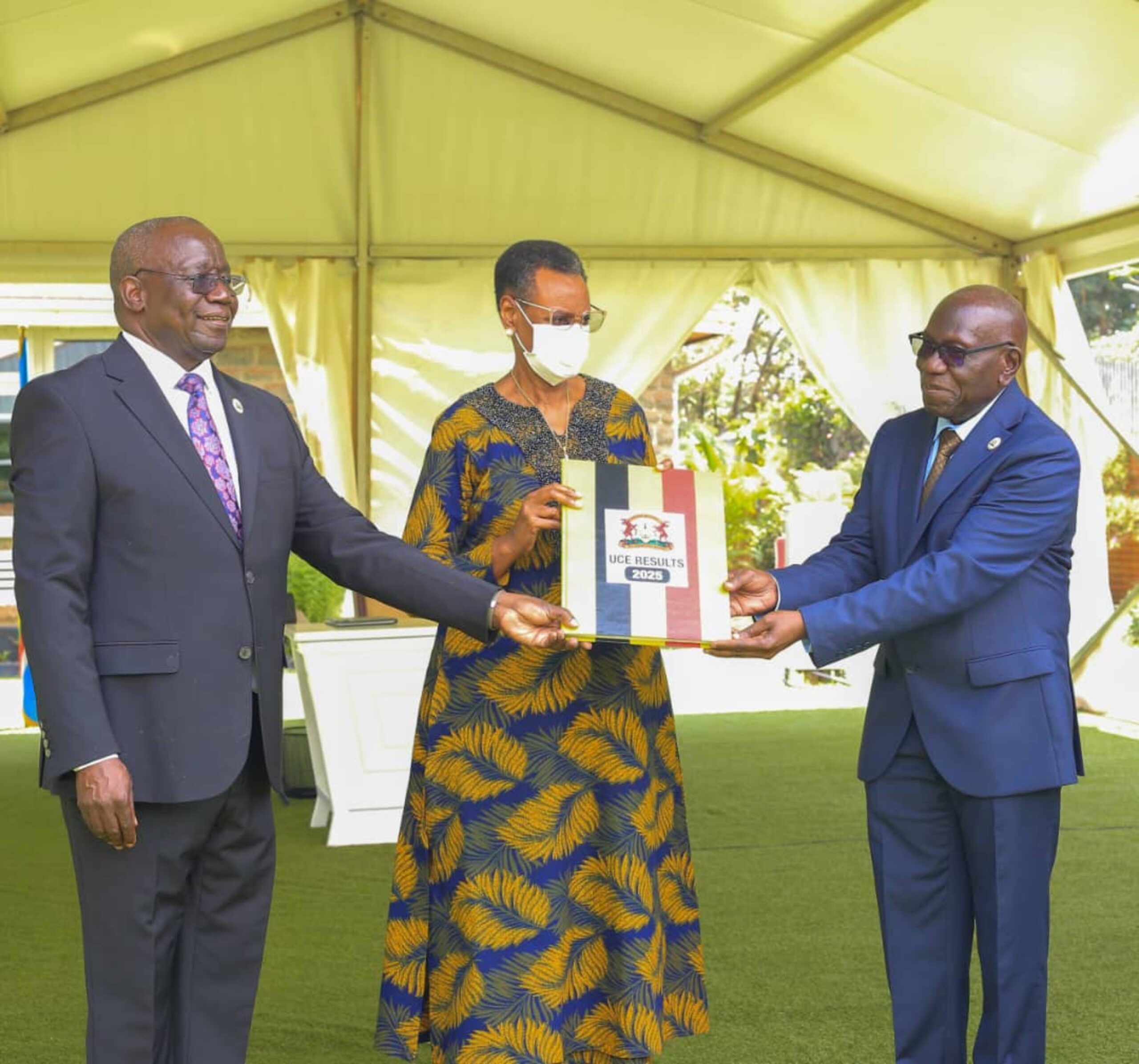
The Uganda National Examinations Board (UNEB) on Friday released the results of the 2025 Uganda Certificate of Education (UCE) examination, recording a 99.69 per cent pass rate.
The 2025 results are for the second cohort of candidates under the Competency-Based Curriculum.
According to UNEB Executive Director Dan N. Odongo, a total of 432,163 candidates from 3,975 examination centres registered for the UCE 2025 examination, compared to 359,417 candidates in 2024, an increase of 72,746 candidates (20.2 per cent).
Of those registered, 204,292 (47.3 per cent) were males, and 227,871 (52.7 per cent) were females. A total of 154,642 candidates (35.8 per cent) were beneficiaries of the Universal Secondary Education (USE) programme, while 277,521 (64.2 per cent) were non-USE candidates.
A total of 429,949 candidates (99.5 per cent) sat for the examination in 2025, compared to 357,120 in 2024. Only 2,214 candidates (0.5 per cent) were absent, continuing the trend of declining absenteeism observed in 2024.
UNEB also registered 708 Special Needs Education (SNE) candidates, 342 males and 366 females, down from 743 in 2024. These included candidates who were blind (27), had low vision (116), were deaf (60), dyslexic (90), and physically handicapped (72).
An additional 343 candidates with other forms of disability, including sickle cell anaemia, epilepsy, and circumstantial disabilities such as accident-related injuries, were granted extra time. Only four SNE candidates (0.6 per cent) were absent. All SNE candidates were allowed an extra 45 minutes per paper.
The Board further registered 52 candidates from Uganda Government Upper Prison (36 males and four females) and 12 candidates from Mbarara Main Prison (all males).
Odongo reported that performance in the 2025 examination improved compared to 2024. Overall, 428,628 candidates (99.69 per cent) qualified for the UCE certificate, which will be reflected on transcripts and certificates as Result 1.
The proportion of candidates who did not qualify for the UCE certificate declined significantly from 1.9 per cent in 2024 to 0.31 per cent in 2025. These candidates will be indicated as Result 2 or Result 3 on their transcripts.
He explained that Result 2 applies to candidates who did not fulfil all award conditions, such as missing project scores, sitting fewer subjects, or lacking continuous assessment (CA) scores, while Result 3 applies to candidates who scored below basic level (Grade E) in all subjects.
Higher exceptional achievement levels were recorded in Christian Religious Education, Geography, and English Language, with more candidates attaining Grade C and above in 2025 compared to 2024.
In science practical assessments, candidates were required to develop aims and hypotheses from given scenarios, conduct investigations using provided materials, and draw conclusions. Odongo noted that while improvements were observed, many candidates still struggled to interpret scenarios, relate experiments to real-life situations, and meaningfully interpret results.
“The challenge cutting across all areas is the difficulty candidates showed in linking scenarios to creative thinking and problem-solving in real-life situations. These competencies are central to the curriculum,” Odongo said, adding that teachers need to provide stronger guidance to learners.
At Uganda Government Upper Prison School, Luzira, 40 candidates were registered, of whom 39 sat for the examination. All qualified for the UCE certificate. At Mbarara Main Prison Inmates’ Secondary School, all 12 registered candidates sat and qualified for the certificate.
UNEB also conducted a quality assurance survey involving 36,546 candidates from 118 districts, nearly half of whom were female. The survey found that 96.3 per cent of candidates said examination items were within the syllabus, 74.7 per cent found the time allocated adequate, and 88.2 per cent reported that questions were clearly presented.
In terms of difficulty, 4.7 per cent found the examination easy, 66.4 per cent fair, and 28.8 per cent difficult, results consistent with the overall performance, where most candidates achieved a satisfactory (Grade C) competency level.
Cases of examination malpractice remained low, with only 63 cases reported, mainly in Mathematics and science practical papers. Odongo said most cases involved candidates being given experimental results to copy, which conflicted with their recorded investigation designs.
Speaking at the release, John Chrysestom Muyingo, the State Minister for Higher Education, said the UCE examination marks a critical transition in learners’ academic journeys, opening pathways to advanced secondary education and skills development aligned with national goals.
“As we continue implementing the competence-based curriculum, I remind teachers that it is intensive and requires full physical presence and creativity. Schools should also allow learners adequate time to rest and work on their projects,” Muyingo said.
The Minister of Education and Sports, Janet Kataha Museveni, applauded UNEB for the successful conduct of the examinations and thanked God for the 20 per cent increase in UCE candidature.