


Politics
Parliament Constitutes Appointments Committee to Vet New Ministers

Parliament has constituted the Appointments Committee that will vet Ministers-designate starting Monday, 1 June 2026.
Appointed by President Yoweri Museveni earlier this week, the Ministers-designate are expected to appear before the committee, which is chaired by the Speaker and deputised by the Deputy Speaker.
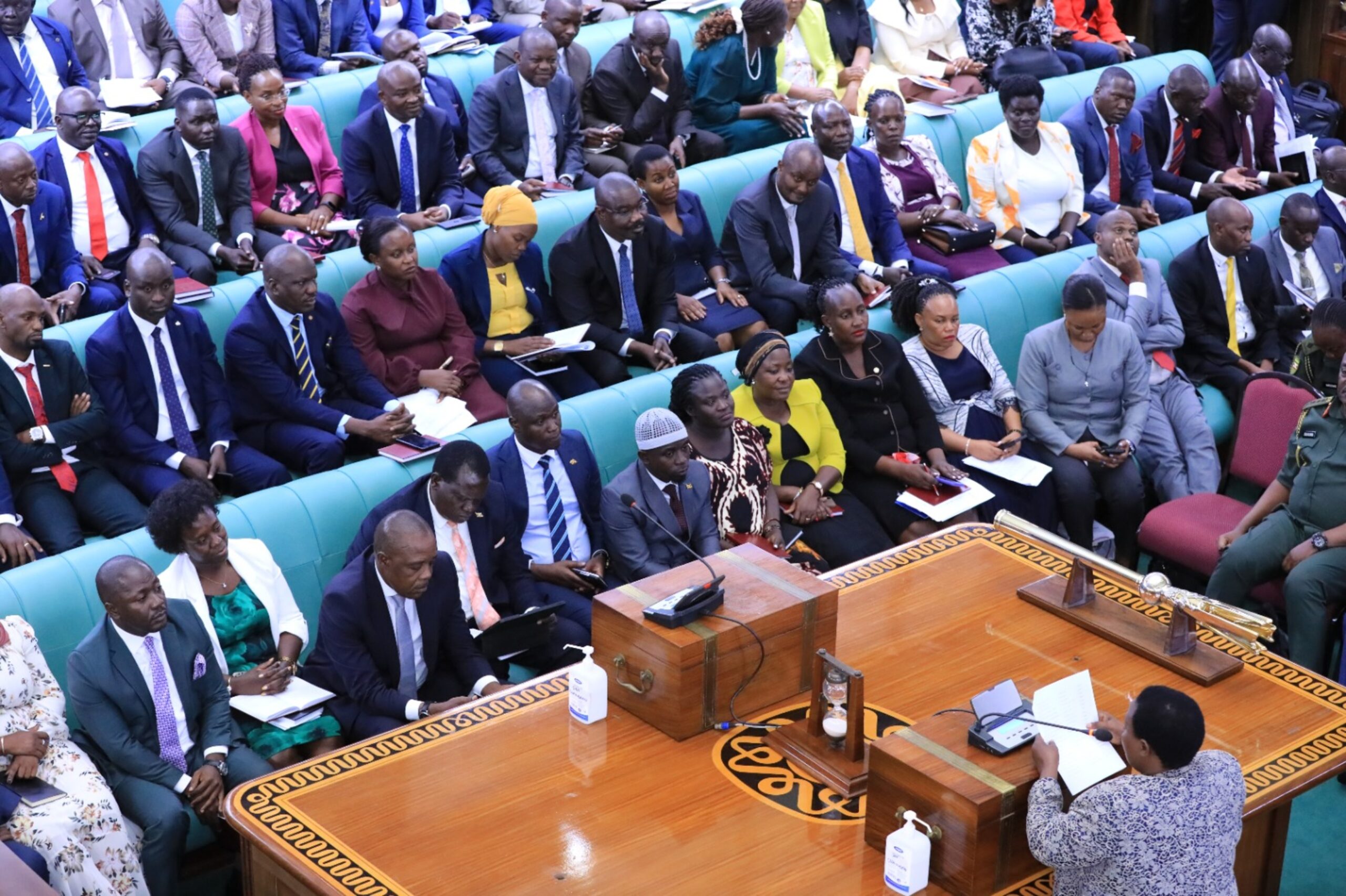
The Appointments Committee was constituted during the plenary sitting held on Thursday, 28 May 2026, chaired by Speaker Jacob Marksons Oboth. Other members of the committee include the Leader of the Opposition in Parliament, Hon. Joel Ssenyonyi, alongside legislators drawn from across the political divide.
Ahead of the anticipated vetting exercise, Parliament, during Thursday’s plenary sitting of the Second Session of the 12th Parliament, approved an increase in the number of Cabinet Ministers and Ministers of State to 30 and 51, respectively, in consideration of Articles 113(2) and 114(3) of the Constitution.
Under the Constitution, parliamentary approval is required to increase the number of Cabinet Ministers and other ministers beyond the statutory 21 positions. The approval followed a motion moved by the Prime Minister, Robinah Nabbanja, who, together with Vice President Jessica Alupo, had earlier been approved by the House to retain their respective positions.
“For the efficient running of the State, the President has determined that there is need to increase the total number of Cabinet Ministers from twenty-one to thirty, and the total number of Other Ministers from 21 to 51,” Nabbanja said. She explained that population growth and emerging governance demands have necessitated an expansion of ministerial portfolios to improve service delivery and ensure equitable representation.
“Flagship programmes such as the Parish Development Model, Emyooga initiative and climate resilience strategies require dedicated ministerial oversight to ensure effective implementation. Specialised portfolios are needed to coordinate cross-cutting programmes, monitor government performance and guarantee accountability at the grassroots level.
Under service delivery and efficiency, more ministers allow specialisation, clear mandates and stronger oversight,” Nabbanja added. The motion was seconded by Kyaka South County MP and Deputy Attorney General-designate, Hon. Jackson Kafuuzi. Kafuuzi argued that Parliament’s approval serves as a safeguard to ensure accountability and prevent the automatic inflation of Cabinet numbers.
“The framers of the Constitution anticipated evolving governance needs and deliberately vested Parliament with the authority to approve adjustments. This is not a departure from the law, but its faithful application,” Kafuuzi said.
However, some legislators opposed the motion and urged the House to suspend it and instead require the government to align ministerial numbers with the constitutional provisions. “If there is any governance gap that has been created, it can be fixed by local leaders. I want to appeal to colleagues that for the first time in the history of this country, let us stay this motion and try out the number of ministers as given in the Constitution,” said Mukono Municipality MP, Hon. Betty Nambooze.
Chief Opposition Whip Hon. Paul Mwiru argued that reducing the number of ministers would free up more resources for service delivery.
“The framers of the Constitution defined these numbers, and the government has not moved to amend these provisions. Actually, when we reduce their number, it is in their interest because we are finding more money for service delivery.
Let us maintain the numbers as they are in the Constitution and see how it works out,” Mwiru proposed. Kassanda County North MP, Hon. Patrick Nsamba, referenced the recent rationalisation of government agencies and urged government to similarly reduce the number of ministers. In response, Prime Minister Nabbanja clarified that the proposed number of ministers reflects the existing ministerial structure and portfolios.
“The number of ministers and ministers of state carrying out duties is the same number we have brought. The rationalisation process was carried out because there was duplication of work in departments and agencies associated with different ministries,” Nabbanja said.
Parliament also indicated that the remaining 30 standing and sectoral committees of the House will be constituted in due course.
OTHER MEMBERS OF THE APPOINTMENTS COMMITTEE
NRM Members
1. Hon. Catherine Akumu Mavenjina (Older Persons Representative, Northern Region)
2. Hon. Jane Avur Pacuto (Pakwach District Woman Representative)
3. Hon. Betty Awor Engola (Apac District Woman Representative)
4. Hon. Annet Birungi (Workers Representative)
5. Hon. Sam Byibesho (Kisoro Municipality)
6. Hon. Elma Challa Kapel (Youth Representative, Northern Region)
7. Hon. Steven Gashaija Shyaka (Entebbe Municipality)
8. Hon. Ruth Katushabe (Bukomansimbi District Woman Representative)
9. Hon. Stephen Kisa Bakubalwayo (Luuka South County)
10. Hon. Sowedi Kitanywa (Busongora County North)
11. Hon. Keefa Kiwanuka (Kiboga East County)
12. Hon. Christine Lanyero Awany (Nwoya District Woman Representative)
13. Hon. Irene Linda (Fort Portal City Woman Representative)
14. Hon. Asha Mafabi Nabulo (Sironko District Woman Representative)
15. Hon. Judith Nagujja (Buvuma District Woman Representative)
16. Hon. Faith Nakut Loru (Napak District Woman Representative)
17. Hon. Alex Ndeezi (Persons with Disabilities Representative, Central Region)
18. Hon. Madina Ntale Nsereko (Kawempe Division South, Kampala)
19. Hon. Johnson Nyeko Kezekiya (Lamwo County)
20. Hon. Simon Peter Opolot-Okwalinga (Kanyum County)
21. Hon. Beatrice Rwakimari (Ruhaama County)
22. Hon. Robina Rwakojo Gureme (Gomba West County)
23. Hon. Genensio Tumuramye (Kashongi County)
24. Hon. Fadil Twalla (Tingey County)
Opposition Members
1. Hon. Betty Aol Ocan (PFF, Gulu City Woman Representative)
2. Hon. Lucy Akello (FDC, Amuru District Woman Representative)
3. Hon. Peter Okot (DP, Tochi County)
4. Hon. Otuko Apio Eunice (UPC, Oyam County North)
5. Hon. Joel Ssenyonyi Besekezi (NUP, Nakawa Division West)
6. Hon. Paul Mwiru (NUP, Jinja South Division East)
7. Hon. Sheilah Draville Amaniyo (NUP, Mukono District Woman Representative)
8. Hon. Joseph Gonzaga Ssewungu (NUP, Kalungu County West)
9. Hon. Ismail Kasule (ANT, Hoima West Division)
Independent Members
1. Hon. Esther Acom (Serere District Woman Representative)
2. Hon. Angella Akoth Nzokire (Tororo District Woman Representative)
3. Hon. Herbert Kinobere (Kibuku County)
4. Hon. Emmanuel Ongiertho Jor (Nebbi Municipality)