


Health
Accurate Media Coverage Key to Effective Epidemic Preparedness — Living Goods

Authorities are actively disseminating information through various media platforms, highlighting key symptoms and preventive measures citizens should watch for.
The outbreak has already been confirmed in the Democratic Republic of Congo, where more than 500 cases have been reported. In Uganda, one death has been confirmed, while another individual who was in close contact with the deceased is currently undergoing treatment.
Uganda has previously battled several epidemics, including Cholera, Ebola, Rubella, Mpox, and conjunctivitis, commonly known as red eyes. These outbreaks have had significant impacts on families and the national economy.
In response to the current threat, the President of Uganda has established the National Epidemic Response Task Force to coordinate the fight against Ebola. The committee has proposed an emergency, budget exceeding 90 billion Ugandan shillings to support preparedness, response, and containment efforts.
Health experts warn that epidemics often disrupt multiple sectors, including business, education, healthcare, and government spending. Uganda remains particularly vulnerable when outbreaks occur unexpectedly, leaving limited time for preparation and resource allocation. By the time response measures are fully implemented, the disease may have already spread widely, amplifying its impact.
The Ministry of Health has emphasized the critical role of journalists as watchdogs and trusted sources of information, indicating that given the public’s reliance on media, there is a growing need to equip journalists with skills in accurate and responsible reporting on epidemic preparedness.
This, officials say, will complement government efforts by ensuring that communities receive timely, factual information to help them prevent infection and respond effectively.
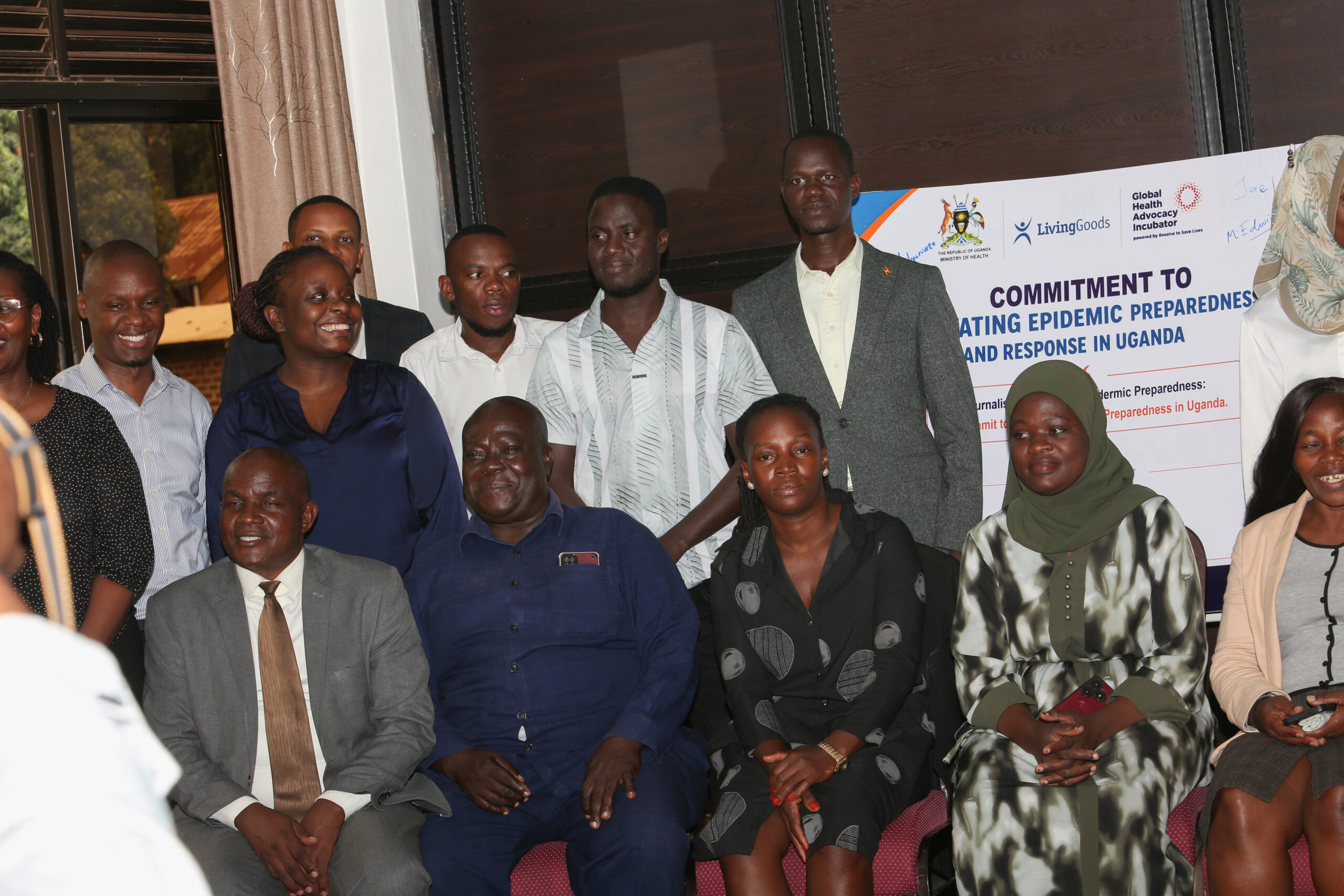
Living Goods, in partnership with the Ministry of Health has trained health journalists under the Health Journalists Network Uganda to enhance their skills in accurately reporting on epidemic preparedness. The initiative aims to ensure the public remains vigilant and well-informed in the event of an outbreak.
According to Richard Muhumuza from Living Goods, journalists have consistently reported on pandemics, but the evolving nature of health information requires continuous updates. He emphasized the need for journalists to be equipped with current and accurate knowledge to provide clear and reliable reporting.
Muhumuza noted that with Uganda facing the risk of an Ebola outbreak, this is a critical time for journalists to deepen their understanding of epidemic preparedness to help safeguard communities through accurate information.
The Partnerships, Advocacy, and Communications Director at Living Goods, Amy Kakiiza, urged journalists to take responsibility for effectively communicating the Ministry of Health’s position on managing and containing epidemics. She stressed that accurate reporting can help the public respond appropriately and in time, reducing the risk of widespread harm.
Kakiiza further noted that information shared by journalists is often more trusted and better understood by the public compared to content on social media, which is frequently affected by misinformation.
This, she said, underscores the importance of engaging journalists in epidemic reporting to support government efforts to protect citizens.
During a workshop on enhancing epidemic preparedness and response in Uganda, held at Rivonia Hotel, the Senior Medical Officer for Public Health Preparedness and Response at the Ministry of Health, Bonny Kintu, reaffirmed the ministry’s commitment to providing journalists with accurate and timely information.
“You don’t need to be a medical professional to report accurately on health issues. What matters is the passion to learn and understand these topics,” he said.
Meanwhile, Alex Kakeeto, the Incident Commander in Wakiso District, highlighted the area’s vulnerability due to its high population movement. He noted that the district is at increased risk of epidemic spread as people frequently move in and out.
Kakeeto assured that Wakiso District is well-prepared to handle a potential outbreak. He revealed that toll-free lines have been established for reporting suspected cases, and trained health teams have been deployed across the district for rapid response.
In addition to support from the Ministry of Health, the district has six ambulances ready to transport suspected cases, 30 boda bodas to facilitate movement of health workers, and specialized teams for testing and safe burials.
He added that awareness campaigns are underway, with posters and public messages being distributed to encourage vigilance. Residents have been advised to watch for symptoms such as fever, headache, vomiting, and bleeding, and to report cases early rather than waiting for severe symptoms.
Similarly, one of the journalists Jael Namiganda noted that limited access to credible sources has been a challenge when reporting on epidemic preparedness.
However, she expressed optimism that the training and resources provided by Living Goods will enable journalists to report more accurately and effectively, helping communities better prepare for potential outbreaks.